
Durdle Door
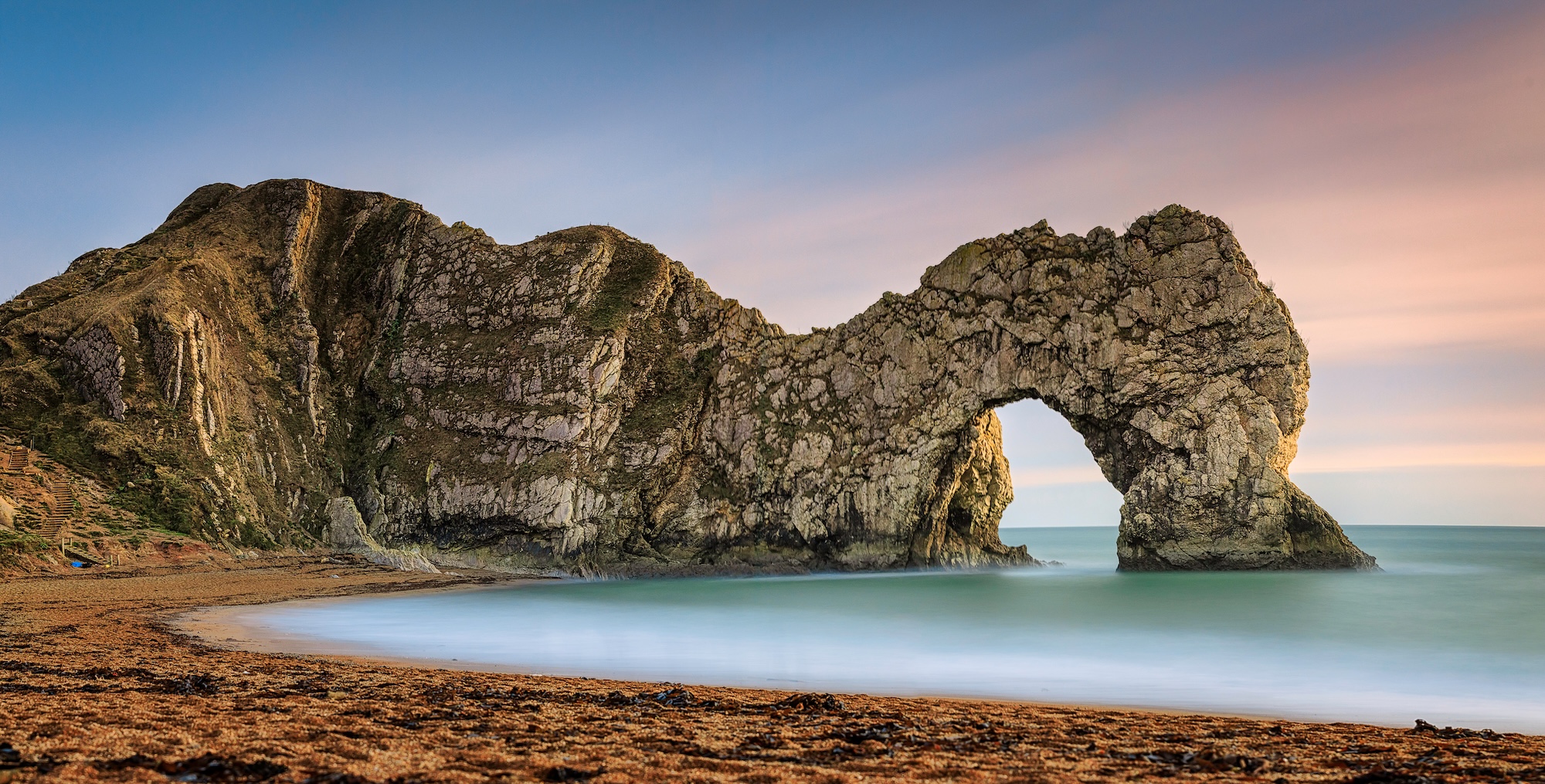
Durdle Door is one of Dorset’s most instantly recognisable landmarks. A 200-foot natural limestone arch rising straight from the sea, carved by erosion over thousands of years. Set on the Jurassic Coast, this stretch of coastline is designated a Site of Special Scientific Interest (SSSI) and is celebrated worldwide for its geology and scale. The beach below is a dramatic mix of shingle and sand, surrounded by steep cliffs. The sound of the sea here is incredible.
It’s also no surprise that Durdle Door is one of the UK’s most photographed landmarks. Its distinctive shape has also made it a popular filming location, appearing in Nanny McPhee, the opening scenes of Far from the Madding Crowd, and in music videos including Shout by Tears for Fears and On a Saviour’s Day by Cliff Richard.
Beautiful as it is, this is a coastline to respect. The sea slopes steeply, and conditions can change quickly.
If you’re planning to explore Durdle Door and the surrounding coastline, staying nearby makes it easy to visit early in the morning or return for another walk. Our handpicked Lulworth holiday cottages include a beautifully furnished, dog-friendly cottage in Winfrith Newburgh, just a short drive from Lulworth Cove and Durdle Door.
Why We Love It Here
Our love of Durdle Door has changed as our family has grown. When our children were younger, we’d park at the Durdle Door car park and make our way down the steep path, usually with a promise of a treat afterwards. Today, we’re more likely to park at Lulworth Cove and walk over — climbing the large stone steps up from the cove, following the coast path for around 25–30 minutes, then making our way towards Durdle Door. The views along the way are among the best on this coast and make the walk just as memorable as the destination. It’s also one of the places our family and friends beg us to take them to, just so they’ve crossed it off their Dorset bucket list!
We rarely spend a full day on the beach itself. Instead, we treat Durdle Door as a stopping point. Take it all in, and then continue walking along the shoreline towards Bat’s Head (often locally called Butter Rock). In this direction, the crowds quickly thin, the coastline feels wilder, and the sound of the sea gets louder as waves crash against the shingle and cliffs.
We’ve walked this entire stretch of coast as part of the Macmillan Cancer Jurassic Coast Mighty Hike, and it’s one of those landscapes that never looks quite the same twice. A great tip if you want a different perspective is to get out on the water: Jurassic Coast Activities run guided kayak tours from Lulworth Cove, allowing you to see Durdle Door from sea level, which is an unforgettable experience.
Durdle Door is also an easy day out if you’re staying at Silverlake Estate, around 20–30 minutes away by car, depending on traffic. It’s a lovely option for families and couples who want to explore the Jurassic Coast but also enjoy the estate’s lakes, swimming pool, spa and outdoor activities during their stay.
And if you’re planning a longer stay, there’s so much more of Dorset worth discovering. From the beaches of Weymouth to the villages of Purbeck and the quieter stretches of the Jurassic Coast, our collection of Dorset holiday cottages offers some lovely places to stay while you explore.
Frequently Asked Questions
Yes. Parking is available at the Durdle Door car park (pay and display), with a steep walk down to the beach. Alternatively, you can park at the Lulworth Cove car park and walk over via the large limestone and chalk steps and coast path.
Yes, dogs are welcome on Durdle Door beach throughout the year. It’s a wonderful stretch of coastline to explore with your dog, although the steep paths and steps down to the beach can be challenging, particularly on the return climb. We’d recommend keeping dogs under close control near cliff edges and taking fresh water with you.
If you’re planning a Dorset break with your four-legged companion, explore our collection of dog-friendly holiday cottages in Dorset, with plenty of beautiful coastal and countryside walks nearby.
Durdle Door is a wonderful place for families to visit, but it’s important to be aware of the conditions. The walk down to the beach is steep, and the water becomes deep surprisingly quickly. There are no lifeguards, and strong currents and changing sea conditions can make swimming dangerous. We’d recommend enjoying the beach and coastal views rather than treating it as a traditional family swimming beach, particularly with younger children.
If you’re planning a family break, take a look at our collection of family-friendly holiday cottages in Dorset, with lovely places to stay and some of Dorset’s best family attractions within easy reach.
Facilities at Durdle Door itself are intentionally limited, helping to preserve the wild feel of the coastline. At the Durdle Door car park, there are seasonal public toilets, and at the top of the main path you’ll usually find a seasonal mobile café kiosk (often referred to locally as the Man O’ War Bar), selling drinks, ice creams and light snacks.
For more choice, Lulworth Cove is just a short walk or drive away and has everything you need for a longer stop. There are public toilets and several cafés and takeaways, including Boat Shed Café and Finley’s Café, both great for something informal. If you’re looking for a sit-down meal or a drink, Lulworth Cove Inn is the main pub in the village and a popular place to relax after a coastal walk.
There’s plenty to explore around Durdle Door, and this is one of those places where you could happily spend days without running out of things to do. Lulworth Castle and its grounds sit just inland and are well worth a visit, while Lulworth Cove itself is a destination in its own right, with its sheltered bay, village atmosphere and the Lulworth Cove Visitor Centre, which is great for learning more about the area’s geology and history.
The South West Coast Path runs in both directions from Durdle Door, offering outstanding walking, with Man O’ War Cove just along the way. A short drive reveals even more Dorset highlights, including the abandoned village of Tyneham, the changing colour waters of Blue Pool, and the iconic ruins of Corfe Castle.
That said, this stretch of coast really does have everything. Dramatic scenery, beautiful walks, good food and fascinating history.