
Explore Studland’s History
Discover Studland’s History: Old Harry Rocks, D-Day and Dorset’s Coastal Heritage
Whether you’re staying in one of our holiday cottages in Dorset or visiting for the day, Studland is far more than one of the county’s most beautiful beaches. Beneath its peaceful scenery lies a landscape shaped by ancient geology, remarkable wildlife and one of the most important wartime stories anywhere on the Jurassic Coast.
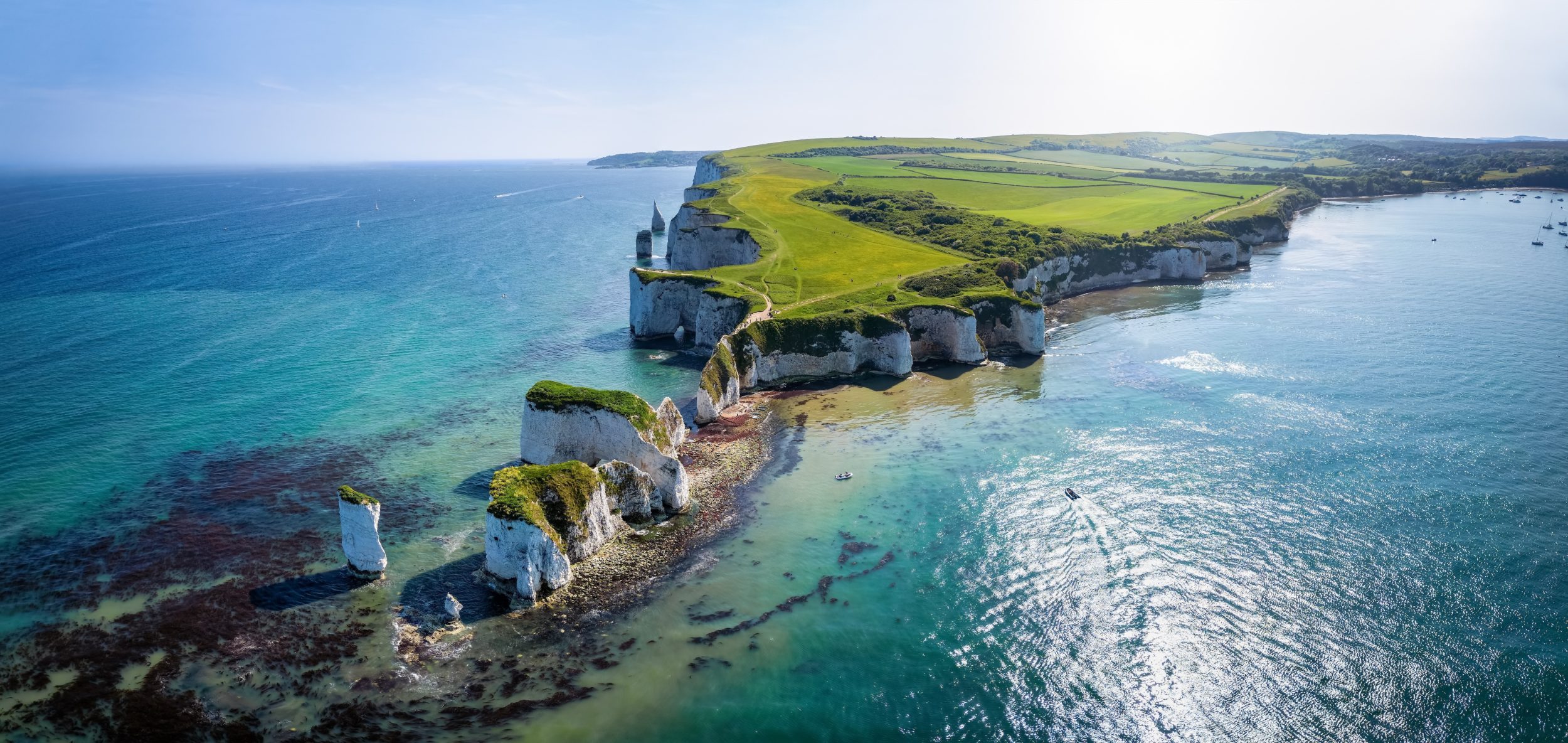
t the eastern edge of the bay, the iconic Old Harry Rocks rise from the sea, dramatic white chalk stacks sculpted by wind and waves over thousands of years. Millions of years ago, they formed part of the same chalk ridge that once connected Dorset with the Isle of Wight before coastal erosion created the spectacular sea stacks we see today.
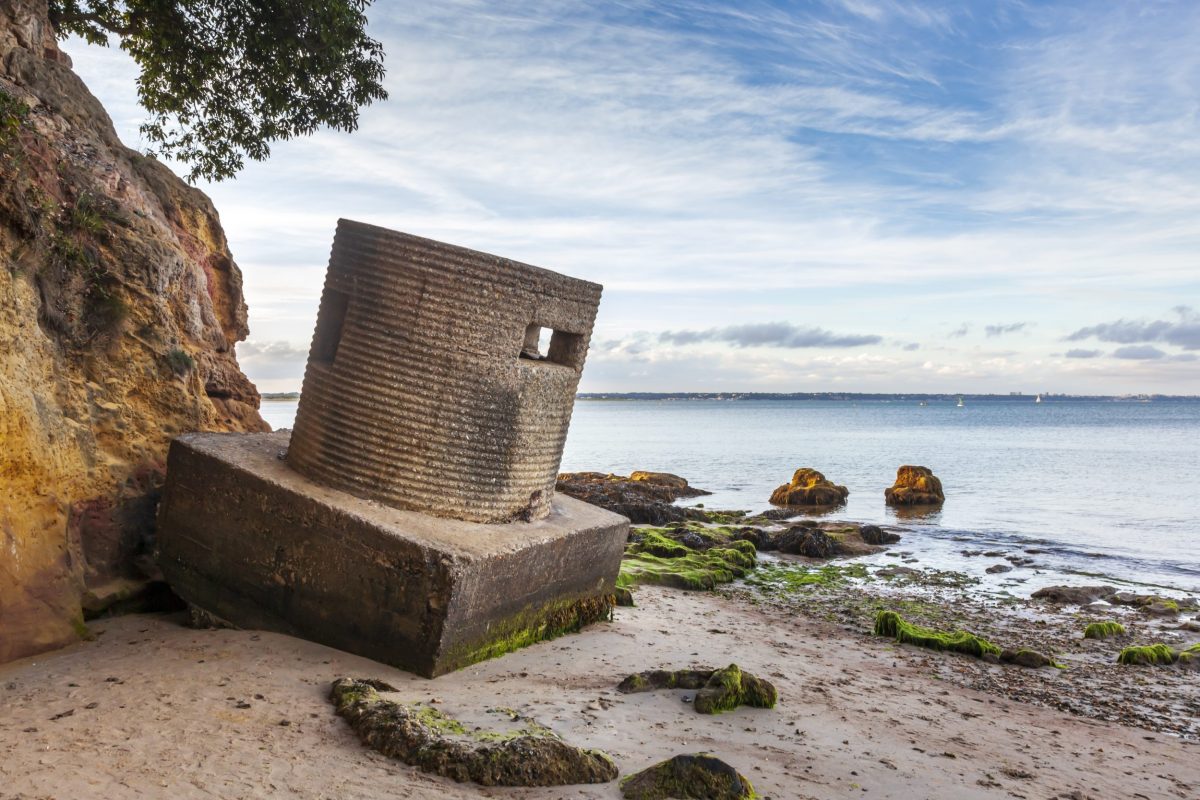
But this coast has witnessed far more than the slow work of nature. During the Second World War, practice D-Day landings took place along the bay. From Fort Henry, a concrete observation bunker perched above Middle Beach, Winston Churchill, Eisenhower, and King George VI watched Exercise Smash, a major rehearsal for the Normandy landings.
Explore Studland’s Heritage & History

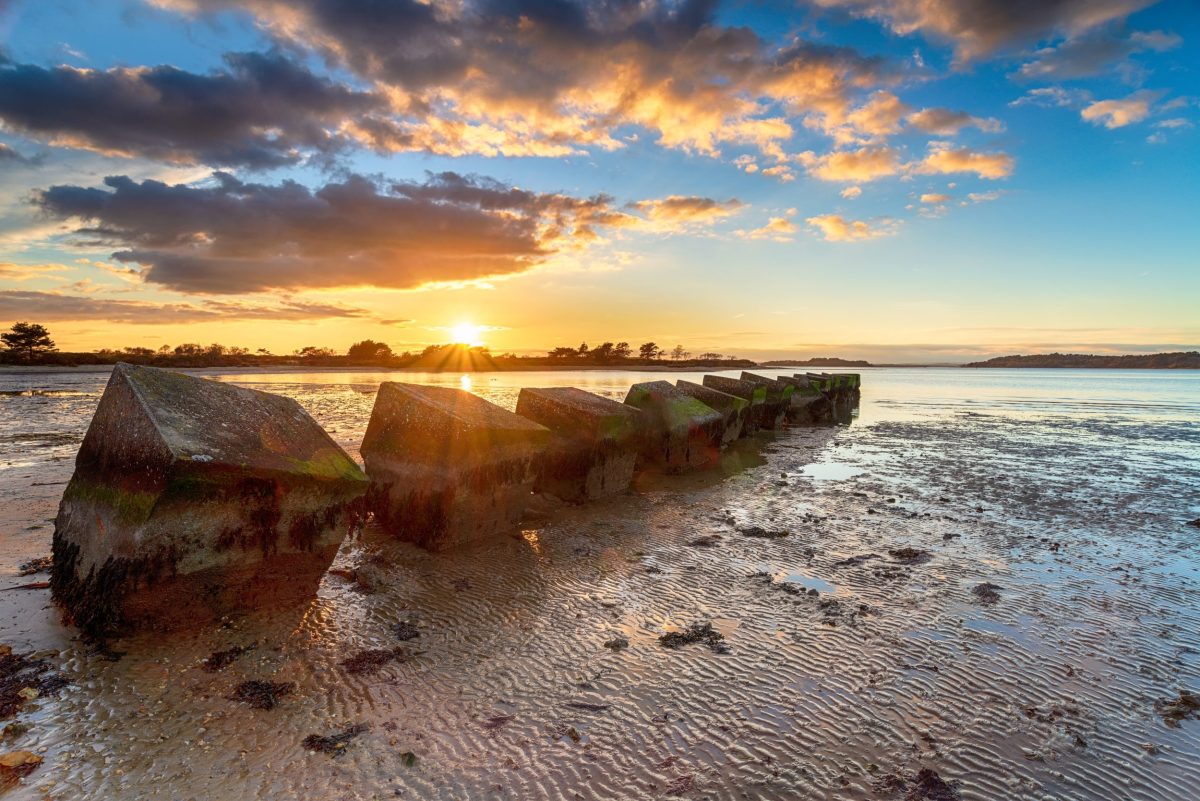
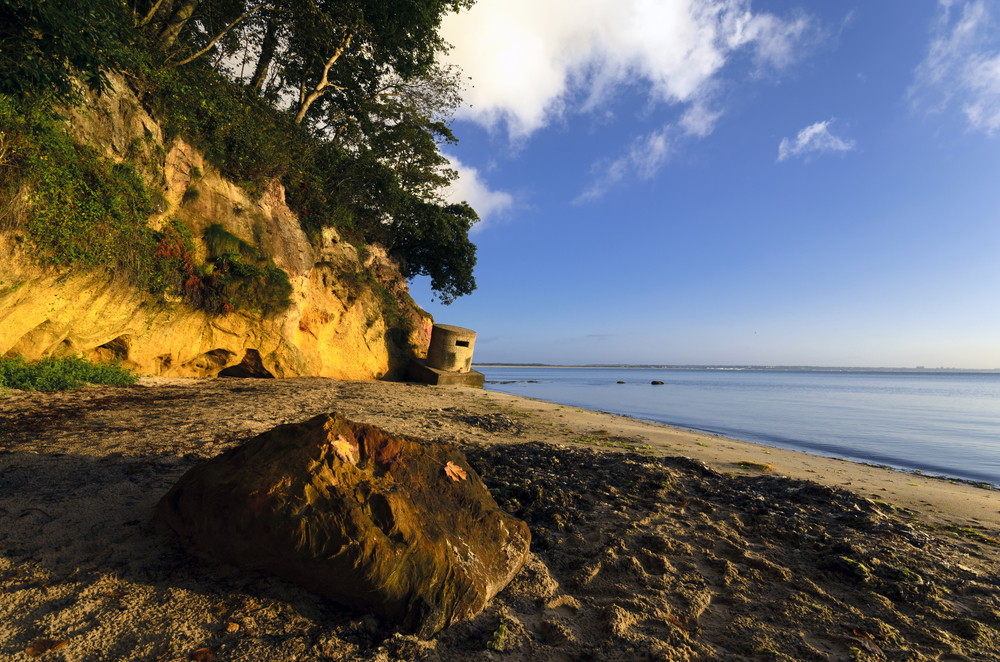
Fort Henry still stands above Middle Beach. You can look out across the same sweeping bay, imagining the tension and anticipation that once filled these waters. Along the shoreline, you’ll also see the imposing concrete anti-tank blocks known as Dragon’s Teeth. Standing inside Fort Henry today, it’s remarkable to imagine Churchill, Eisenhower and King George VI watching hundreds of landing craft preparing for what would become one of the most significant military operations in modern history.
Today, much of Studland is cared for by the National Trust, protecting its rare heathland, dunes, historic farmland and internationally important wildlife habitats. This careful conservation means visitors can experience a landscape that still feels remarkably wild despite its popularity. Studland also has literary charm. Author Enid Blyton spent time at Knoll House, drawing inspiration from the bay and the surrounding countryside for her much-loved novels. For us, it’s this combination of natural beauty and fascinating history that makes Studland somewhere we never tire of returning to.
Why Studland’s History Fascinates Us
Every visit reveals something different. Sometimes it’s standing inside Fort Henry imagining the D-Day rehearsals, other times it’s watching the tide reveal the Dragon’s Teeth or walking above Old Harry Rocks wondering how dramatically the coastline has changed over thousands of years. Few places in Dorset combine geology, military history and spectacular scenery quite so effortlessly.
One of the things we love about Studland is that history isn’t confined to museums. Every walk across the heath, along the cliffs or down onto the beach passes places shaped by ancient geology, wartime history and centuries of Dorset life. It’s one of the few places where every footpath seems to tell another story.
Studland’s story is just one chapter in Dorset’s remarkable past. Continue exploring the dramatic history of Corfe Castle, discover Wareham’s Saxon heritage, uncover the fascinating story of Tyneham, or explore our Curated Guide to Dorchester’s Museums to discover Roman treasures, Thomas Hardy and Dorset’s rich cultural heritage. If you’re interested in Dorset’s wartime history, don’t miss our guides to the history and heritage of Weymouth and Portland, where you’ll uncover the area’s vital role during the Second World War and the preparations for D-Day. Together, these places reveal thousands of years of history across this extraordinary corner of Dorset.
Frequently Asked Questions
Studland’s history stretches back millions of years. Its famous chalk coastline was shaped by ancient geological forces, while the area later became home to farming communities and one of Britain’s most important Second World War training grounds. Today, much of Studland is protected by the National Trust, preserving landmarks such as Old Harry Rocks, rare heathland and the historic coastline where preparations for D-Day once took place.
Yes. Much of Studland Bay, including Knoll Beach, the dunes, heathland and surrounding countryside, is cared for by the National Trust. Their conservation work protects internationally important wildlife habitats, rare heathland, sand dunes and some of Dorset’s most iconic coastal landscapes, helping to preserve Studland for future generations.
Yes. Studland played a vital role in the preparations for D-Day. Fort Henry, overlooking Middle Beach, was used by Winston Churchill, General Eisenhower and King George VI to observe Exercise Smash, one of the largest rehearsals for the Normandy landings. Along the shoreline, you can still see the concrete anti-tank defences known as the Dragon’s Teeth, providing a fascinating reminder of the area’s wartime history.
Old Harry Rocks were formed over thousands of years as the sea gradually eroded the chalk cliffs along Dorset’s coastline. Today they form one of the most recognisable landmarks on the UNESCO Jurassic Coast, standing as spectacular white sea stacks that mark the eastern end of this world-famous coastline.
Yes, although care is essential. The safest way to enjoy spectacular views is from the clifftop paths above Studland. On calm days, local boat trips and experienced kayakers can also enjoy the rocks from the water, offering a completely different perspective. If kayaking, always check sea conditions, wear appropriate safety equipment and never underestimate changing tides and weather.
Studland is famous for its long sandy beach, the dramatic Old Harry Rocks, beautiful heathland and its important role in Britain’s Second World War history. Much of the area is protected by the National Trust, while nearby Fort Henry and the surviving wartime defences tell the story of the D-Day preparations that took place here.
Fort Henry was built as an observation bunker overlooking Studland Bay and played a key role during Exercise Smash, a major rehearsal for the D-Day landings in 1944. Winston Churchill, General Dwight D. Eisenhower and King George VI all watched the exercise from here, making it one of the most historically significant places along Dorset’s coastline.
Yes. Many of the concrete anti-tank blocks, known as the Dragon’s Teeth, remain visible along Studland’s shoreline. Some are easier to spot around low tide, and they provide a fascinating reminder of the extensive coastal defences built during the Second World War.
Yes. Studland forms part of Dorset’s spectacular UNESCO World Heritage-listed Jurassic Coast. While the famous geology continues west towards Lulworth Cove and Durdle Door, Old Harry Rocks mark the eastern end of this extraordinary coastline and remain one of its most photographed landmarks.
Studland is perfectly placed for exploring some of Dorset’s most fascinating historic sites. Nearby you’ll find Corfe Castle, the Saxon town of Wareham, the abandoned village of Tyneham, and Swanage, with its Victorian heritage and famous steam railway. with its Victorian heritage and famous steam railway. Families and anyone interested in Dorset’s prehistoric past should also visit Keates Quarry, where you can see genuine dinosaur footprints preserved in the rock, and The Etches Collection at Kimmeridge, home to one of Britain’s finest collections of Jurassic marine fossils. For even more inspiration, explore our guide to Family Days Out on Dorset’s Jurassic Coast. If you’re planning a family break, our collection of family-friendly holiday cottages provides the perfect base for discovering these remarkable places together.
Many guests choose our Silverlake Estate Collection when exploring the Isle of Purbeck’s remarkable history. Within easy reach of Studland, Corfe Castle, Wareham, Tyneham, Lulworth Cove and the wider Jurassic Coast, it’s an excellent base for discovering some of Dorset’s most fascinating historic places before returning to peaceful lakeside surroundings.