
Half-term days out. Dorset's Ancient Mysteries: Giants, Legends and Secret Places to Explore
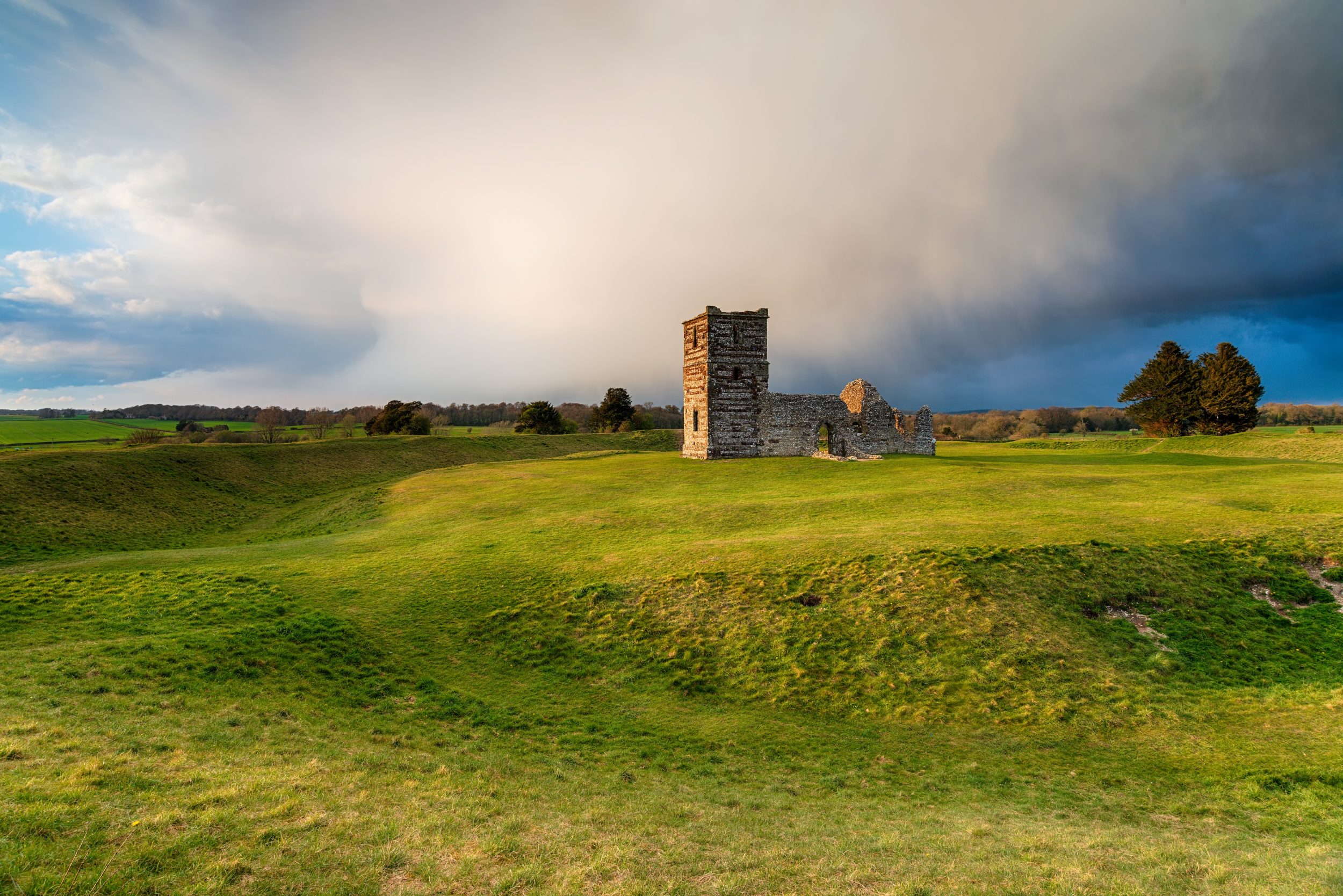
There are parts of Dorset where it’s easy to feel that the landscape is trying to tell you something.
A giant wielding a club has been carved into a chalk hillside. A medieval church stands within an earthwork dating back thousands of years, long before Christianity reached Britain. Stone circles lie beside country lanes. Ancient hillforts have been linked to King Arthur. And on Studland Heath, a 400-tonne boulder supposedly marks the spot where the Devil took a particularly bad aim at Corfe Castle.
Then there are the places that feel mysterious without needing a legend.
We’ve walked along ancient sunken lanes near Symondsbury with our children, explored the enormous ramparts of Maiden Castle, and climbed Chapel Hill at Abbotsbury to St Catherine’s Chapel, with its extraordinary views across Chesil Beach towards Portland.
Having lived in Dorset for more than 15 years, we never really tire of exploring these places.
Partly because there’s nearly always another story to uncover.
Some are supported by archaeology. Others have been passed down through generations of Dorset families. And some probably began because people living hundreds of years ago were looking at exactly the same strange stones, earthworks and ruins that we see today and wondering how on earth they got there.
If you’re staying in one of our Dorset holiday cottages, whether at October half term or any time, these are some of our favourite places to discover Dorset’s ancient mysteries, legends and folklore for yourself.
And we’ll try to separate what we actually know from what Dorset has simply decided makes a much better story.
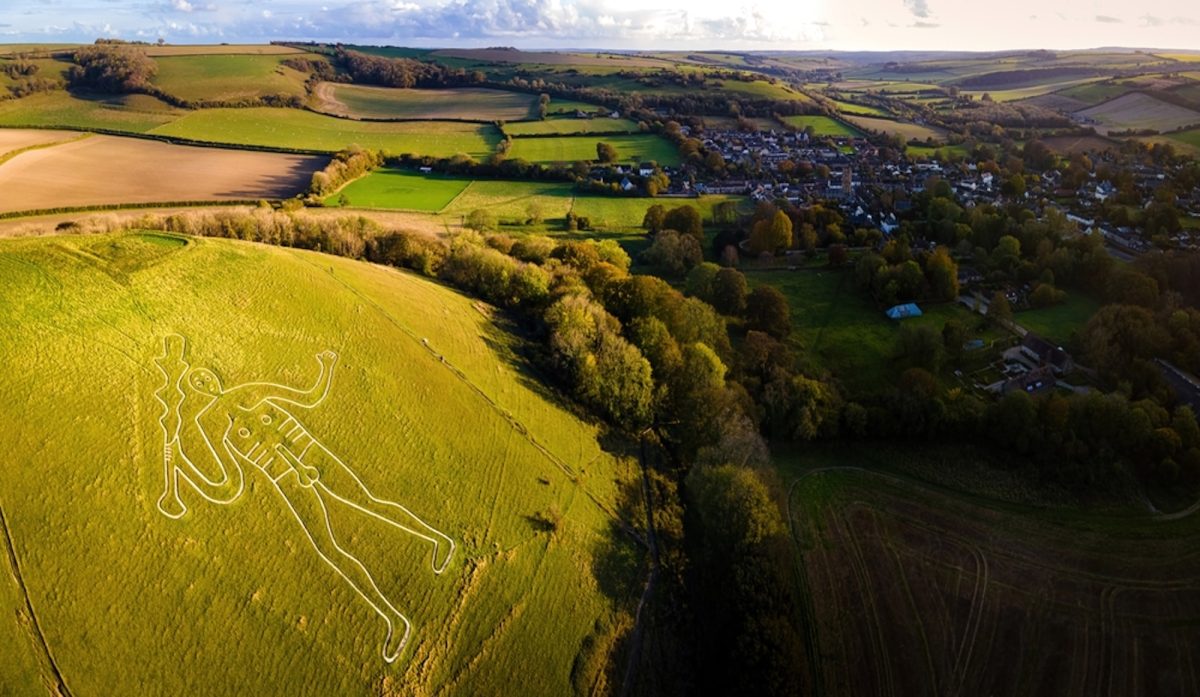
The Cerne Abbas Giant: Dorset’s Greatest Mystery?
There aren’t many Dorset landmarks that raise as many questions as the Cerne Abbas Giant.
Who created him?
When?
Why is he carrying a club?
And there’s also the fairly obvious question of why whoever created him decided he shouldn’t be wearing any clothes.
For centuries, nobody could answer even the first of those questions with certainty.
The enormous chalk figure above Cerne Abbas stands around 180 feet tall and has variously been described as a prehistoric fertility symbol, a Celtic deity, Hercules and even a 17th-century caricature of Oliver Cromwell.
Then science changed the narrative.
Research commissioned by the National Trust used sediment analysis to date the material buried beneath the figure. The results suggest that the Giant was probably first created between AD 700 and 1100.
That places him in the late Saxon period rather than in prehistoric Dorset.
It was a remarkable discovery.
But rather wonderfully, it didn’t actually solve the mystery.
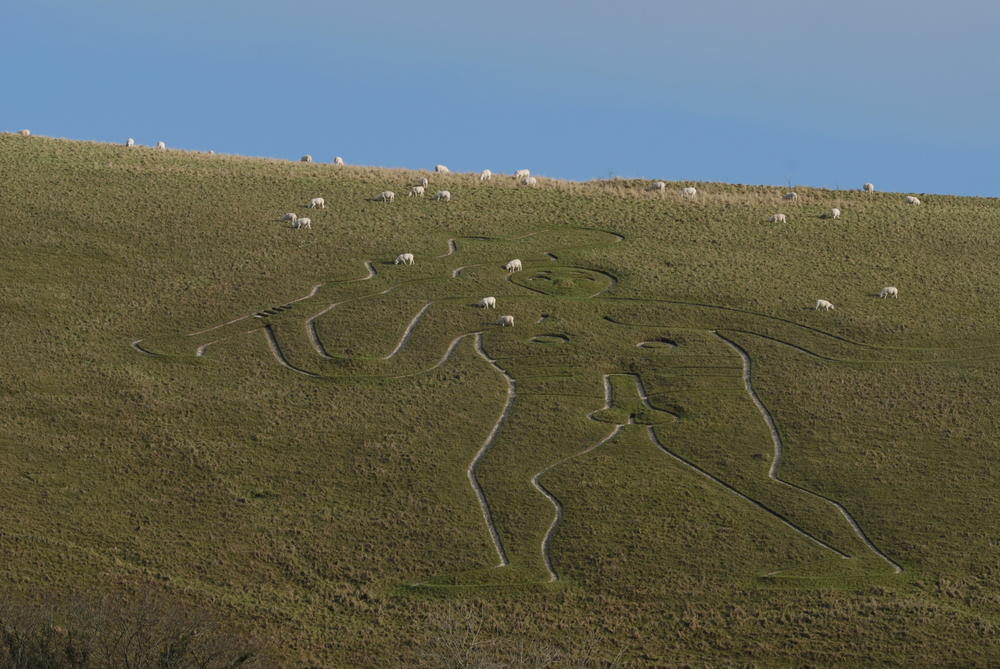
Could the Giant be Hercules?
One intriguing interpretation is that the figure represents Hercules, the hero of classical mythology.
The club certainly fits.
Researchers have even suggested that the Giant may once have had something draped over his outstretched arm, perhaps a representation of Hercules’ lion skin.
Another theory suggests that he may have been associated with a Saxon military gathering place during a period when this part of England was under Viking attack.
Nobody can say for certain.
And then there’s the fertility legend…
Whatever the Giant originally represented, later generations assigned him an entirely different role.
By the Victorian period, he was associated with fertility.
One particularly enduring tradition held that couples struggling to conceive should spend the night on the hillside.
We’ll leave you to investigate the finer details of that Dorset custom yourselves.
There’s also a much more dramatic local story.
According to legend, a real giant once terrorised the surrounding countryside. The people of Cerne Abbas finally killed him as he slept and marked the position of his body by cutting his enormous outline into the chalk.
Archaeology might have narrowed down the time when the Giant was created.
But more than a thousand years later, we still don’t really know who he was.
And that’s certainly part of the fun.
Make a day of it
Don’t just photograph the Giant and leave.
Cerne Abbas itself is a beautiful Dorset village, well worth exploring, with the remains of Cerne Abbey, historic streets and lovely countryside surrounding it.
It’s also easily accessible from our Dorchester holiday cottages or Silverlake Estate and makes a fascinating addition to a day spent exploring the countryside north of Dorset’s county town.
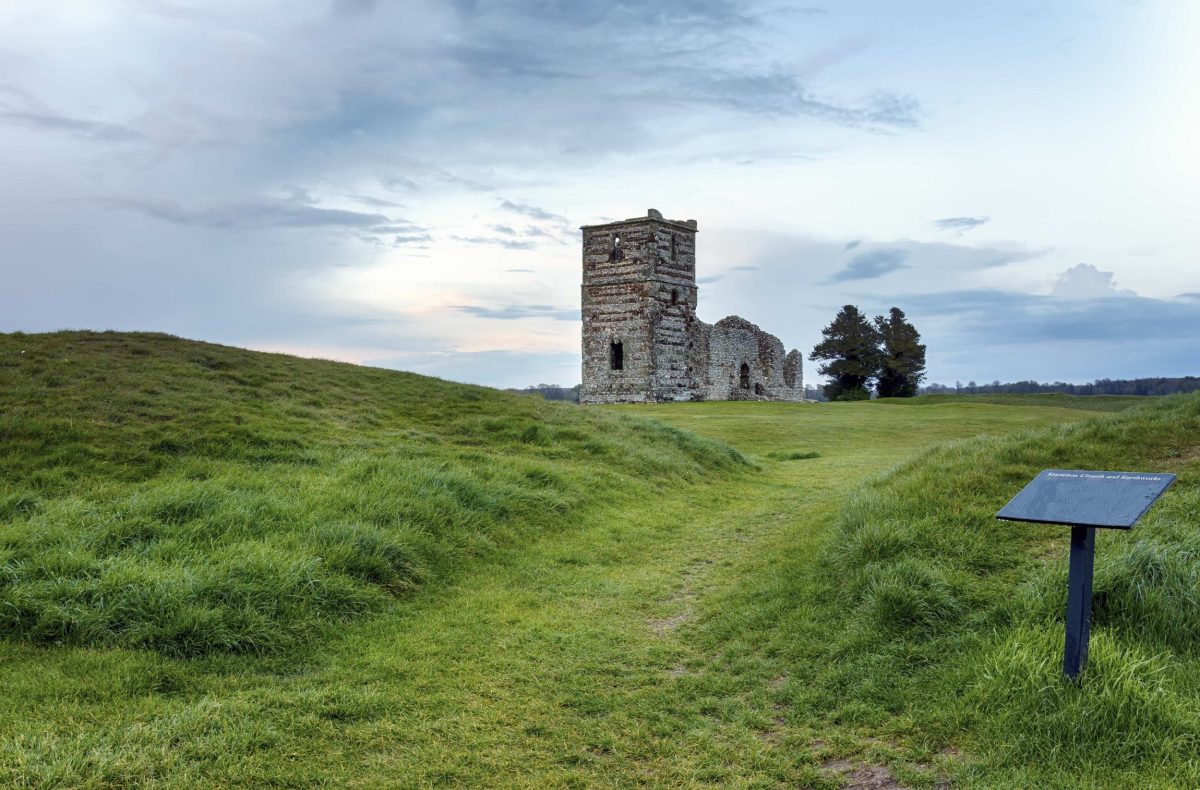
Knowlton Church: A Church Inside a 4,000-Year-Old Sacred Landscape
Knowlton is one of those Dorset places that seems unusual until you know anything about it.
A ruined medieval church stands in isolation in the countryside. Then you notice the enormous circular earthwork surrounding it. And that’s when Knowlton becomes particularly interesting.
The church dates back to the 12th century.
The landscape surrounding it is thousands of years older than it.
Knowlton forms part of an extraordinary complex of Neolithic earthworks and burial monuments, created by communities living here about 4,000 years ago.
Nobody knows precisely what happened within these vast ceremonial circles.
Thousands of years later, however, somebody made the fascinating decision to build a Christian church directly inside one of them.
It’s difficult to imagine a clearer meeting of ancient and medieval Dorset than this.
Dorset’s lost city of seven churches
Before archaeology could explain prehistoric earthworks, local people had their own explanations.
In the 18th century, antiquarian William Stukeley recorded a local story that Knowlton had once been a great city with seven churches, which were subsequently destroyed in war.
There weren’t seven churches.
English Heritage suggests that people may simply have seen the various prehistoric circular earthworks and assumed that each marked the remains of another church.
We love that explanation.
It’s a wonderful example of folklore doing the job that archaeology would eventually take over: people saw something mysterious in their landscape and created a story to explain it.
Then the Devil stole the bell
Knowlton’s stories become even stranger.
According to another local legend, the Devil stole the church bell and threw it into a nearby river.
An alternative version says humans stole it before witchcraft intervened.
And then there’s the so-called ghost trap.
The unusual position of the henge’s ditch has led to the suggestion that it might have been designed to contain spirits within the earthwork.
It’s an intriguing idea, and English Heritage itself addresses the interpretation, but it certainly isn’t an established explanation for why Neolithic communities built henges.
What we do know is that Knowlton was important to people for thousands of years.
Standing inside the ruined church, surrounded by a prehistoric ceremonial landscape, remains one of Dorset’s most unusual historical experiences. Knowlton also features in our guide to haunted places in Dorset, where we explore more of the ghost stories, strange legends and supposedly haunted locations found across the county.
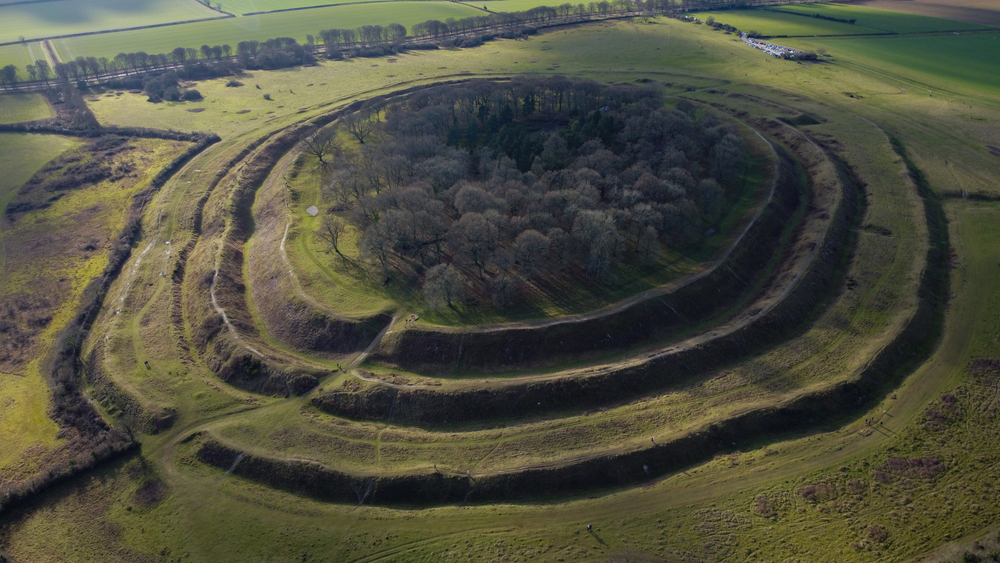
Badbury Rings: Did King Arthur Fight Here?
Dorset has several spectacular Iron Age hillforts, but Badbury Rings has an additional claim to fame.
It might, and ‘might’ is doing quite a lot of work here, have a connection with King Arthur.
The archaeology is impressive enough without his involvement.
People were active around Badbury thousands of years ago, and the hillfort’s innermost defences are thought to date from around 500–600 BC.
The Durotriges later occupied this part of Dorset before the Roman conquest, and Roman roads also converge around the site.
But one theory identifies Badbury with the mysterious Battle of Mons Badonicus, also known as Mount Badon.
This was supposedly a great British victory over the Anglo-Saxons around the late fifth or early sixth century.
Centuries later, the battle became linked to King Arthur.
Could Badbury have been the battlefield of Arthur?
Nobody knows.
There isn’t even agreement on precisely where the Battle of Badon took place.
But walk around Badbury’s enormous defensive rings, and it’s easy to understand why generations have imagined armies gathering here.
Later folklore went considerably further, with stories of buried treasure, ghostly warriors, and even Arthur himself supposedly resting beneath the earth.
Archaeology reveals an Iron Age fortress.
Folklore gives us King Arthur.
We’d suggest enjoying both, while remembering they’re not quite the same.
This is a lovely place for a walk, especially when combined with nearby Kingston Lacy.
There are wonderful views across the surrounding countryside, although the ground is uneven and the site is exposed to the elements.
Dogs are welcome, but livestock graze here and seasonal restrictions apply, so we’d always follow the National Trust’s latest guidance.
Agglestone Rock: The Day the Devil Missed Corfe Castle
This is one of our favourite Dorset legends to tell to children.
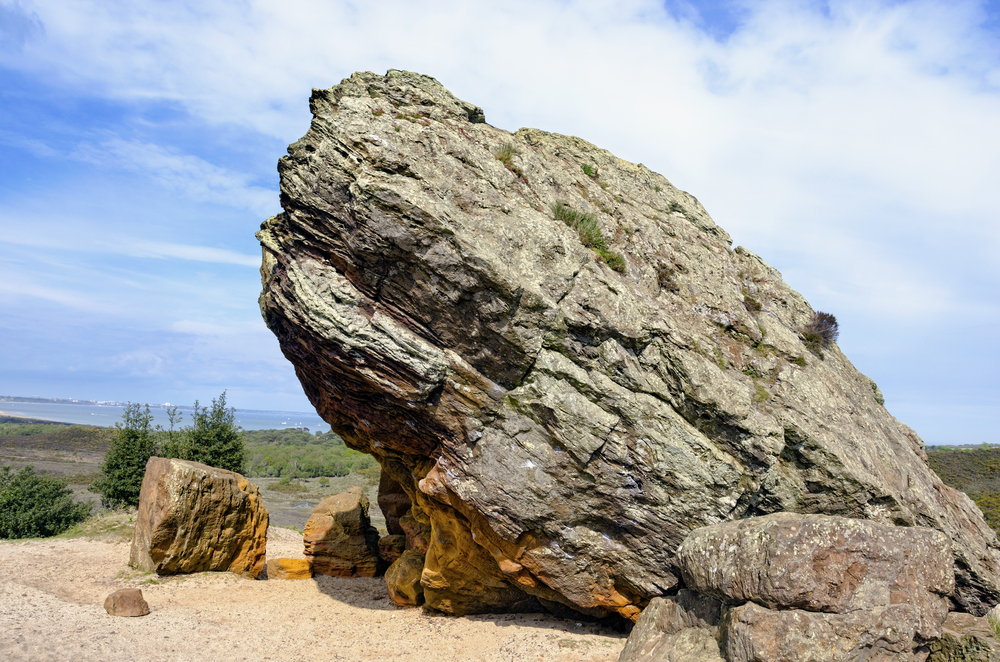
Head onto Studland and Godlingston Heath, and you’ll eventually come across an enormous boulder improbably perched on the landscape.
This is Agglestone Rock.
It weighs about 400 tonnes.
Geology has a perfectly sensible explanation for its presence.
Dorset folklore has a much better version.
Apparently, the Devil was sitting on the Needles off the Isle of Wight when he looked across the water and spotted Corfe Castle.
For reasons that are somewhat unclear, he took offence.
So he hurled something enormous towards the castle.
And missed.
The projectile landed on Studland Heath, forming Agglestone Rock.
Different versions change both the projectile and the intended victim. It’s sometimes called the Devil’s Anvil or Devil’s Nightcap, while other stories identify various religious buildings as his target.
But we particularly like the Corfe version.
Especially because you can look across the Purbeck landscape towards the castle and contemplate just how badly the Devil misjudged the distance.
A brilliant family walk
This is one we’d particularly recommend to families.
The walk across the heath feels wonderfully different from Dorset’s coastal paths, with open heathland, wildlife and sweeping views towards Poole Harbour and the Purbeck Hills.
And giving children a 400-tonne rock, supposedly thrown by the Devil, to find makes the walk considerably more interesting.
The Nine Stones: A 4,000-Year-Old Dorset Puzzle
We’ve driven along the A35 near Winterbourne Abbas many times.
Just yards away from all that traffic lies something created around 4,000 years ago.
The Nine Stones.
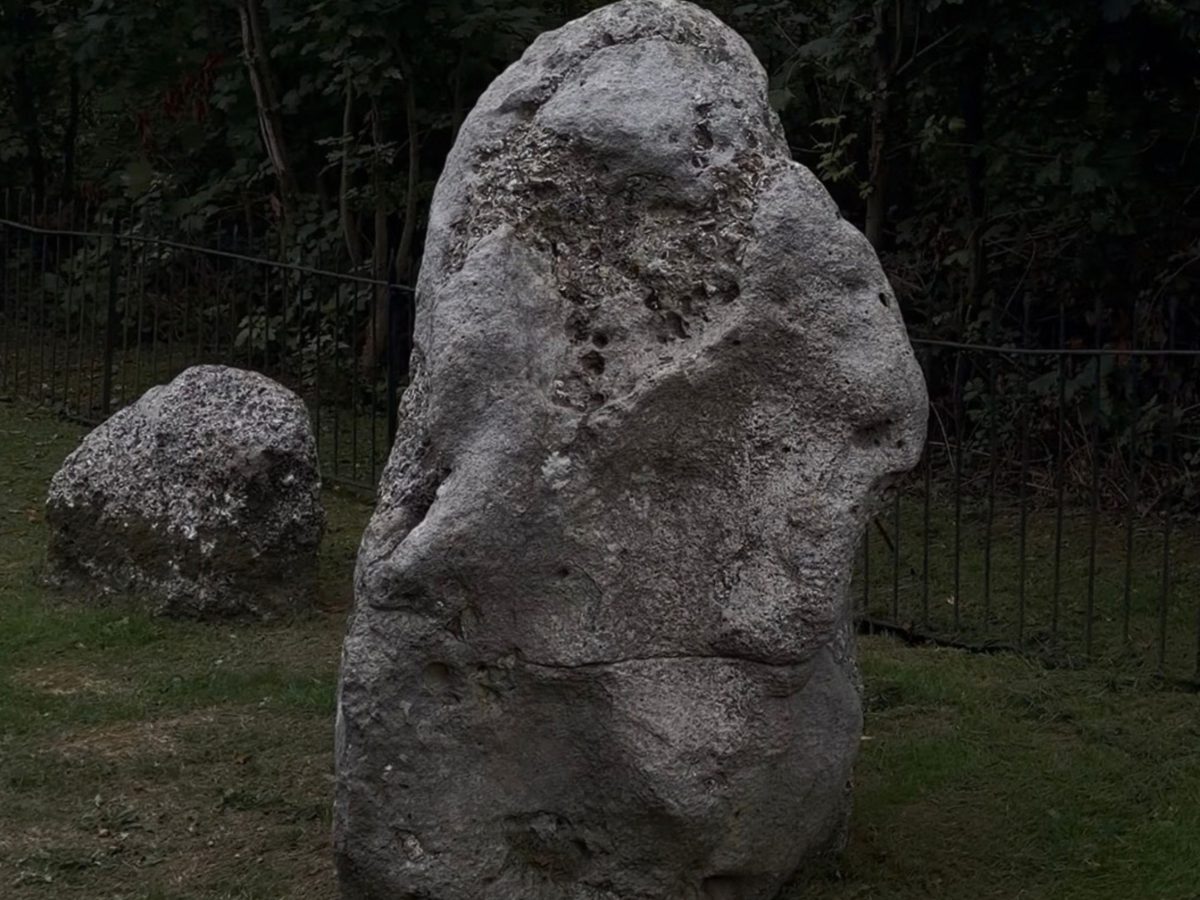
Hidden within a small wooded glade, this prehistoric stone circle is wonderfully understated.
There are no enormous standing stones.
No visitor centre.
No grand entrance.
Just nine irregular stones gathered quietly among the trees.
English Heritage dates stone circles of this type to the late Neolithic and the Middle Bronze Age, roughly 2500–1000 BC.
Although we know monuments like these had ritual significance, nobody can tell us exactly what happened here.
Some stone circles elsewhere appear to be associated with burials or seasonal alignments.
But the precise purpose of the Nine Stones remains unknown.
Which inevitably left plenty of scope for stories.
Across Britain, mysterious stones have been explained as people turned to stone, objects hurled by supernatural figures, or remnants of strange gatherings.
The true explanation for Dorset’s Nine Stones disappeared thousands of years ago.
In many ways, that’s what makes them so fascinating.
Worth knowing
The Nine Stones is a small site rather than a major attraction, so we’d combine it with another site.
Maiden Castle is nearby, while the prehistoric burial mounds at Winterbourne Poor Lot and across the wider South Dorset Ridgeway offer plenty more ancient Dorset to explore.
It’s also particularly convenient for guests staying at Silverlake Estate, providing you with an easy route into some of Dorset’s most remarkable prehistoric landscapes.
St Catherine’s Chapel: Wishes Above Abbotsbury
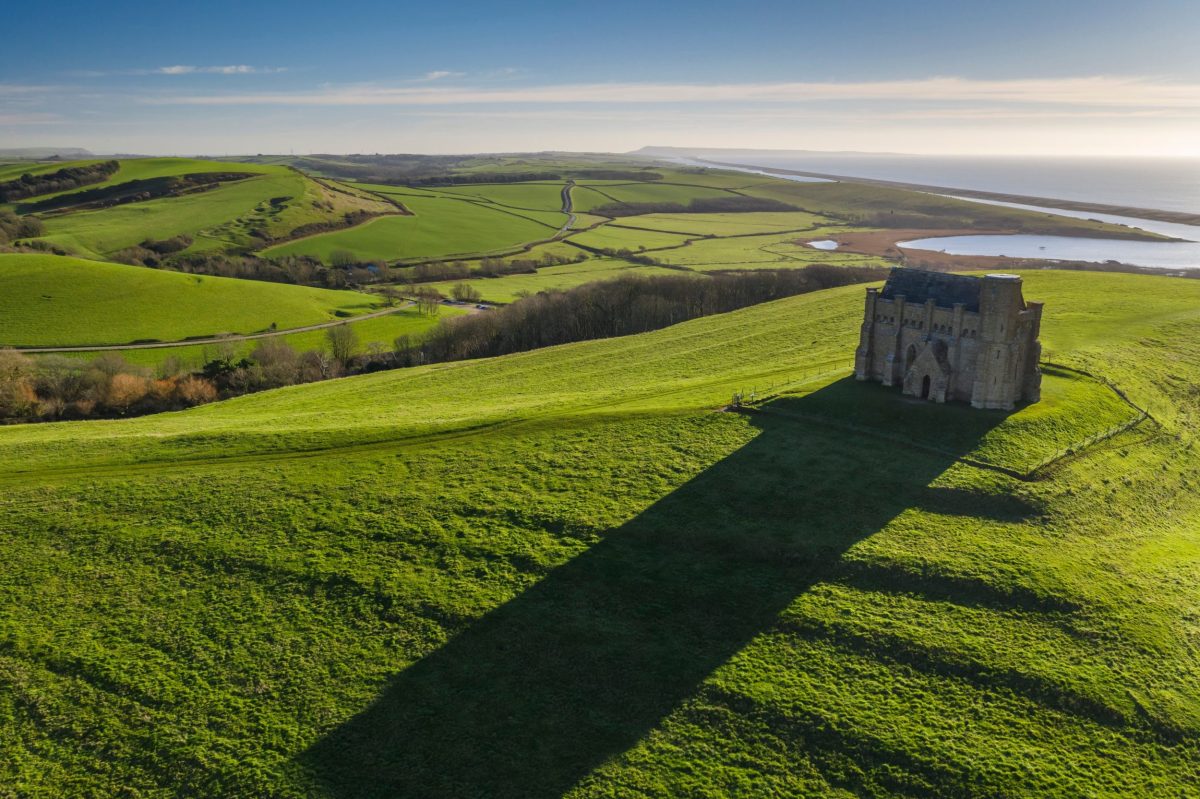
There are few Dorset buildings with a more spectacular setting than St Catherine’s Chapel.
We’ve climbed ourselves, and the view from the top is worth every step.
Below you lies Abbotsbury.
Beyond it lies the Fleet.
Then Chesil Beach.
And in the distance, the unmistakable outline of Portland appears.
The chapel itself dates from the late 14th century and was built by the monks of nearby Abbotsbury Abbey as a place for pilgrimage and retreat.
But St Catherine’s has another story.
Looking for a husband?
St Catherine of Alexandria became the patron saint of unmarried women, and for generations young women from Abbotsbury climbed the hill to seek her help in finding a husband.
There are three curious wishing holes in the chapel.
The tradition involved placing a knee into one and the hands into the other two while asking St Catherine for help.
A local rhyme even asked for a husband who was handsome, rich, and nice and preferably arrived fairly quickly.
It appears that Dorset matchmaking predates dating apps by several centuries.
The tradition persisted into the 19th century.
Whether St Catherine had a particularly high success rate isn’t recorded.
Abbotsbury’s lost abbey
Back in the village, another mystery lies partly hidden, in plain sight.
Abbotsbury once housed a wealthy Benedictine monastery founded in 1044.
At its height, the abbey would have dominated village life.
Then came Henry VIII and the Dissolution of the Monasteries.
The abbey was dissolved in 1539, and much of it disappeared.
Look carefully around Abbotsbury today, however, and you will find pieces of that lost medieval world.
The enormous tithe barn survives, along with fragments of the monastic buildings and the hilltop chapel.
We think that’s one of the pleasures of exploring Abbotsbury.
You aren’t simply visiting a ruin.
You’re piecing together a village that looked completely different hundreds of years ago.
For guests in our Weymouth holiday cottages, Abbotsbury makes for a particularly easy day out along the coast road, and the drive itself offers some of our favourite views in Dorset. We’ve produced a complete guide to exploring Abbotsbury, should you wish to make a day of it.
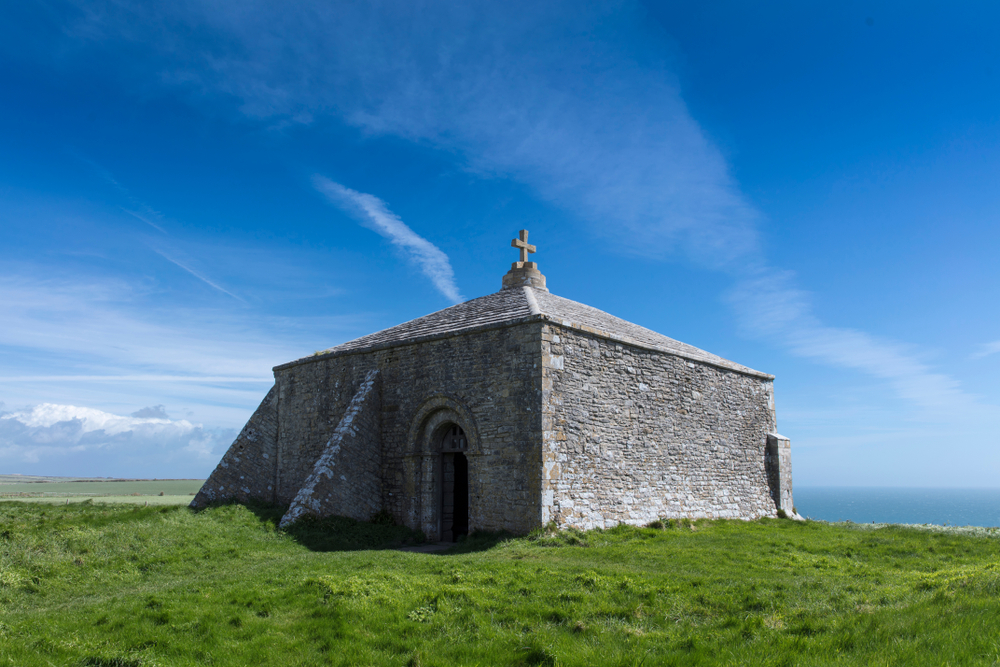
St Aldhelm’s Chapel: A Mystery on the Edge of the Sea
We’ve walked this stretch of the Purbeck coast ourselves, including routes around Worth Matravers, Winspit and St Aldhelm’s Head.
It’s spectacular.
But St Aldhelm’s Chapel is especially intriguing.
The small square stone building stands alone, high above the sea, on one of Purbeck’s most dramatic headlands.
It dates from the 12th century and is dedicated to St Aldhelm, Sherborne’s first Bishop.
But even historians aren’t entirely certain why it was built here.
Historic England notes how unusual the building is.
It’s square rather than conventionally church-shaped, has very little natural light, and stands within an earlier Christian enclosure where burials have also been found.
It may have served as a chapel for a small religious community.
Its position above a notoriously dangerous coastline has also fuelled stories linking it to sailors and shipwrecks.
One later legend tells of a bride and groom who drowned when their boat was caught in a storm near the headland, and the chapel is said to have been built in their memory.
It’s a beautiful story.
But that’s how we’d treat it: a story rather than documented history.
One for walkers
We wouldn’t recommend St Aldhelm’s as a place to simply drive to, photograph and leave.
The pleasure is in reaching it.
A walk from Worth Matravers takes you through some of our favourite Purbeck countryside, and longer routes can include Winspit, Chapman’s Pool and stretches of the South West Coast Path.
Just remember this is serious coastal terrain.
Wear appropriate footwear, check the weather, and keep well away from cliff edges.
Symondsbury Holloways: Dorset’s Secret Passages
This one comes with a particularly enthusiastic recommendation from our family.
We took our children to explore the Holloways near Symondsbury when they were younger, and they absolutely loved them.
It’s easy to understand why.
Shute’s Lane and Hell Lane don’t feel like ordinary paths.
They feel like secret passages.
The lanes have gradually sunk below the surrounding landscape as centuries of traffic, animals, carts, water and erosion have worn them deeper and deeper into the ground.
Today you’re walking between towering banks, tangled with tree roots and vegetation.
In places, the canopy closes overhead.
Then you start spotting faces and strange carvings in the rockwork.
For children, it feels like stepping into another world.
But the magic has a real explanation
The word holloway derives from the Old English hola-weg, meaning a sunken road.
These weren’t built as mysterious tunnels.
They were working their routes through the landscape.
Generations travelled along them until human use and natural erosion gradually formed the extraordinary passages we see today.
Of course, that hasn’t stopped folklore from taking over.
There are stories of smugglers, mysterious travellers and fairy music linked to ancient holloways.
Symondsbury has embraced the sense of mystery as well, with maps and information to help families search for the carvings and ‘Magical Markings’ hidden along the routes.
This is exactly the sort of Dorset place we love recommending because children have an adventure while adults discover something genuinely fascinating about the landscape.
No screens are required.
Our tip
Wear decent shoes.
Even when the surrounding countryside seems dry, Holloways can be muddy and slippery beneath the trees.
For guests exploring West Dorset from one of our family-friendly Dorset cottages, we’d be happy to add this to the list.
The Dorset Ooser: Dorset Folklore Gets Really Strange
Not all Dorset mysteries are carved into hillsides or buried in fields.
Some were carried around the villages.
And few are stranger than the Dorset Ooser.
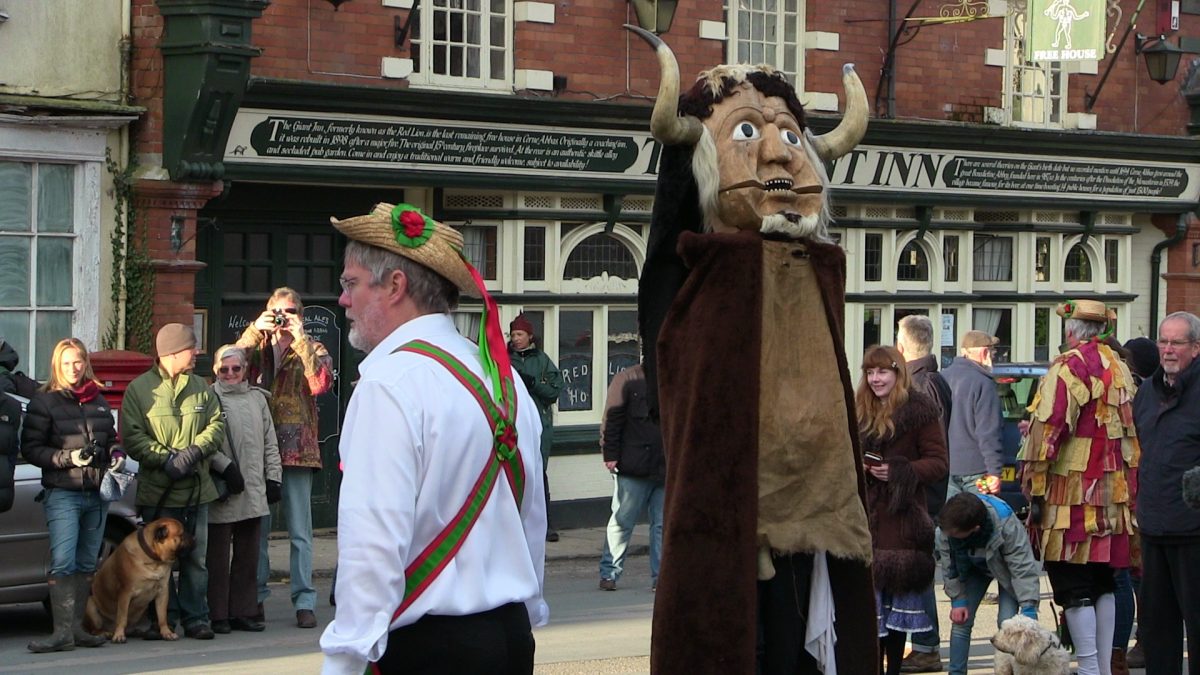
The original Ooser was a large wooden mask from Melbury Osmond, featuring horns, a beard and a distinctly unsettling expression.
Exactly what it was originally used for remains uncertain.
It has been connected with village customs, folk performances and seasonal traditions.
Later writers have interpreted it as ranging from a fertility figure to a surviving pagan spirit.
That’s where we need to be slightly careful.
There’s no strong evidence that the Ooser represents the direct survival of a prehistoric Dorset religion.
What we do have is a fascinating piece of relatively recent Dorset folk culture that looks ancient enough to prompt people to invent much older explanations for it.
And perhaps that’s even more interesting.
Folklore doesn’t necessarily remain unchanged for thousands of years.
Communities continually reinvent it.
When the Devil Built Dorset
Spend enough time researching Dorset folklore, and you’ll notice the Devil was apparently extremely busy here.
He threw stones.
He stole church bells.
He interfered with buildings.
And he was frequently blamed whenever local people encountered something in the landscape they couldn’t explain.
Dorset isn’t unusual in this respect.
Before archaeology could date stone circles and prehistoric earthworks, communities had developed stories to explain them.
An enormous boulder in an unexpected place?
The Devil threw it.
A strange group of stones?
Someone had been turned to stone.
A church bell mysteriously missing?
The Devil took it.
A prehistoric earthwork that nobody understood?
Perhaps it contained spirits.
These stories aren’t archaeological explanations.
But they are historically interesting because they show how earlier generations interpreted the same landscapes we’re exploring today.
That’s really what makes Dorset folklore so fascinating.
Three Dorset Mystery Trails We’d Recommend
You could visit these places separately.
But some work particularly well together.
The Cerne & Ancient Dorset Trail
Cerne Abbas Giant. Cerne Abbas. Nine Stones. Maiden Castle. Dorchester
Start with Dorset’s most famous chalk figure, then explore the village of Cerne Abbas.
From there, head towards Winterbourne Abbas and the Nine Stones, then continue to Maiden Castle.
Finish in Dorchester, perhaps with a visit to the Dorset Museum & Art Gallery, where you can place much of what you’ve seen within a much broader archaeological narrative. There are plenty more museums in Dorchester, and we’ve recommended some of the best in our curated guide.
For guests staying in our Dorchester holiday cottages or at Silverlake Estate, this is an excellent way to spend a day exploring ancient Dorset without travelling long distances.
The Purbeck Legends Trail
Agglestone Rock. Corfe Castle. Kingston. Worth Matravers & St Aldhelm’s Head
This one needs a full day, and we’d probably split it over two if you want a proper walk.
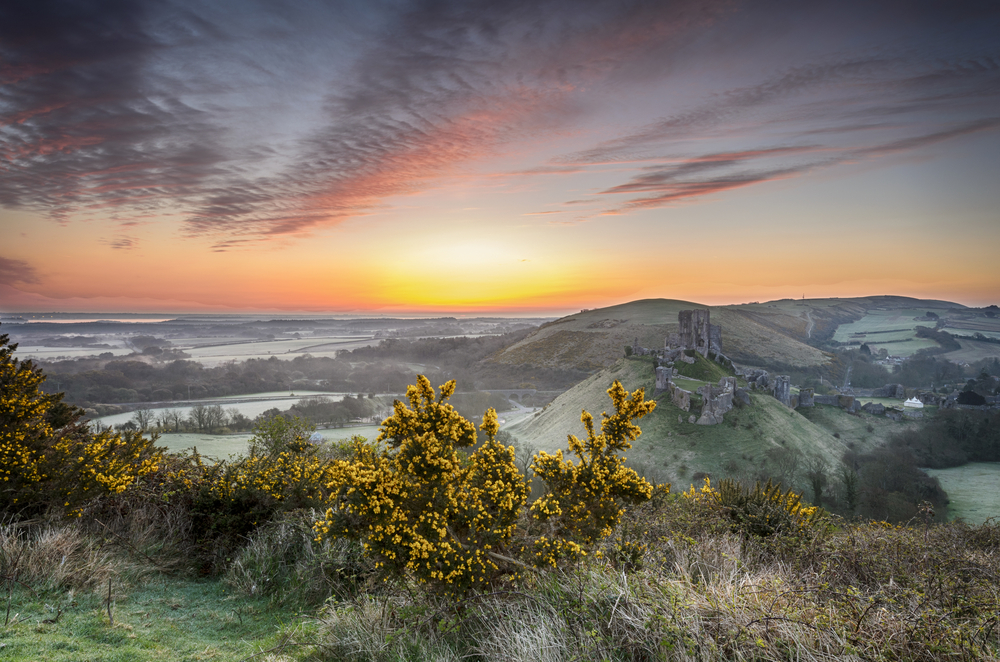
Begin at Agglestone Rock before heading towards Corfe Castle. If the ruins tempt you to explore more of Dorset’s fortresses and strongholds, our guide to castles in Dorset brings together some of the best-known castles, forts and historic defensive sites across the county. If you’re planning to spend a few days exploring Purbeck’s ancient landmarks and coastal scenery, our holiday cottages near Lulworth Cove are worth considering. Our handpicked cottage in Winfrith Newburgh offers a peaceful village base for discovering Corfe Castle, the Jurassic Coast and the surrounding countryside.
From Corfe, the huge Victorian church at Kingston is worth a look. St James’s is often called the Cathedral of Purbeck because its scale seems completely disproportionate to the tiny village around it.
Despite occasional confusion, it isn’t an ancient “Abbey of Purbeck”.
Then head towards Worth Matravers for a walk through the Purbeck landscape towards St Aldhelm’s Head.
There are giants, Devil stories, castles, mysterious chapels and some extraordinary scenery, all packed into a surprisingly small part of Dorset.
The West Dorset Legends Trail
Abbotsbury. St Catherine’s Chapel. Symondsbury Holloways
This is perhaps the most family-friendly of the three options.
Start in Abbotsbury and climb to St Catherine’s Chapel.
Explore the remains of the abbey and village, then follow the coast west towards Symondsbury.
Then swap medieval saints and monasteries for the children’s adventure of exploring Shute’s Lane and Hell Lane.
If you’re staying in one of our luxury holiday cottages in Dorset, we’d take our time with this route rather than treating it as a checklist.
Have lunch somewhere along the way, explore the villages, and leave enough time for walking.
That’s when Dorset is at its best.
For inspiration, we’ve written a guide to exploring Abbotsbury, Burton Bradstock and West Bay.
Archaeology, Folklore or Something in Between?
One thing becomes very obvious as you start exploring Dorset’s legends.
Fact and folklore frequently become entangled.
The Cerne Abbas Giant is real. Scientific testing suggests he was created in the late Saxon period. Whether he represents Hercules remains a matter of interpretation.
Knowlton’s prehistoric henges are real. Its city of seven churches and the bell-stealing Devil belong to folklore.
Badbury Rings is an Iron Age hillfort. Its identification as King Arthur’s battlefield remains unproven.
Agglestone Rock weighs about 400 tonnes and is a natural geological feature. It wasn’t actually thrown from the Isle of Wight by the Devil.
At least, geology says it wasn’t.
St Catherine’s Chapel was indeed a medieval pilgrimage site. The wishing tradition developed around the saint and the chapel over generations.
And Symondsbury’s Holloways really are ancient routes, gradually worn into the landscape over centuries. Their fairy-tale atmosphere is something each generation gets to rediscover for itself.
You’ll also encounter modern ideas about ley lines, earth energy and mysterious alignments at several ancient sites in Dorset.
They’re interesting as part of the ongoing folklore surrounding these places, but they’re not established archaeological explanations.
We don’t think making that distinction spoils the stories.
Quite the opposite.
Knowing what’s genuinely ancient often makes these places even more remarkable.

Exploring Ancient Dorset with Children
History becomes much more interesting for children when there’s something to discover.
A 400-tonne rock thrown by the Devil is considerably easier to sell than “Would anyone like to go for another walk?”.
We’ve learned this ourselves over plenty of family days out.
Turn Agglestone into a hunt for the Devil’s Rock.
Look for carvings and faces in Symondsbury’s Holloways.
Try to work out how the Nine Stones came to be there.
Stand beneath the Cerne Giant and let everyone propose their own theory about who he is.
Climb the enormous ramparts of Maiden Castle and imagine what the landscape looked like two thousand years ago.
That’s why these places are so well suited to families.
They’re not merely historic sites where children are expected to read an information board.
The landscape itself becomes the story.
For families staying in our family-friendly holiday cottages in Dorset, many of the surrounding attractions cost little or nothing to explore.
Frequently Asked Questions
The Cerne Abbas Giant is probably Dorset’s most famous unsolved historical mystery, but Knowlton Church and Earthworks, the Nine Stones, Agglestone Rock, Badbury Rings and St Aldhelm’s Chapel all combine fascinating history with legends or unanswered questions.
Scientific analysis commissioned by the National Trust suggests the Giant was likely created between AD 700 and 1100, placing him in the late Saxon period. His precise identity and original purpose remain uncertain.
Yes. The ruined 12th-century church stands within a much older Neolithic henge, making Knowlton one of Dorset’s most striking examples of how different periods of religious and ceremonial history have occupied the same landscape.
It has been suggested that Badbury was the site of the Battle of Mons Badonicus, later associated with King Arthur, but the battle’s location — or Arthur’s involvement — remains uncertain. The site’s Iron Age history, however, is very real.
According to Dorset legend, yes. Geologists may offer a slightly different version. Agglestone is actually an enormous natural ironstone remnant, but the story that the Devil threw it at Corfe Castle has become one of Purbeck’s most entertaining legends.
Two of Dorset’s best-known Holloways, Shute’s Lane and Hell Lane, lie near Symondsbury in West Dorset. These ancient sunken routes have been shaped over centuries and are known for their steep banks, tree roots and mysterious carvings.
Absolutely, provided you choose routes appropriate for the children’s ages. Agglestone Rock, Symondsbury Holloways, Cerne Abbas and Maiden Castle can all turn a walk into an adventure. Remote coastal locations such as St Aldhelm’s Head require considerably more care and suitable footwear.
Dorchester and the surrounding countryside are particularly well placed for visits to Maiden Castle, Cerne Abbas, the Nine Stones and Abbotsbury, while Silverlake Estate provides a good base between Dorchester, Purbeck and the Jurassic Coast.
Our Weymouth holiday cottages are also convenient for Abbotsbury, Maiden Castle and Portland. For those drawn to Purbeck’s legends and ancient landmarks, our Lulworth holiday cottages collection includes a lovely cottage in Winfrith Newburgh, well placed for exploring Corfe Castle, Agglestone Rock and the surrounding Jurassic Coast.
Every generation has looked at the same hills, stones, ruins and ancient paths and added another story.
You can explore many of them from our collection of Dorset holiday cottages, from family stays and cottages close to Dorchester and Weymouth to our luxury holiday cottages in Dorset and homes at Silverlake Estate.
Just don’t blame us if your children spend the journey home asking whether the Devil really could throw a 400-tonne rock from the Isle of Wight. We made the mistake of telling ours too.