
Fossil Hunting in Dorset: Our Family Guide to the Best Beaches and Places to Find Fossils
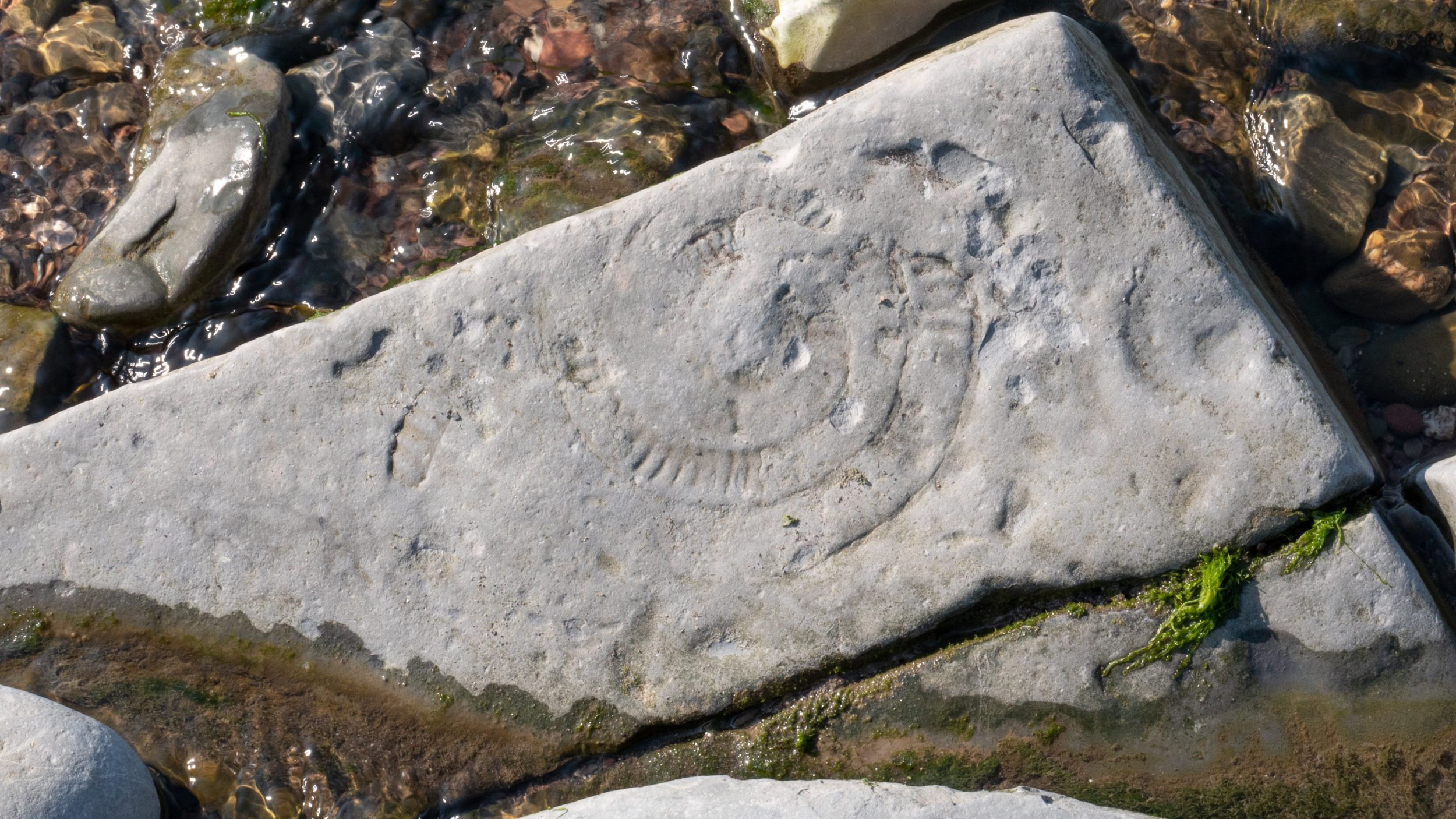
There aren’t many family days out where you can walk onto a beach and come home with something that’s been hidden away for 150 million years.
But that’s part of the magic of fossil hunting in Dorset.
We live on one of Britain’s most extraordinary stretches of coastline. Dorset’s Jurassic Coast tells a story spanning around 185 million years of Earth’s history, and in places you can quite literally pick up pieces of that story from the beach.
It’s something we discovered with our own children when they were young.
Some of their earliest proper fossil-hunting adventures were around Lyme Regis, searching through the stones and shale to see who could make the first discovery. There is something wonderfully addictive about it. Once someone finds the first ammonite or belemnite, suddenly every stone on the beach deserves closer inspection.
Years later, our son went on a school trip to Kimmeridge and returned home with an enormous fossil. It still sits proudly in our lounge today.
We’ve since returned to Kimmeridge as a family, and it remains one of our favourite places for a Jurassic Coast day out, particularly when you combine the bay with the brilliant Etches Collection in the village.
Whether you’re staying in one of our Dorset holiday cottages and looking for something different to do with the children, or you’re simply fascinated by the Jurassic Coast, these are the places we’d recommend starting with.
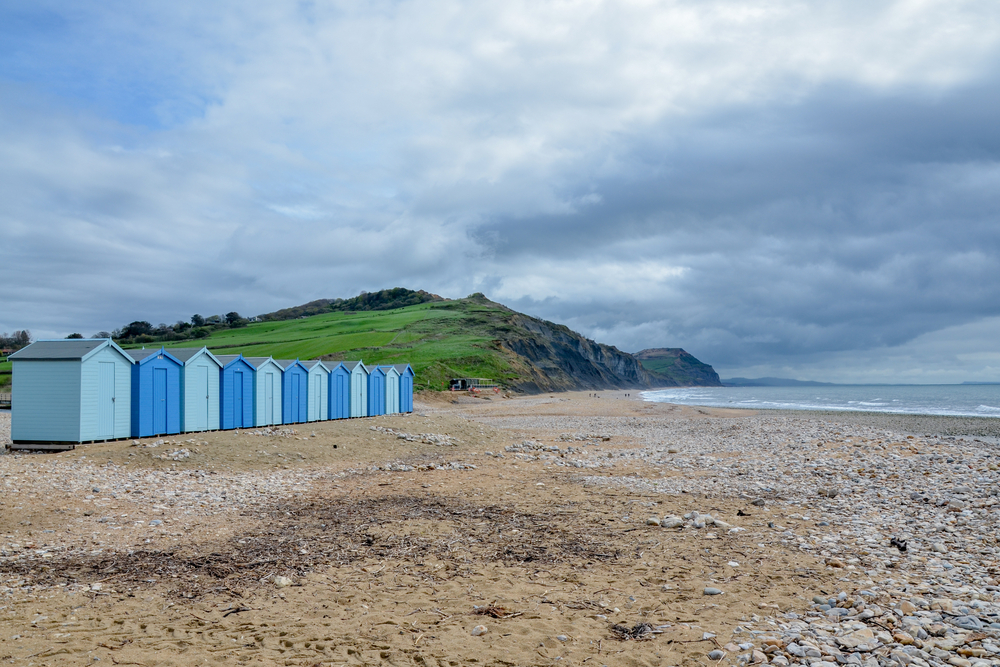
Where is the best place to go fossil hunting in Dorset?
If you’ve never been fossil hunting before, we’d recommend starting with Charmouth or Lyme Regis.
The stretch of coast around the two towns is world-famous for its fossils, and both towns offer expert-led fossil walks. Charmouth is particularly good for families because the Charmouth Heritage Coast Centre sits beside the beach and can help you understand what you’re looking for.
But they’re certainly not the only options available.
From Ringstead Bay near Weymouth to Kimmeridge in Purbeck, Dorset offers several very different fossil-hunting experiences.
At a glance: our favourite Dorset fossil-hunting locations
Best for first-time fossil hunters: Charmouth
Best for combining fossil hunting with a day in town: Lyme Regis
Best near Weymouth: Ringstead Bay
Best for older children and budding palaeontologists: Kimmeridge Bay
Best for dramatic scenery: Seatown
Best for seeing dinosaur footprints: Spyway, near Worth Matravers
And if we were taking children fossil hunting for the first time?
We’d probably book a guided walk in Charmouth or Lyme Regis before trying to go it alone.
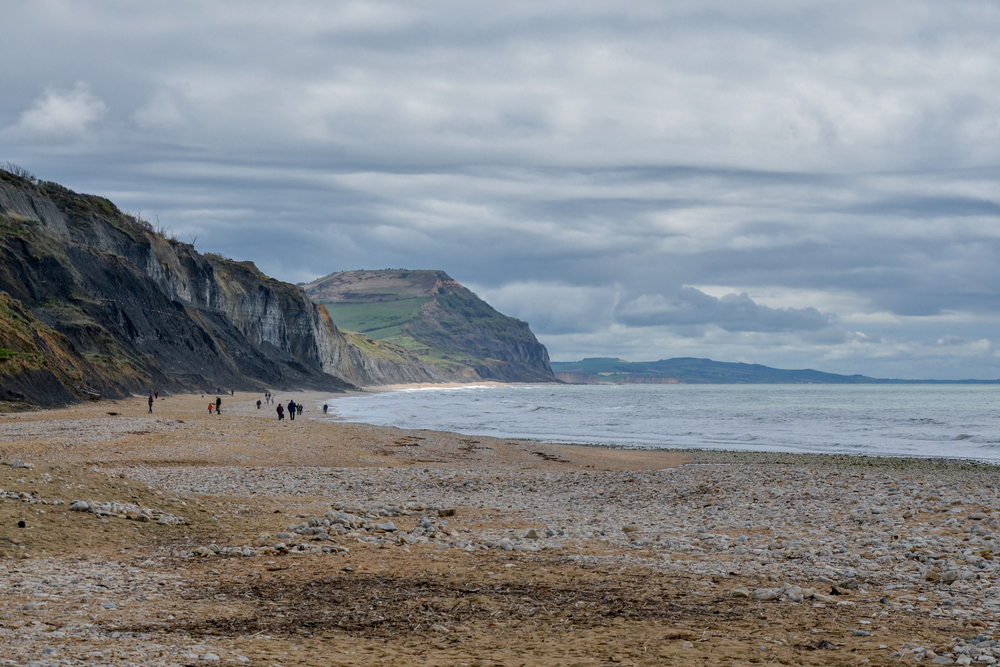
Charmouth. Our choice for first-time fossil hunters
If you’re introducing children to fossil hunting, Charmouth is hard to beat.
The constantly changing cliffs and foreshore around Charmouth reveal fossils in rocks formed during the Jurassic period. Ammonites, belemnites and fossilised shells are among the things you might discover amongst the loose material on the beach.
What really makes Charmouth work for families is the Charmouth Heritage Coast Centre.
It’s right beside the beach. Entry to the centre is free, and its displays give children an idea of what to look for before heading outside.
Even better, the centre runs guided fossil-hunting walks with its wardens. They’re designed as an introduction to fossil hunting and take you onto the beach with someone who knows where to look and, crucially, how to explore the coastline responsibly.
Our advice for a family’s first fossil hunt would be to do exactly that.
Spend some time at the Heritage Coast Centre, join a guided walk if you can, and then you’ll have a much better idea of what you’re looking at the next time you’re wandering along a Dorset beach.
Look out for ammonites, belemnites and fossilised shells.
Curated tip: Guided fossil walks are popular, especially during the school holidays, so check availability before travelling.
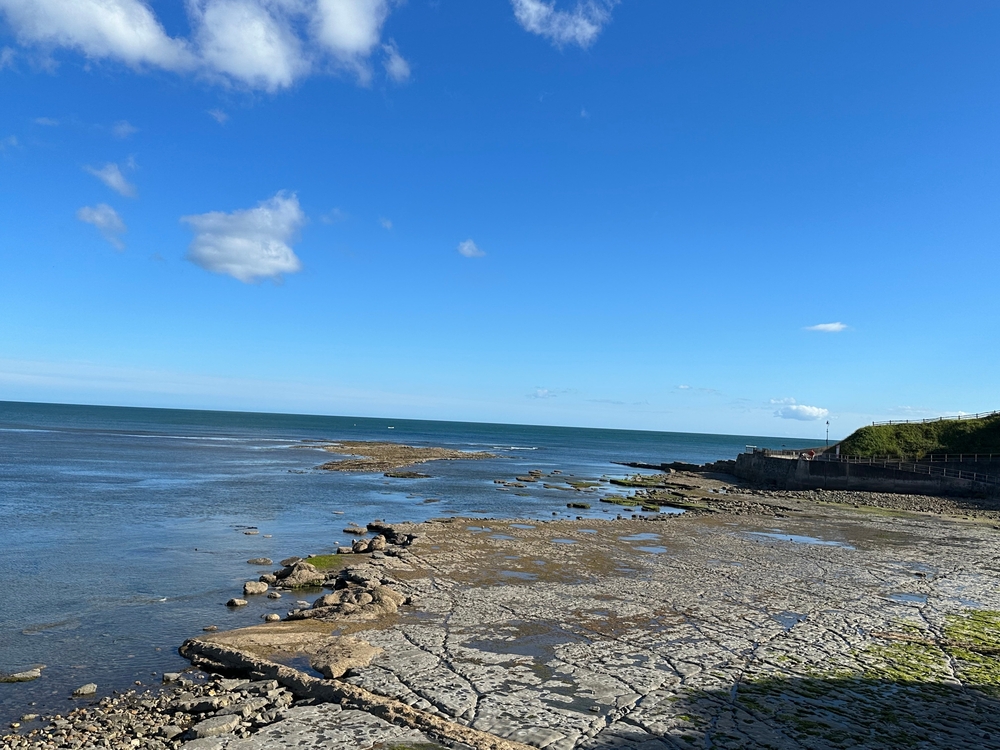
Lyme Regis. Fossils, Mary Anning and a brilliant family day out
Lyme Regis was where our children first became truly excited about fossil hunting, so this one comes with plenty of happy family memories.
It’s also impossible to talk about fossils in Dorset without mentioning Mary Anning.
Born in Lyme Regis in 1799, Anning became one of Britain’s most important fossil hunters. Her discoveries of marine reptiles helped transform scientific understanding of prehistoric life and of Earth’s history.
Today, you can quite literally follow in her footsteps.
Lyme Regis Museum stands on the site of Anning’s former home and fossil shop and features an excellent geology gallery as well as displays that tell her remarkable story.
The museum also runs expert-led fossil walks on Lyme’s beaches. If you’re visiting in 2026, there’s another reason to go: the museum is hosting In Search of Mary Anning: New Discoveries, an exhibition exploring what we now know about Anning.
Then there’s the beach.
Search carefully through loose material, and you may discover ammonites, belemnites and other remains of creatures that lived in the Jurassic seas millions of years ago.
For something slightly different, walk towards Monmouth Beach, where at low tide you can see the extraordinary Ammonite Pavement, sometimes called the Ammonite Graveyard, with fossilised ammonites embedded in the rock.
Don’t try to remove them. This is one of those occasions when the best fossil is the one you leave exactly where it is.
For us, Lyme works particularly well because fossil hunting can be part of a much bigger day out: beach in the morning, lunch in town, the museum, and perhaps a walk along the Cobb before heading home.
Look out for: ammonites, belemnites and fossilised shells.
Curated tip: Don’t assume you need to find something enormous. For children, discovering their first tiny ammonite can be just as exciting.
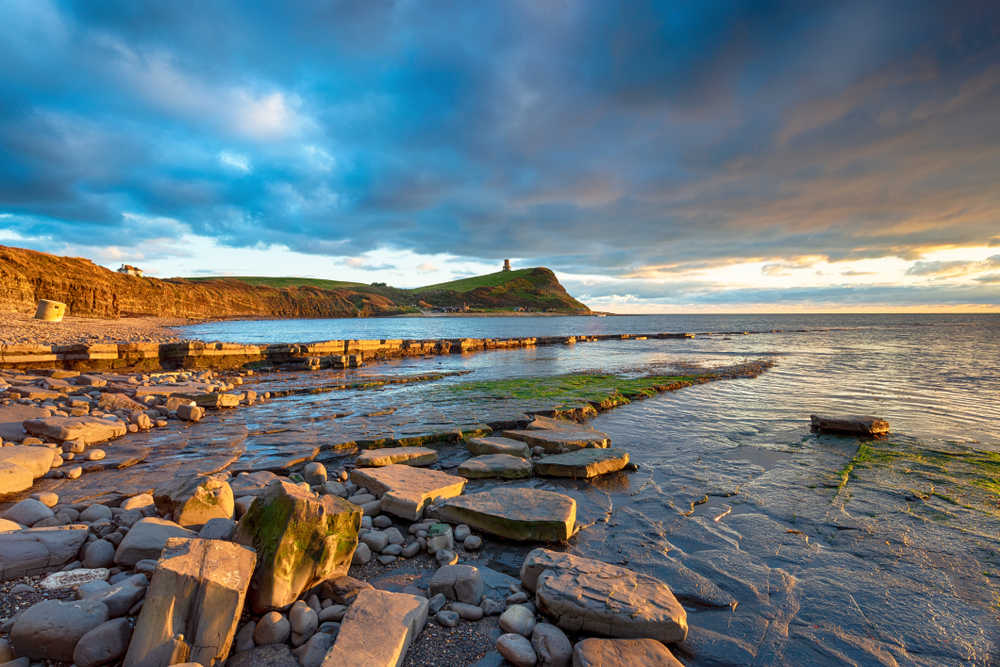
Kimmeridge Bay. The one that made it into our lounge
Kimmeridge is especially special to us.
Our son visited on a school trip when he was younger and returned with a giant fossil he’d found. Years later, it still has pride of place in our lounge, probably the best souvenir he’s ever brought home from any school trip.
We’ve been back to Kimmeridge more recently and have been reminded what a fascinating day out it is.
The rocks here give their name to the Kimmeridgian Stage of the Late Jurassic, and this part of Dorset has yielded some extraordinary fossil discoveries.
For families, though, we’d think of Kimmeridge as more than just a fossil-hunting beach.
At low tide, there are rock ledges and pools to explore. The surrounding coast is beautiful, and the bay is home to an extraordinary variety of marine life. It’s a place where the Dorset coast of 150 million years ago and the Dorset coast of today come together in a rather wonderful way.
And then there’s The Etches Collection Museum of Jurassic Marine Life in Kimmeridge village.
If you have children who are even remotely interested in fossils, dinosaurs or prehistoric creatures, we’d strongly recommend combining both.
The collection was created by local fossil expert Dr Steve Etches MBE and contains an extraordinary collection of Late Jurassic fossils, almost all of which were discovered around Kimmeridge.
Among its stars is the enormous pliosaur skull featured in the BBC’s Attenborough and the Giant Sea Monster. The ongoing BIG SARA project is now linked to efforts to recover more of this remarkable animal.
Standing in the museum, looking at marine predators that once swam through tropical Jurassic seas, and then driving down to the coastline where many of the fossils were discovered give Kimmeridge an extra dimension that children – and adults – tend to remember.
Look out for: ammonites, belemnites and fossilised marine life.
Curated tip: Make a day of it. We’d combine a visit to the bay with The Etches Collection rather than treating either as a quick stop.
Kimmeridge’s rock platforms can be slippery, and conditions change with the tide, so we’d particularly recommend checking the conditions before exploring and keeping younger children close. If you’re staying at Silverlake Estate, Kimmeridge makes a particularly good day out.

Ringstead Bay. Our fossil-hunting choice near Weymouth
For guests staying in Weymouth holiday cottages, Ringstead Bay is one of the easiest places to add a bit of fossil hunting to a day at the beach.
We know this stretch of coastline well, and Ringstead has a very different feel from Lyme Regis or Charmouth.
It’s quieter and more relaxed, backed by wonderful Dorset scenery.
The geology changes as you move along the bay, and fossils found around Ringstead include oysters and other bivalves, brachiopods, and occasional ammonites.
Large fossilised oysters can be especially satisfying for younger fossil hunters because they’re relatively easy to recognise.
Look out for: fossilised oysters, bivalves and occasional ammonites.
Curated tip: Ringstead is particularly useful if you’re staying near Weymouth, Osmington or Dorchester and don’t want to drive all the way to Lyme Regis.
As everywhere along this coast, stay away from the base of cliffs and check tide and weather conditions before setting off.
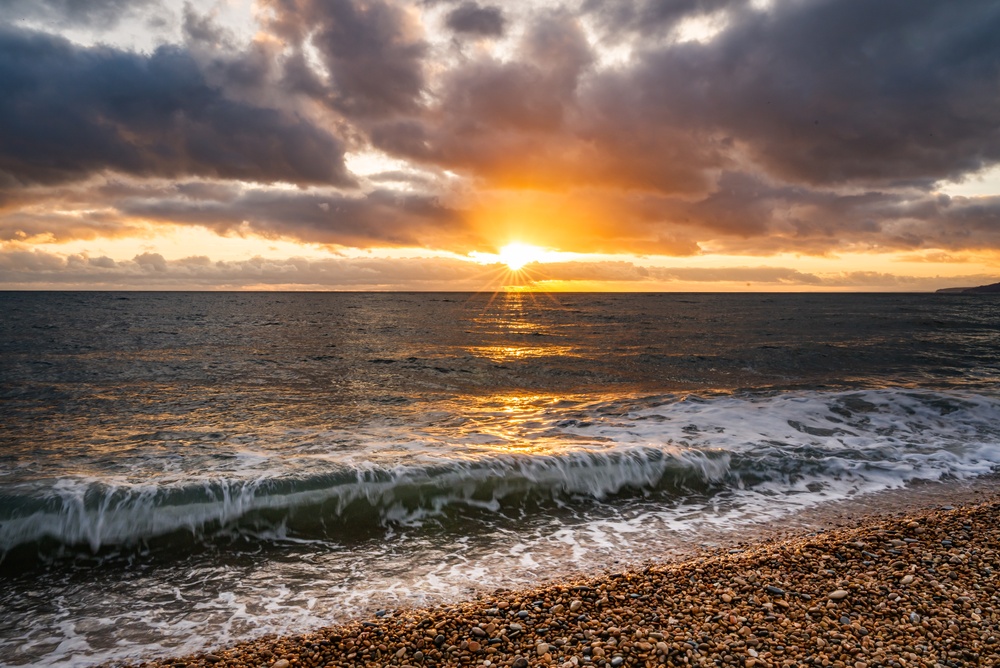
Seatown. Fossil hunting beneath Golden Cap
For its scenery alone, Seatown deserves its place on the list.
The little beach lies beneath Golden Cap, the highest point on England’s south coast, and feels considerably wilder than Lyme Regis or Charmouth.
The surrounding Jurassic rocks can yield ammonites, belemnites and fossilised shells, with fresh material sometimes exposed after winter weather.
We’d suggest Seatown for families with slightly older children who are comfortable walking over shingle and who enjoy a bit more of an adventure.
And there’s another attraction.
After searching the beach, you have the Anchor Inn almost beside it, which is not a bad place to finish a Dorset coastal day.
Look out for: ammonites, belemnites and bivalves.
Curated tip: Combine a fossil hunt with a walk around Golden Cap if your children are old enough for a longer day out.
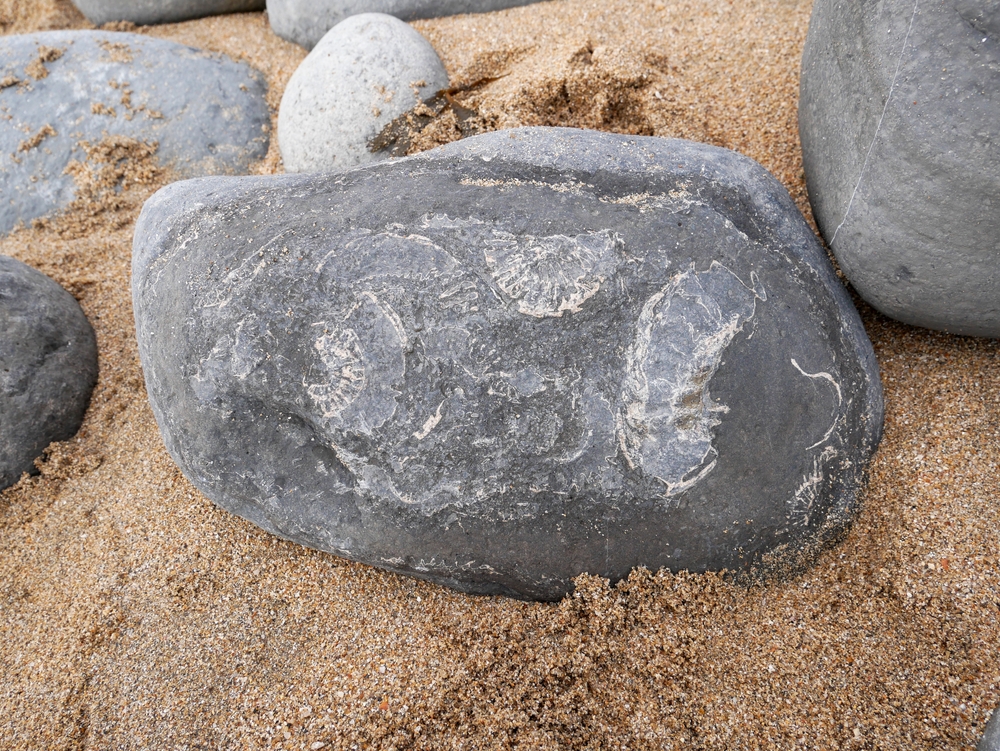
What fossils can you find in Dorset?
You don’t need to know your Promicroceras from your Dactylioceras before you start learning.
For a family fossil hunt, we’d focus on recognising a few basic shapes.
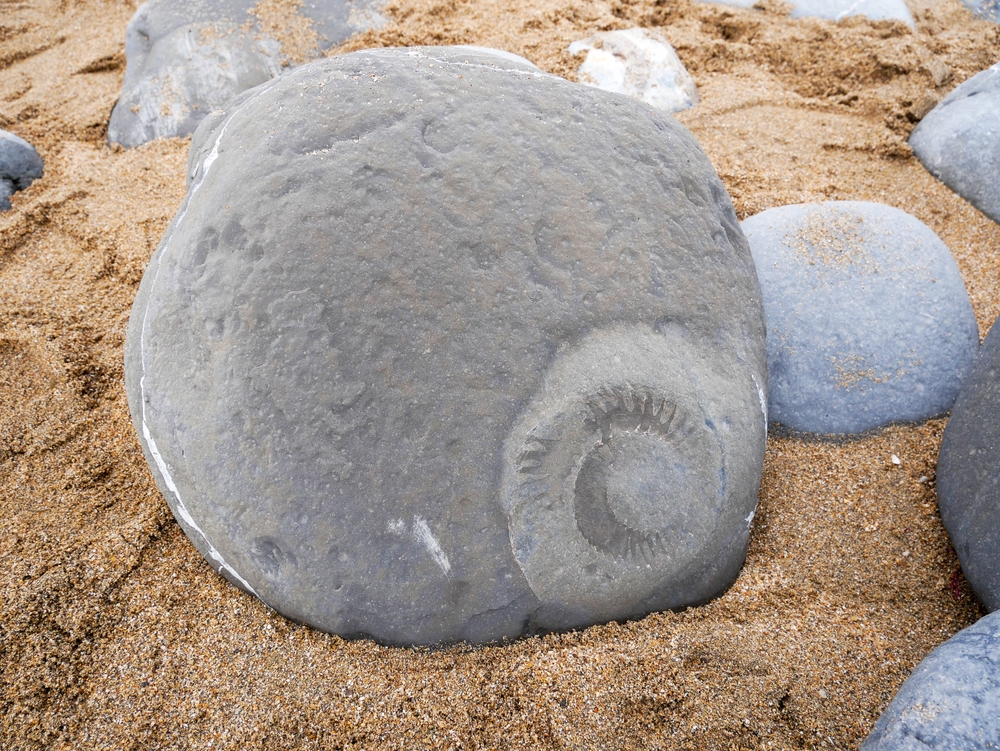
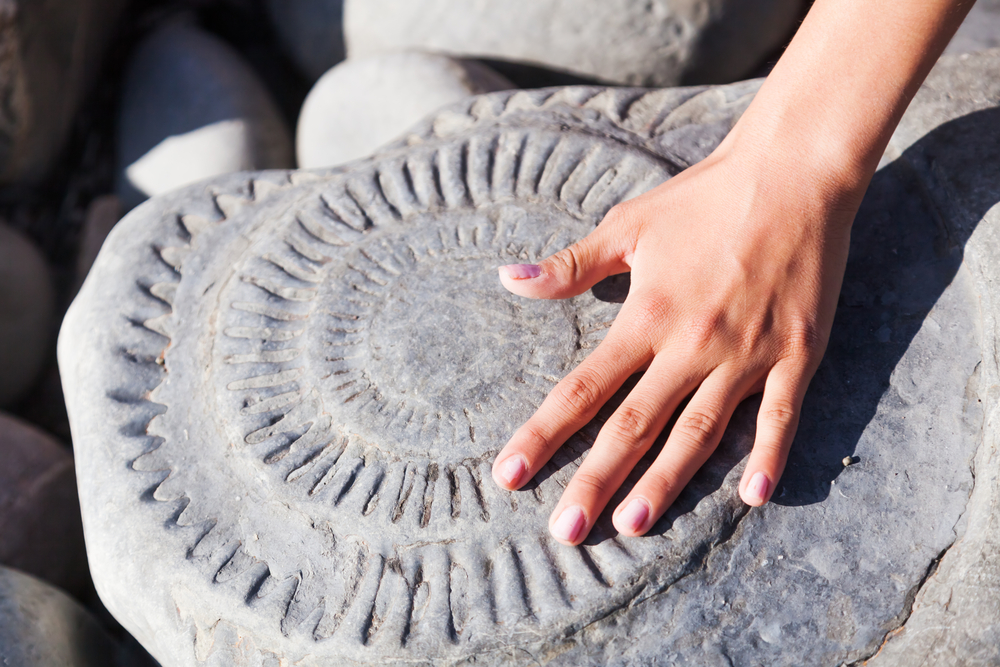
Ammonites
Probably the classic fossil of the Jurassic Coast.
Ammonites were marine animals related to modern squid and octopuses. Their distinctive spiral shells make them easy for children to recognise.
They vary enormously in size, from tiny specimens to examples considerably larger than a dinner plate.
Belemnites
These can look a little like fossilised bullets or pointed stone fingers.
Belemnites were squid-like marine creatures, and their hard internal guards are commonly preserved as fossils.
Once children know what they’re looking for, they often become surprisingly good at spotting them.
Fossilised shells
Bivalves, brachiopods and oysters occur at several Dorset fossil sites.
They’re not quite as glamorous as discovering a marine reptile, perhaps, but some are beautifully preserved and are often among the first fossils children find.
Crinoids
Crinoids are sometimes known as sea lilies, although they’re animals rather than plants.
Fragments can appear as tiny discs or star-like shapes in rocks.
Fossilised bone and teeth
Fragments of fish and marine reptiles are occasionally discovered along the Jurassic Coast.
These are much rarer.
If you find something unusual, particularly a substantial bone, a skeleton, or an exceptionally complete specimen, don’t immediately put it in the rucksack. Photograph it, record exactly where you found it, and seek advice from one of the local fossil centres or museums.
You might have found something rather more interesting than you realise.
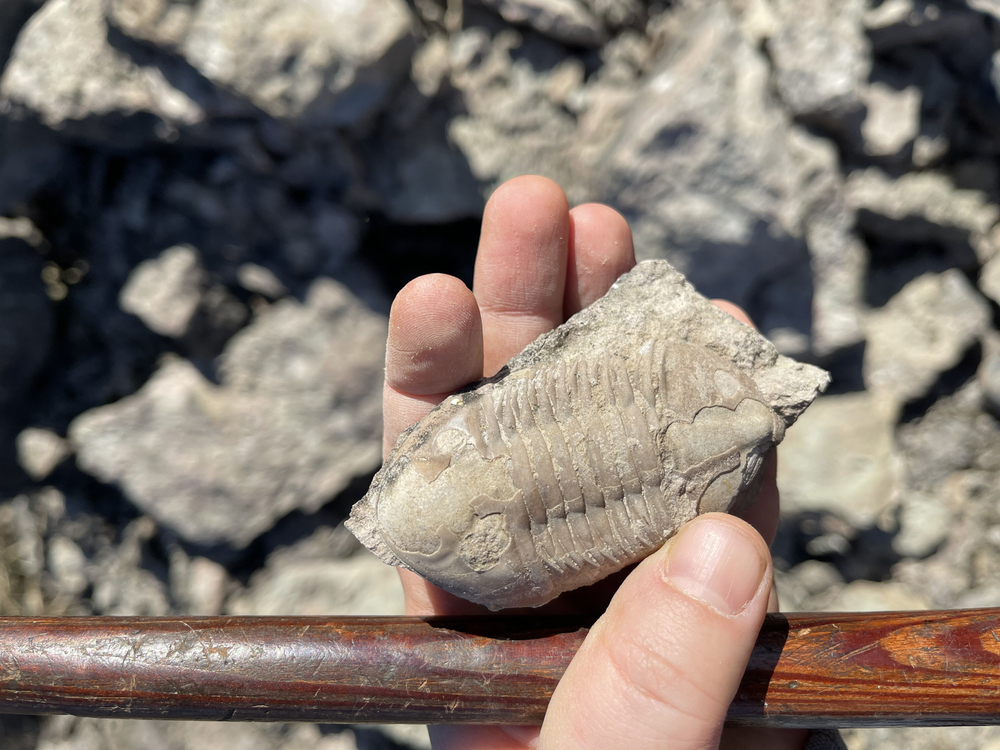
Do you need a hammer for fossil hunting?
For an ordinary family fossil hunt, no.
In fact, we’d leave the hammer at home.
The easiest and most responsible way to start fossil hunting is simply to search among loose stones, shingle and material naturally washed onto the foreshore.
Never hammer into cliffs or start digging into them.
Apart from potentially damaging an important geological site, Dorset’s cliffs can be highly unstable.
You don’t need specialist equipment either.
For our family’s fossil-hunting kit, we’d take:
- sturdy shoes or walking boots with good grip
- waterproofs or layers depending on the weather
- a small bag or container for finds
- a little newspaper or tissue to wrap anything fragile
- water and snacks
- a simple fossil identification guide
- a phone for photographs
- plenty of patience
A small hand lens can be fun too, especially once you’ve found something interesting.
When is the best time to find fossils in Dorset?
Autumn and winter can be particularly productive, as storms and coastal erosion expose fresh material.
But there’s an important distinction between favourable fossil conditions and favourable conditions for taking a family to the beach.
Wild weather may expose fossils, but you don’t want to be standing beneath unstable cliffs during or immediately after severe weather.
For families, we’d choose a sensible weather window and, most importantly, check the tide.
A falling tide generally gives you more time to explore the exposed foreshore before the sea returns.
Never rely on guesswork.
Check an up-to-date local tide table on the day of your visit. And if the weather puts a stop to your fossil hunting plans, there’s no need to abandon the day’s adventures. Our guide to things to do in Dorset when it rains includes some fascinating museums and indoor attractions where the whole family can carry on exploring, whatever the forecast.
Fossil hunting safely on the Jurassic Coast
This is the section we’d strongly encourage you to read before setting off.
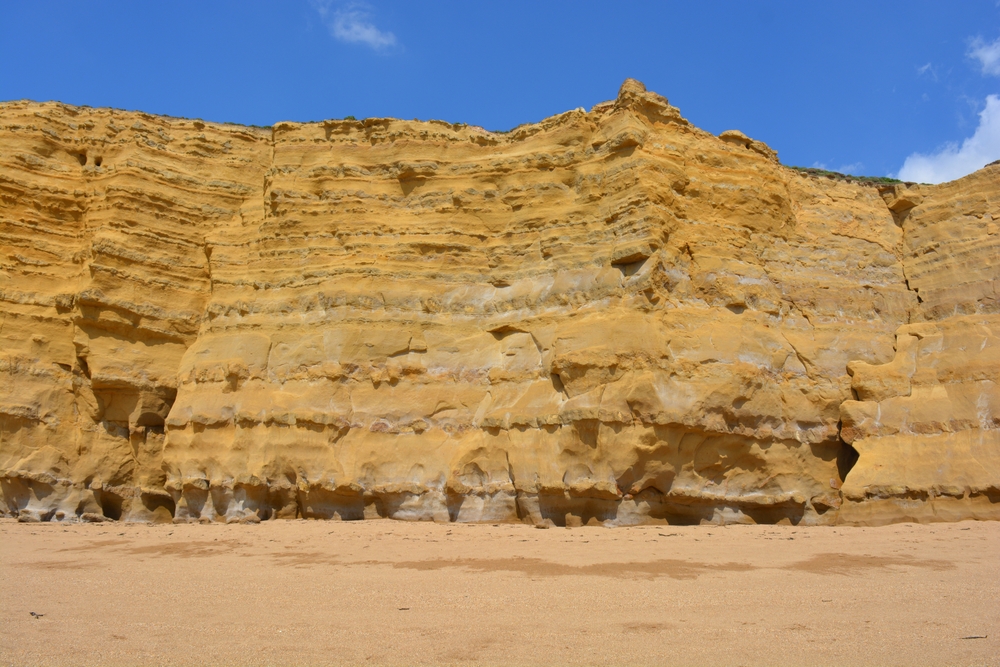
The same erosion that reveals Dorset’s fossils also leaves parts of the coastline naturally unstable.
Keep away from cliffs
Don’t sit, picnic or allow children to play immediately beneath cliffs.
Rockfalls and landslides can occur without warning.
Check the tides
Know when high and low tides are due before walking along the shore.
Don’t explore near headlands unless you’re certain you can return safely.
Look down, but remember to look up
It’s very easy to become completely absorbed in searching for stones beneath your feet.
Stop regularly to check where you are, where the children are, what the sea is doing and what’s above you.
Wear proper footwear
Wet rocks, shale, seaweed and clay can be extremely slippery.
Flip-flops and fossil hunting aren’t a particularly good combination.
Collect responsibly
For beginners, focus on loose fossils already lying on the beach.
Don’t dig into cliffs or damage rock platforms, and remember that individual locations may have their own collecting restrictions.
If in doubt, leave a fossil where it is, take a photograph, and ask an expert.
Should we book a guided fossil walk?
If this is your first time fossil hunting, we’d say yes.
There’s an enormous difference between staring at thousands of grey stones and having someone show you exactly what an ammonite fragment, belemnite or fossilised shell looks like.
Once you’ve found the first, everything changes.
Charmouth Heritage Coast Centre runs family-friendly guided fossil hunts led by its wardens, while Lyme Regis Museum offers expert-led fossil walks alongside its museum collection.
Lyme Regis Museum’s walks typically last 2½–3 hours and are suitable for children aged six and above, whereas Charmouth’s public walks are shorter, at around 1½ hours.
Both are tide-dependent, and availability can disappear quickly during busy school-holiday periods, so we’d book ahead rather than simply turn up.
What should you do with fossils when you get home?
Firstly, don’t scrub them with a scrubbing brush.
Some fossils are far more fragile than they appear.
Gently remove loose dirt with a soft brush, and allow damp specimens to dry naturally rather than placing them on a radiator.
And do something we’ve become increasingly grateful we did with family finds: record where and when you found them.
A tiny label saying:
Kimmeridge Bay – May 2016
turns an interesting object into a family keepsake.
Years later, that’s often as important as the fossil itself.
We certainly know that’s true of the one sitting in our lounge.
Make fossil hunting part of a Dorset holiday
One of the things we love about fossil hunting is that it doesn’t need to be an organised attraction or an entire day out.
It can be an hour spent searching for Ringstead after a morning in Weymouth.
It can include a guided walk at Charmouth, followed by lunch in Lyme Regis.
Or it can become a full Jurassic day at Kimmeridge, exploring the coastline before visiting The Etches Collection to discover the extraordinary creatures that once inhabited the sea beneath what is now Dorset.
And you never quite know what you’ll find.
That’s probably why our children enjoyed it so much and why, all these years later, one of their discoveries still sits in our home.
When you’re staying in one of our Dorset holiday cottages, you’re not simply visiting one of Britain’s most beautiful coastlines.
You’re staying beside 185 million years of history.
Sometimes all you need to do is look down.
Frequently Asked Questions
For first-time fossil hunters, we’d recommend Charmouth and Lyme Regis. Both are renowned for Jurassic fossils and offer expert-led fossil walks. Charmouth is especially good for families, as the Heritage Coast Centre is right beside the beach.
Yes. Fossil hunting can be a brilliant family activity, though the suitability of individual beaches varies. Charmouth is one of our favourite starting points for families, particularly on a guided walk. Always supervise children closely around cliffs, tides and slippery rocks.
Small, common loose fossils can be collected at some Jurassic Coast locations, but rules vary between sites and protected areas. Never remove fossils from cliffs or damage bedrock. Always follow local collecting guidance. Significant or unusual discoveries should be reported to a local museum or fossil expert.
No. For a family fossil hunt, we’d recommend leaving hammers at home and searching among loose stones and material on the foreshore instead.
Ammonites, belemnites, bivalves and other fossilised shells are among the most recognisable finds. Rare discoveries can include fossilised fish and marine reptile remains.
Both are excellent. Charmouth is particularly good for beginners, thanks to the Heritage Coast Centre and its guided walks. Lyme Regis combines fossil hunting with the story of Mary Anning, the Lyme Regis Museum and the town itself, making it ideal for a full family day out.
Yes. Ringstead Bay is known for fossilised shells, including oysters and other bivalves, with ammonites also possible. It’s a particularly convenient option for guests staying in Weymouth and Osmington.
Kimmeridge is internationally significant for its Late Jurassic geology and fossils. Ammonites, belemnites and other marine fossils can be seen in the area, but collecting is restricted and visitors should follow local guidance. We’d combine a visit to the bay with a visit to The Etches Collection in Kimmeridge village.
Autumn and winter storms can expose fresh fossil material, but safety should always come first. For families, choose suitable weather and visit on a falling tide, checking tide times and coastal conditions.
Leave significant finds in place initially, take clear photographs and record their exact location. Contact an organisation such as Charmouth Heritage Coast Centre, Lyme Regis Museum or The Etches Collection for expert advice.