
The Blue Pool, Dorset: Why We Keep Going Back To This Magical Attraction
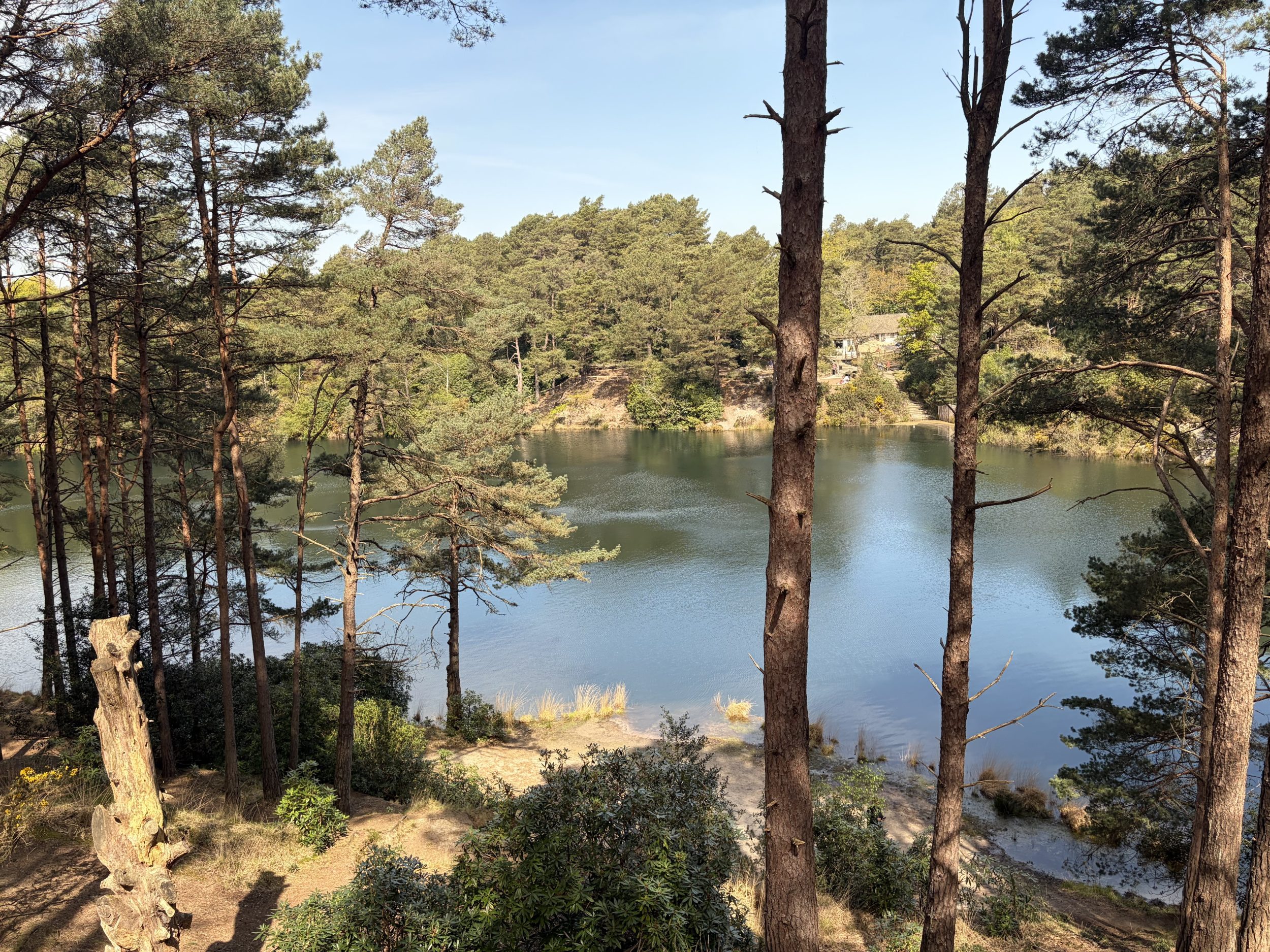
If we had to recommend just one hidden gem in Dorset that still surprises first-time visitors, The Blue Pool would be near the top of our list. There are places you visit once and remember fondly. And then there are places that quietly become part of your family’s story. Places you return to year after year without really questioning why. The Blue Pool in Wareham is one of those places for us.
Set within the Furzebrook Estate on the Isle of Purbeck, just a few miles south of Wareham, it’s a former clay quarry that filled with rainwater over centuries, becoming something genuinely extraordinary: a lake that changes colour with the light, the temperature and the time of year. Turquoise one hour, silver the next, green by afternoon. Surrounded by woodland, heathland and rare wildlife, it’s drawn visitors since 1935 and shows no signs of losing its charm.
We’ve visited more times than we can count, and we’re still not done. In fact, if someone asked us which Dorset attraction we’ve visited most over the past fifteen years, this would probably be the one.
Watch our visit to The Blue Pool Dorset.
Why We Have Visited The Blue Pool More Than Any Other Dorset Attraction
If you asked us which Dorset attraction we’ve visited most often over the years, the answer wouldn’t be the Tank Museum or Corfe Castle; it would be The Blue Pool.
We’ve brought family. We’ve brought friends who’d never heard of it. We’ve brought grandparents, who were quietly amazed. We’ve visited, just the two of us, dog lead in hand, on quiet autumn mornings when the mist still lay over the water and there was barely another soul in sight.
But we visited most of them with our children, and those are the visits we remember most clearly. They loved the puzzles and trails, the pool itself, the play area at the end, and the tea rooms, where they knew they’d be allowed a slice of cake.
For years, The Blue Pool was run by Miss Barnard, the daughter of the man who first opened it to the public in the 1930s. She was a constant presence in the tea rooms, a guardian of the place in the truest sense, and her devotion to it showed in everything. When she passed away and new owners took over, we’ll be honest: we were apprehensive. Would one of our most cherished, unspoilt corners of Dorset, under new management, still be the same?
We needn’t have worried. In fact, the new owners have done something rather clever. They’ve kept what matters the same and improved it where they could. The pool is still the pool. The woodland still feels enchanted. The tea rooms have been slightly upgraded with an Art Deco theme. But now there’s also the UK’s longest rope bridge, suspended through the canopy, and a Trail of Enchanted Doors that didn’t exist before, along with investment and care evident in every corner of the estate.
Walking around it now, you still get the same feeling we always did; the sense of having wandered into a Famous Five adventure. That hasn’t changed.
Many visitors don’t realise that The Blue Pool is widely believed to have inspired elements of Enid Blyton’s Five Have a Mystery to Solve, one of the most atmospheric books in the Famous Five series. With its mysterious woodland paths, hidden corners and ever-changing pool, it’s easy to see why. If you’re a fan of the series, check out our guide to Famous Five locations in Dorset.
What Is The Blue Pool Dorset?
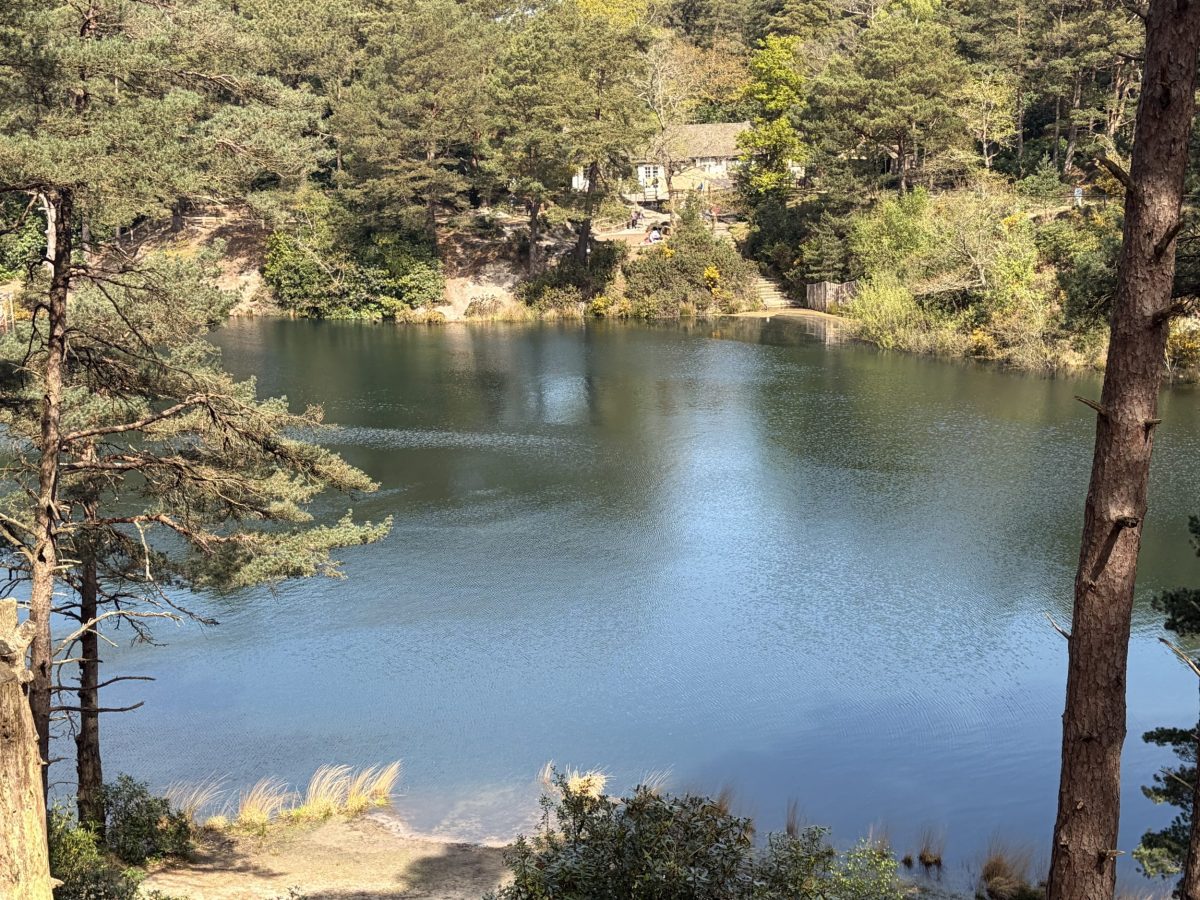
At its simplest, The Blue Pool is a flooded former clay quarry, now among Dorset’s most unusual and beguiling natural attractions. Yet that description barely does it justice.
The pool sits at the centre of the Furzebrook Estate, a landscape of heath, woodland and gorse on the Isle of Purbeck, a few miles south of Wareham and two miles west of Corfe Castle. Depending on the source, the park spans either 25 acres (the immediate nature reserve) or up to 300 acres of the wider estate.
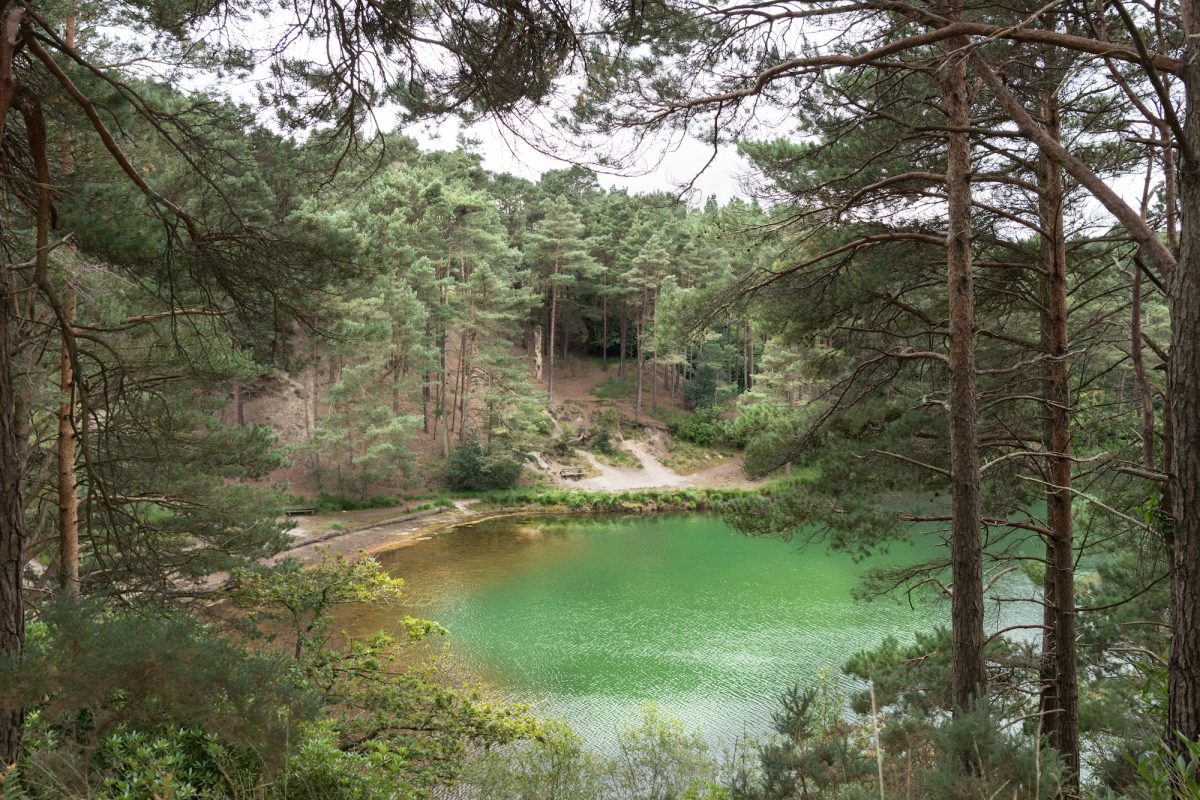
What makes the pool itself so extraordinary is its colour, and more specifically, the fact that it never stays the same. On a sunny summer’s day, it can appear vivid turquoise, almost impossibly bright. On an overcast afternoon, it shifts to silver. In certain light, it takes on a green or even teal hue. Return in winter, and it may look entirely different again.
Why is the Blue Pool blue?
The colour is caused by minute particles of ball clay that remain suspended in the water, a phenomenon known as colloidal suspension. These particles interact with light differently depending on their concentration and the angle of the sun, scattering shorter blue wavelengths and producing the distinctive turquoise shimmer. Changes in rainfall, temperature and light conditions all affect the colour, which is why no two visits ever look quite the same. That’s why photographers return again and again, trying to capture the perfect version of it.
The pool is designated a Site of Special Scientific Interest (SSSI) in part for its remarkable flora and fauna. The surrounding heathland is home to nationally rare plants, including Dorset heath and marsh gentian, as well as abundant wildlife.
The Fascinating History of The Blue Pool
The story of The Blue Pool begins in the 17th century, when the site was first worked as a chalk pit. From the mid-1600s, Purbeck ball clay was extracted here — a fine, pale clay prized by British pottery manufacturers, including Wedgwood, for making items ranging from smoking pipes to teacups.
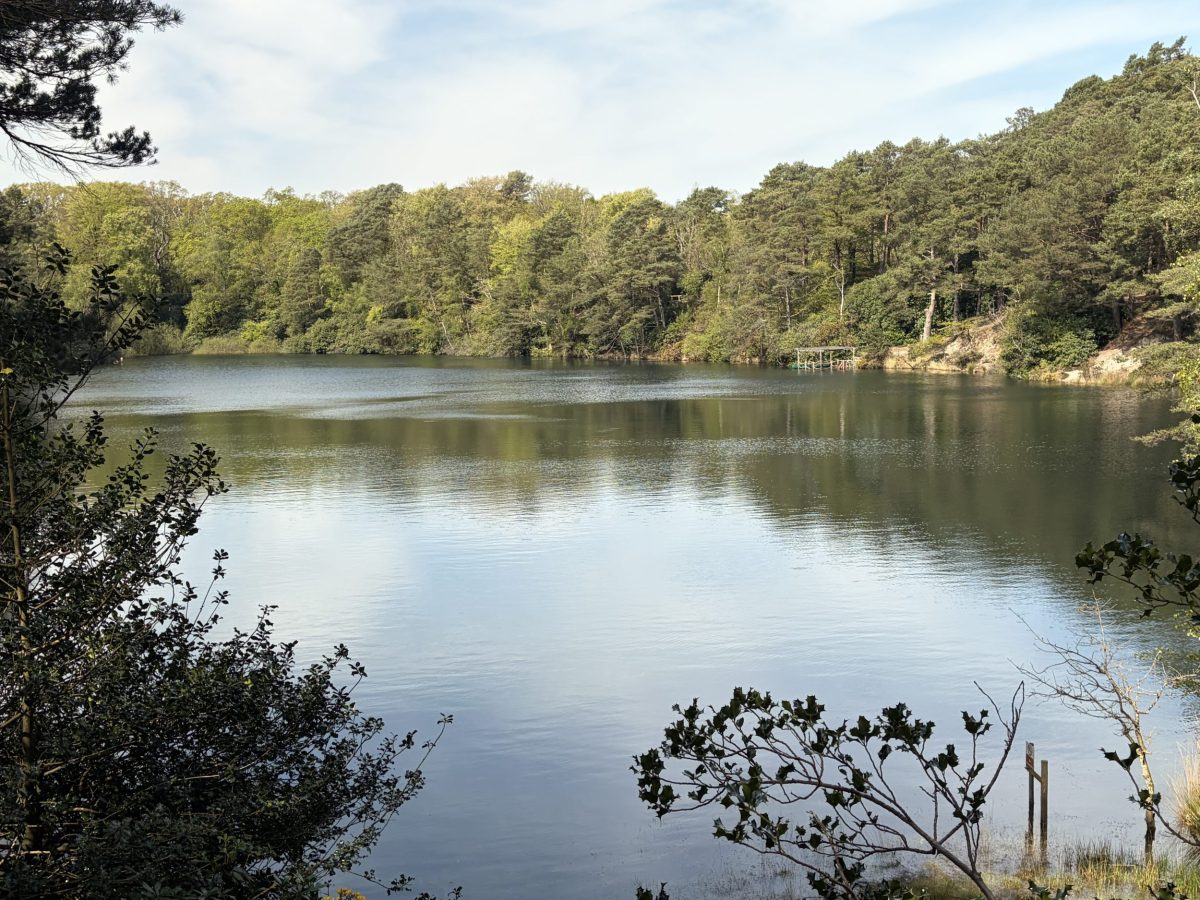
Extraction continued until the site was abandoned before the First World War, in the early 20th century. Left to its own devices, the pit gradually filled with rainwater, leaving behind clay particles and forming the lake we see today.
For several years, the flooded pit remained undiscovered. In 1935, Captain Barnard came across an advertisement for the Blue Pool estate in Country Life magazine. He brought his family to see it, including his young daughter Jennifer, who later described seeing the pool for the first time: “There was nothing here at all , just this pool. It was extraordinary.”
Captain Barnard recognised what he had found and opened the estate to the public. The Barnard family, particularly Jennifer, who ran the tea rooms for decades, became the heart of the place. She was still there, baking scones and welcoming visitors, well into her eighties. Our children also loved receiving a puzzle-trail prize from her. (Note that this particular puzzle and prize no longer take place.)
After Jennifer Barnard’s death, The Blue Pool passed to new owners, the team now behind The Blue Pool Nature Reserve & Tearooms. As we mentioned, our first instinct was concern, but that proved unfounded. The new owners have invested thoughtfully in the estate while preserving what made it special, and The Blue Pool feels as full of character as ever.
The Rope Bridge and Woodland Experience
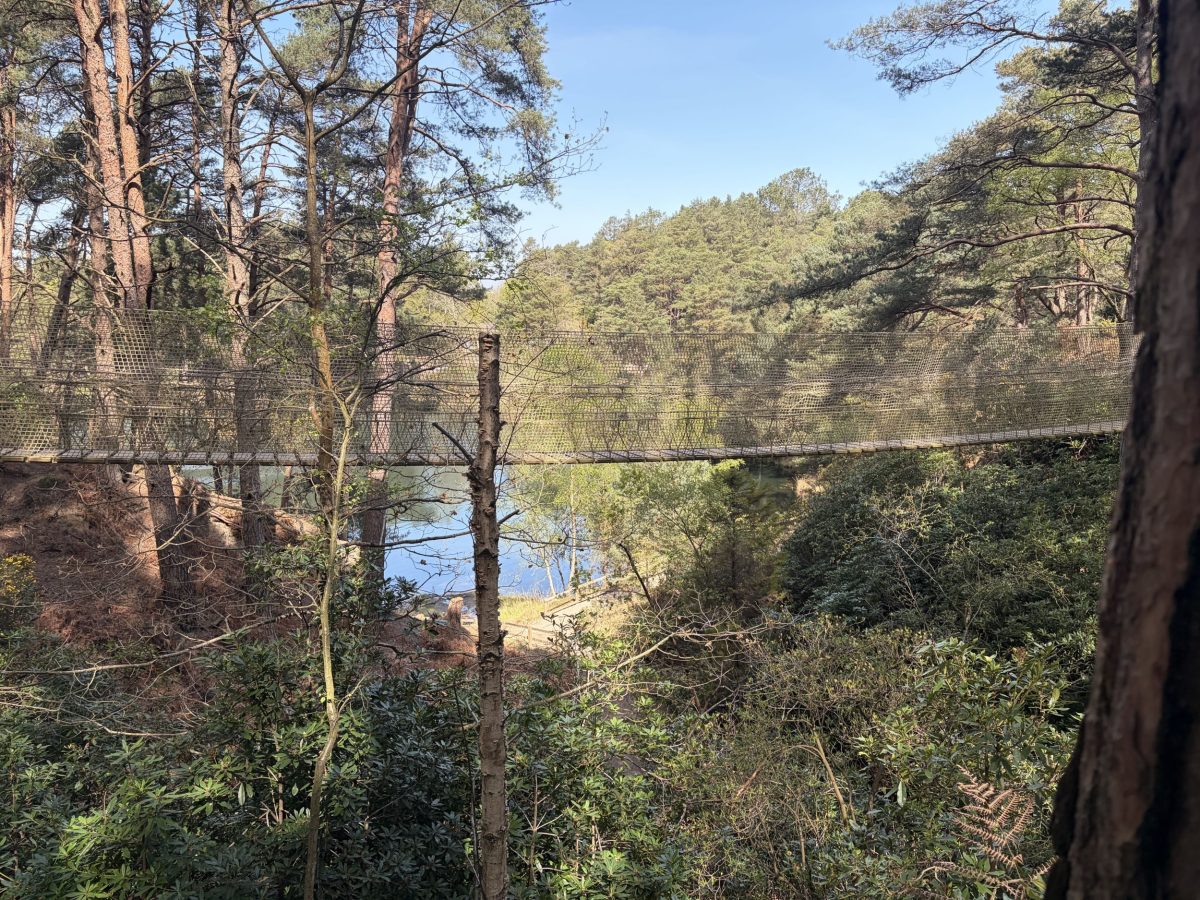
The most dramatic addition in recent years is the rope bridge, and it’s quite something to see.
Stretching through the woodland canopy, this is the UK’s longest rope bridge, and the Blue Pool rope bridge in Dorset has quickly become a draw in its own right. Suspended above the trees, it offers you a perspective on the estate you simply couldn’t get before, a bird’s-eye view of the canopy and glimpses of the pool shimmering through the woodland below.
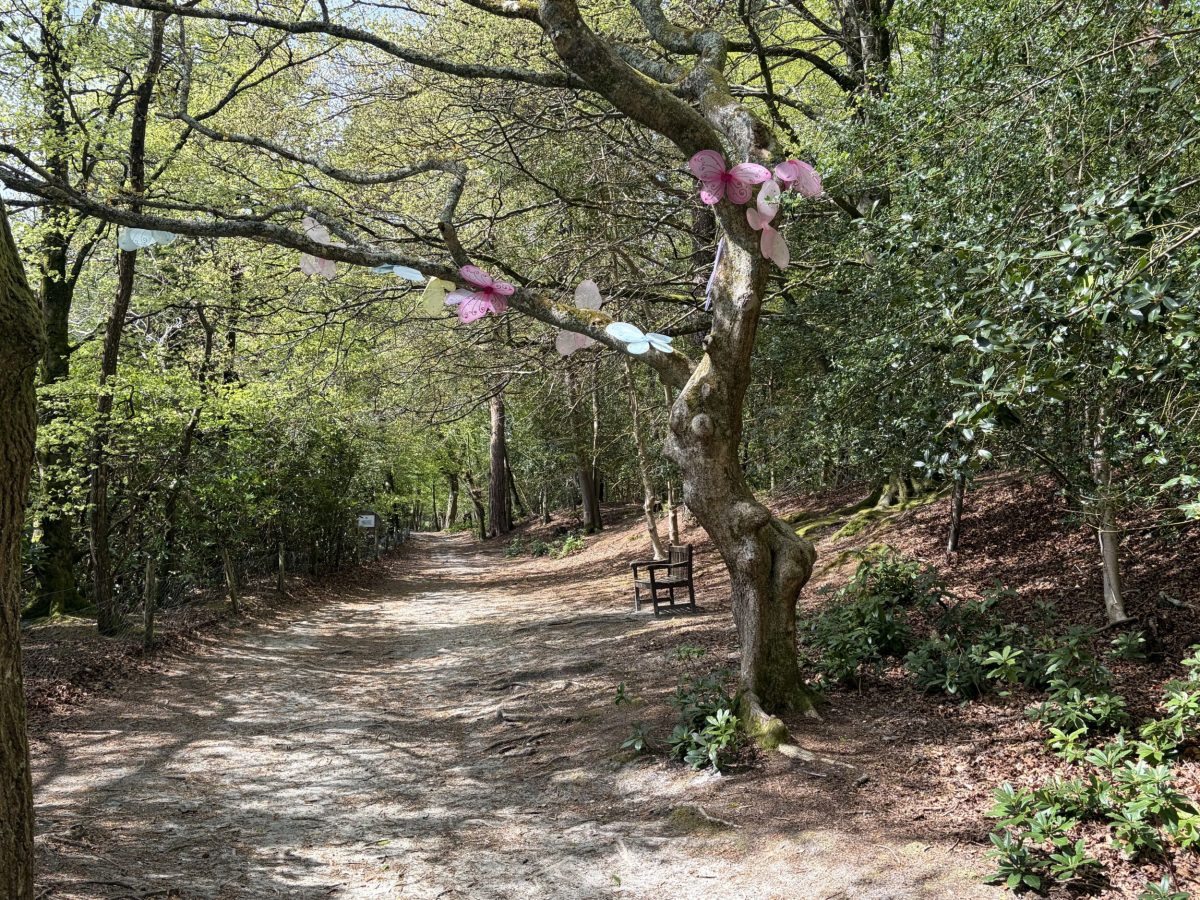
The wider woodland experience has also been significantly enhanced. The Trail of Enchanted Doors winds through the trees, revealing handcrafted fairy doors and gnome homes tucked into tree trunks and roots. It’s imaginative and carefully executed, adding a layer of magic to the woodland walk that children absolutely love and that adults find themselves quietly absorbed in.
These additions haven’t tried to turn The Blue Pool into something it isn’t. They’ve deepened it and added new layers, while leaving its essential qualities, including the peace, the wildness and the extraordinary pool at its centre, completely intact.
Things To Do At The Blue Pool Dorset
The Pool
The pool is the whole reason you’re here, and it doesn’t disappoint. Paths lead down through the woodland to viewpoints and steps where you can see the water up close. The walk around the perimeter reveals different angles and colours. Allow time to sit and watch it. It genuinely changes with the light.
Woodland Walks
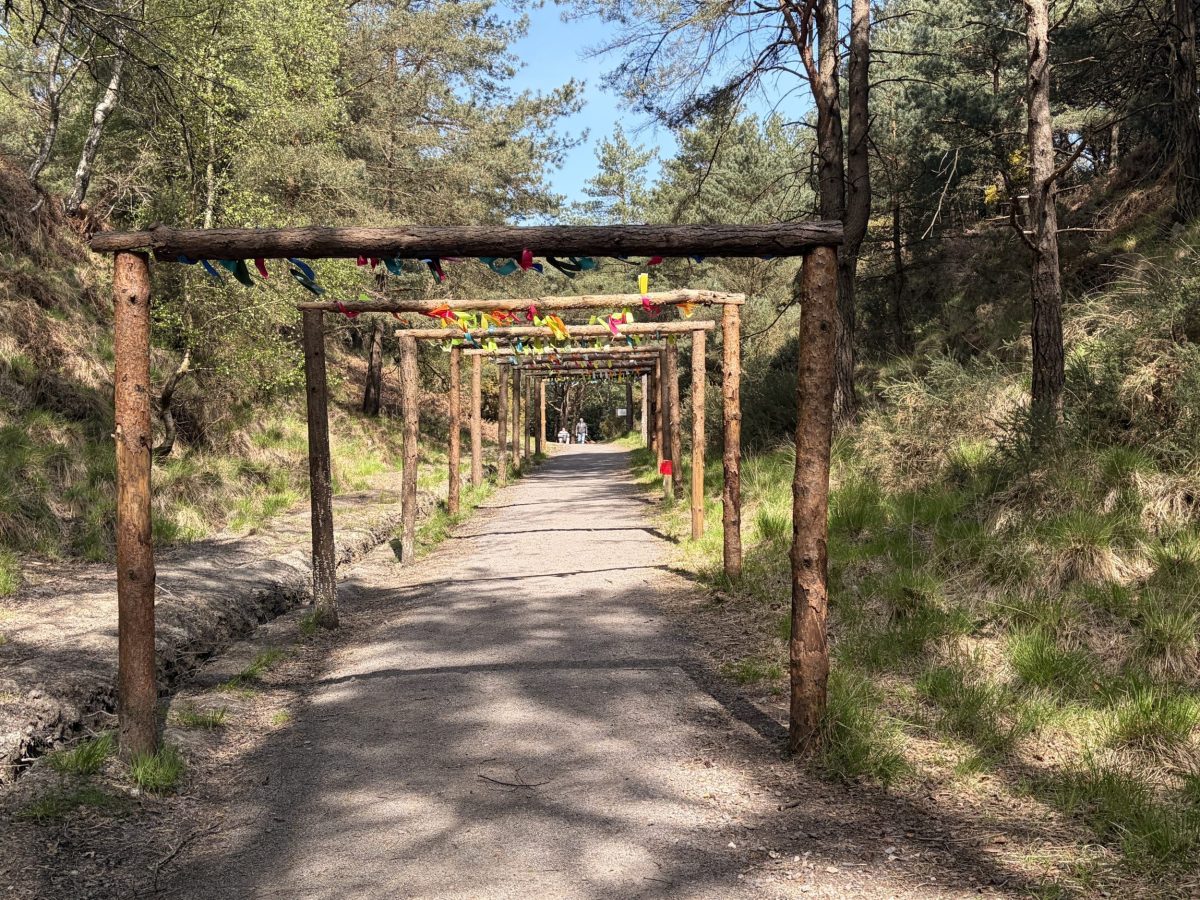
A network of sandy paths crosses the estate, ranging from a gentle, flat circuit around the pool (suitable for wheelchairs if you are staying at one of our accessible cottages) to longer routes through the heathland and woodland. Maps are provided on entry, which our children always treated with great ceremony. The paths are well-maintained and clearly marked, and there’s enough variety to tailor the walk to whoever you’re visiting with.
Children’s Trails and Puzzles
Alongside the Trail of Enchanted Doors, there are trails and puzzles for children that guide them through the woodland to look for things, solve clues and discover the estate from their own perspective. These have always been a highlight for visiting children and give the walk a purpose beyond simply following adults.
Fairy Doors and Gnome Trail
Scattered throughout the woodland, the fairy doors and the gnome trail reward close attention. Small children, in particular, will spend a disproportionate amount of time examining every tree trunk, convinced they’ve spotted a secret entrance. That’s a good thing.
Play Area
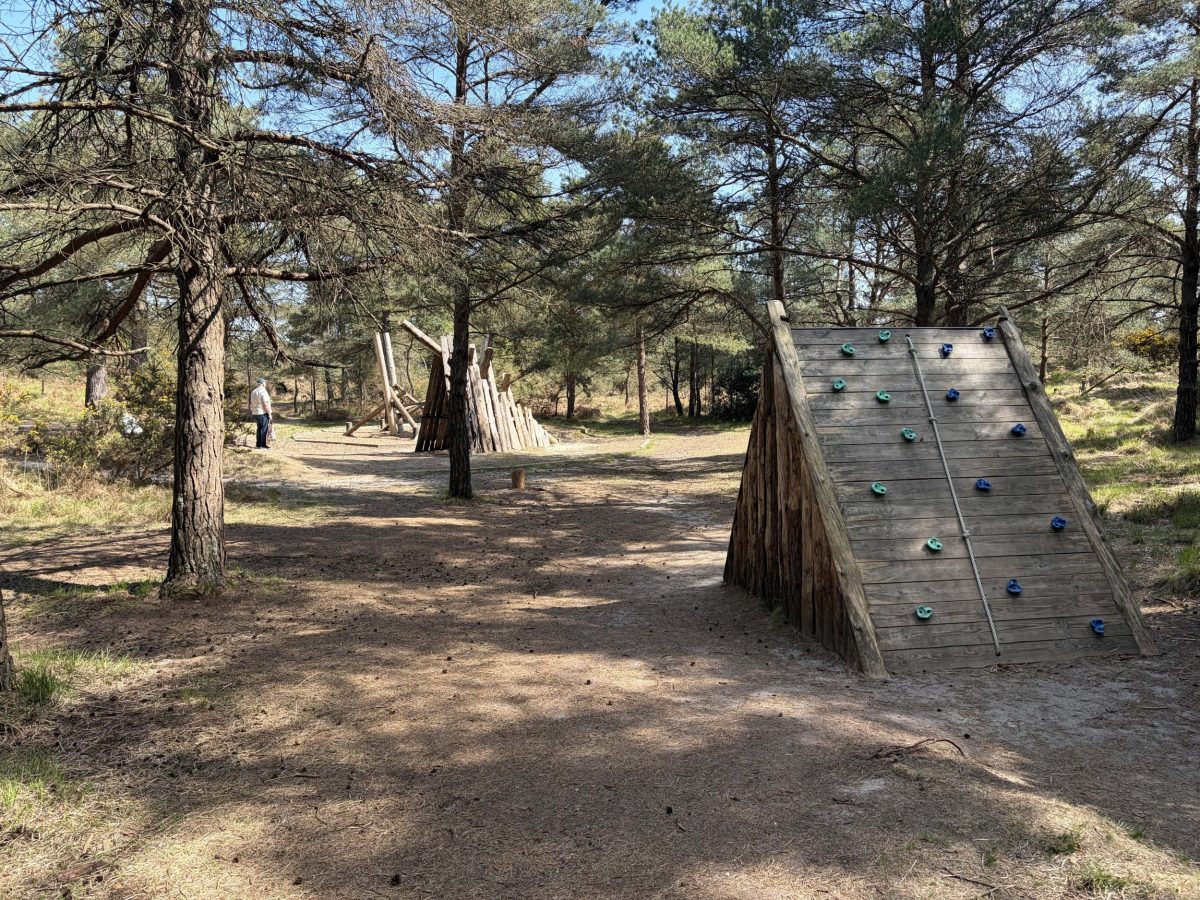
There’s an on-site children’s play area, making it a natural place to end the visit. It’s well-equipped and popular.
The Tea Rooms
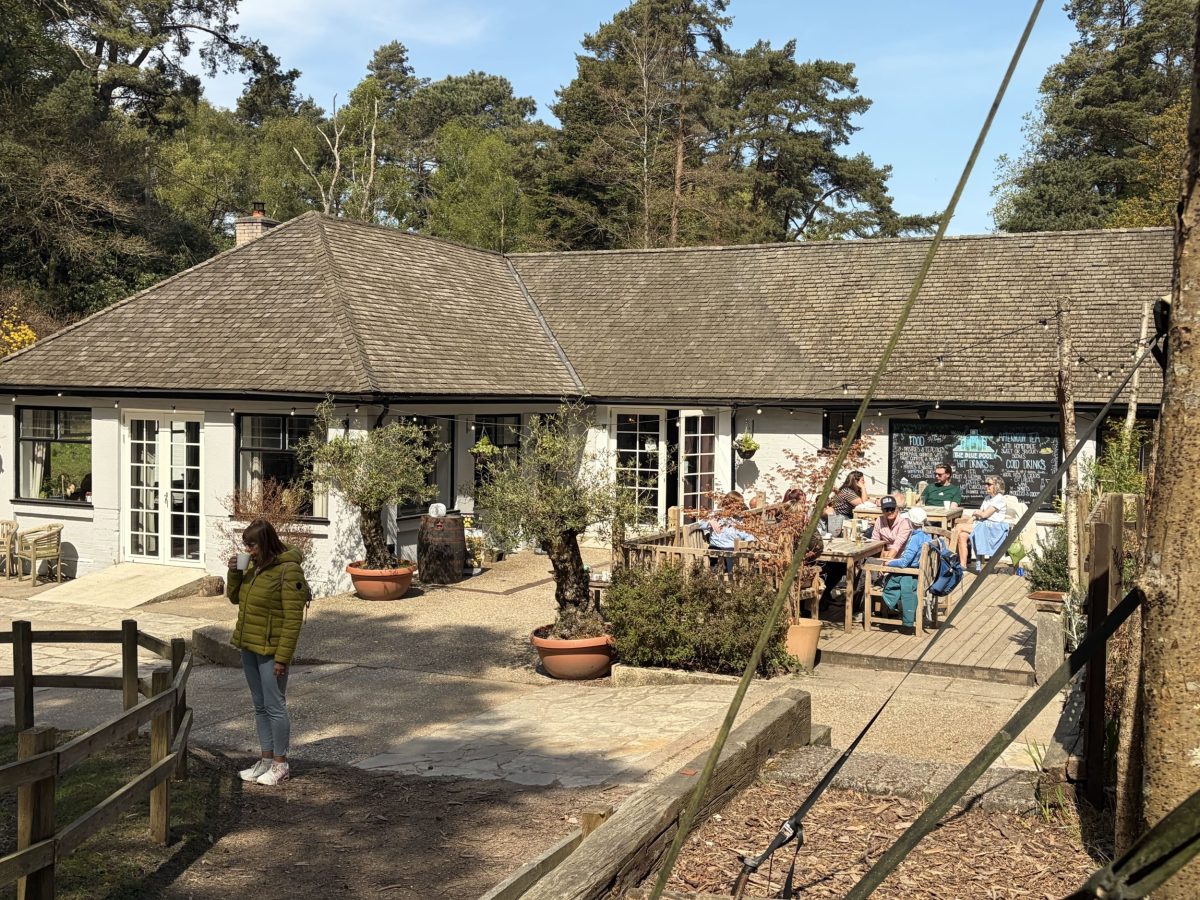
The Art Deco tea rooms are a genuine highlight in their own right, serving locally sourced food daily from 10 am. The food is very good, and it’s a comfortable, characterful place to sit and unwind. On a warm day, the terrace with views across the pool is one of the best spots in Purbeck.
There’s also the excellent, locally produced Purbeck ice cream served on-site, which is worth noting if you’re visiting in summer.
Make Your Visit a Little More Special
If you’re celebrating something special , or simply fancy making your visit a little more memorable, The Blue Pool has a lovely option that many visitors may not know about. The Speakeasy Deck can be privately hired for up to six adults, giving you your own little spot overlooking the water for a couple of hours.
You can make an occasion of it with afternoon tea and a bottle of bubbly from the Tearooms, which we think would be particularly lovely for a birthday, anniversary or even a proposal. It’s exactly the sort of extra experience we enjoy seeking out for guests staying in our Luxury Holiday Cottages in Dorset. It’s those little additions that can turn a visit to one of Dorset’s best-known attractions into something that feels much more personal.
At the time of writing, private hire is £30 for two hours, in addition to general admission, and children aren’t permitted on the deck. As prices and arrangements can change, we’d recommend checking directly with The Blue Pool before your visit.
Why Photographers Love The Blue Pool
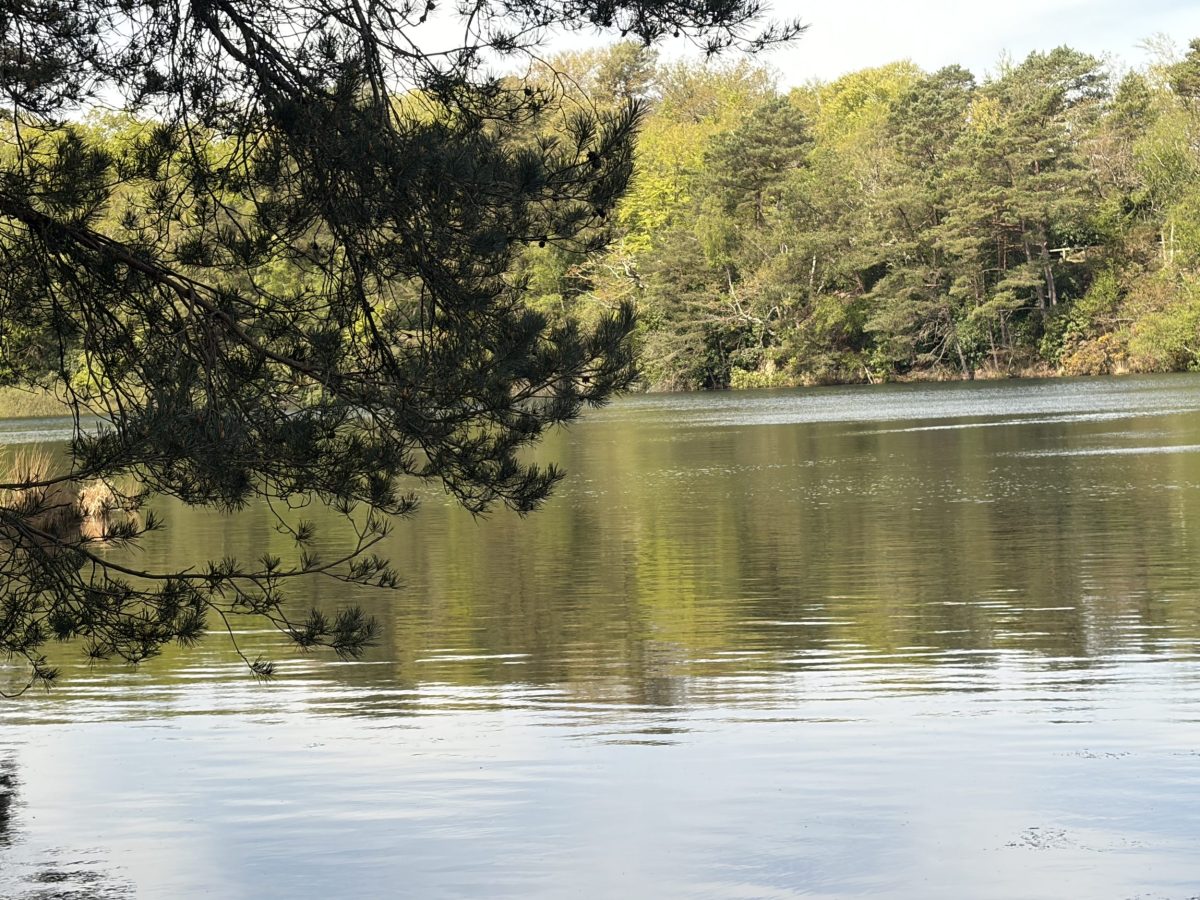
The Blue Pool has become one of Dorset’s favourite locations for photographers, and it’s easy to understand why. Unlike many landscapes, it rarely looks exactly the same twice. The changing colour of the water, reflections across the lake and surrounding woodland mean every visit offers something different.
We’ve taken photographs here in every season over the years, and no two have ever been alike.
Our Photography Tips
Visit early in the morning
The soft morning light often creates the calmest reflections, and you’ll usually have the paths almost to yourself.
Autumn is our favourite season
The rich gold, copper and crimson leaves surrounding the pool create a wonderful contrast against the turquoise water. It’s probably the most photogenic time of year.
Bring a polarising filter
If you’re using a DSLR or mirrorless camera, a polarising filter can help reduce glare on the water and bring out the pool’s remarkable colours.
Check before flying a drone
As The Blue Pool is a private nature reserve and a Site of Special Scientific Interest, always check the latest guidance before flying a drone.
Be patient
The colour of the pool changes throughout the day as the light shifts. Sometimes simply waiting fifteen or twenty minutes can reward you with an entirely different photograph.
The Blue Pool Through The Seasons
One of the reasons we never tire of visiting The Blue Pool is that every season brings something completely different.
Spring
Fresh green woodland, birdsong and carpets of wildflowers make spring one of the quietest and most peaceful times to visit.
Summer
This is when the pool often displays its brightest turquoise colours, especially on clear sunny days. It’s also the perfect season for enjoying lunch or an ice cream on the terrace overlooking the lake.
Autumn
If you asked us to choose just one season, we’d probably pick autumn. The changing woodland colours reflected in the water create one of the most beautiful scenes anywhere in Dorset.
Winter
On crisp winter mornings the woodland feels wonderfully tranquil, and mist occasionally drifts across the water, giving the whole reserve an almost magical atmosphere. It’s a lovely time for photographers and anyone wanting a quieter visit.
Our Top Tips For Visiting The Blue Pool
Visit on a sunny day. The pool’s colour is dramatically more striking in good light. In flat, grey conditions, it’s still beautiful, but in direct sunlight it becomes something genuinely extraordinary, with vivid turquoise set against the dark woodland. If you have a choice, wait for a good, sunny day.
Arrive early rather than late. The estate is at its most peaceful in the morning, before the busiest part of the day. Children particularly enjoy the trails when there are fewer people around. Gnome-spotting is more successful without a crowd, and you’re more likely to see wildlife undisturbed.
Allow more time than you expect. Many visitors plan for an hour or two but end up staying considerably longer. With the walk, the trails, the rope bridge, the tea rooms and the play area, it’s easy to spend half a day here. We’d always allow at least three hours for a family visit, more if you want to linger in the tea rooms.
Take plenty of photos. It’s obvious, but worth emphasising. The light changes quickly here, and the pool looks different from every angle. If you’re a photographer, this is a serious location. If you’re not, you’ll still want to have your phone out.
Blue Pool Dorset: Directions, Parking and Visitor Information
The Blue Pool lies near Furzebrook on the Isle of Purbeck, about three miles south of Wareham.
Address: The Blue Pool Nature Reserve & Tearooms, Furzebrook, Wareham, Dorset, BH20 5AR
Getting there by car: From Wareham, take the A352 south towards Stoborough, then follow signs for Furzebrook and The Blue Pool. Brown tourist signs guide you in for the final section. Parking at The Blue Pool, Dorset, is free and available on site.
Opening times: The Blue Pool is open every day. However, do check the official Blue Pool website for any planned closures before you visit, as occasional closures are announced in advance. The tea rooms are open daily from 10 am.
Accessibility: Most paths are accessible, and there is a completely flat route around the pool suitable for wheelchair and pram use. Some woodland paths have steep steps, so the official website provides more detailed accessibility information to help you plan accordingly.
Tickets: Prices are subject to change, so we recommend checking the Blue Pool website for the latest admission prices before your visit.
Places to Stay Near The Blue Pool Dorset
The Blue Pool sits in one of Dorset’s most beautiful areas, the Isle of Purbeck. It’s within easy reach of Corfe Castle, Lulworth Cove, Durdle Door, Wareham and miles of the Jurassic Coast. Basing yourself nearby lets you visit The Blue Pool as part of a longer exploration rather than as a standalone trip.
At Curated Cottages, we offer a hand-picked selection of holiday cottages in Dorset across the county, with a range of properties near the Purbeck area.
Frequently Asked Questions
Without hesitation, yes. What makes The Blue Pool worth visiting isn’t any single thing — it’s the combination. The extraordinary pool and its shifting colour. The woodland walks and the sense of wildness. The rope bridge that lets you look down from the canopy. The trails that give children a reason to look closely at every corner of the estate. The tea rooms, which have been there since 1935. The history underfoot.
We’ve recommended The Blue Pool to countless guests. Very few have returned without saying they were glad they went. It remains one of our favourite recommendations in our guide to Dorset attractions.
The colour comes from minute particles of ball clay that remain suspended in the water — a phenomenon known as a colloidal suspension. These particles interact with light differently depending on their size, concentration and the angle of the sun, scattering shorter blue wavelengths and producing the pool’s distinctive turquoise colour. Changes in temperature, rainfall and light conditions affect the shade, which is why the pool looks different on every visit.
No. Swimming is not permitted in The Blue Pool. The pool reaches approximately 30 feet (nine metres) at its deepest point, and the water is not safe for bathing. The clay particles that give the pool its colour significantly reduce water visibility, and the depth, combined with the cold, makes swimming genuinely hazardous.
The good news is that Dorset offers plenty of swimming options within easy reach, from the sheltered waters of Lulworth Cove to the beaches at Swanage and Weymouth.
The pool reaches approximately 30 feet (about nine metres) at its deepest point.
Yes, genuinely so. Dogs are welcome throughout the woodland and on the trails, and the estate is a lovely place to walk with a dog. If you are staying nearby in one of dog-friendly cottages, it’s one of our favourite dog-friendly attractions in Dorset.
One of the reasons we often recommend The Blue Pool is that much of the main route around the lake is suitable for wheelchairs, mobility scooters and pushchairs, allowing visitors to experience one of Dorset’s most beautiful attractions without tackling steep coastal paths.
If accessibility is important when planning your holiday, we’ve also created a collection of carefully selected accessible holiday cottages in Dorset, making it easier to enjoy attractions like The Blue Pool together
Yes. In fact, there’s something rather magical about visiting on a misty or drizzly day. While you won’t always see the pool at its brightest turquoise, the woodland becomes wonderfully atmospheric, and you’ll usually encounter far fewer visitors. If possible, we’d still recommend visiting on a sunny day to experience the famous changing colours at their very best.
Absolutely. It’s one of our favourite Dorset attractions for young families. The woodland trails are gentle, there are children’s activities, fairy doors, a play area and plenty to keep little explorers entertained. As with any lake, young children should be supervised at all times near the water.
The main circular walk around the pool is relatively short and easy, taking around 30 to 45 minutes at a relaxed pace. However, most visitors spend between two and four hours exploring the wider woodland trails, rope bridge, play area and tea rooms.
Yes. Many visitors bring a picnic to enjoy within the grounds, although there are also excellent tea rooms serving lunches, homemade cakes and refreshments throughout the day. On warm summer days, it’s one of the loveliest places in Purbeck to relax for a few hours.
The Blue Pool occasionally hosts seasonal events and illuminated woodland experiences. Check the official website for details of current events and dates.
Yes, there is free on-site parking at The Blue Pool. The car park is well signposted and easily accessible from the approach road.
Admission prices are updated periodically, so we recommend checking the official Blue Pool website for the latest prices before your visit.
The rope bridge at The Blue Pool is the UK’s longest, suspended through the woodland canopy. It offers elevated views across the treetops and glimpses of the pool below, and has become one of the estate’s most popular features since its addition.
Most visitors spend between two and four hours, though it’s easy to spend longer if you make full use of the trails, rope bridge, tea rooms and play area. We’d recommend allowing at least three hours for a family visit.
The Blue Pool is brilliantly placed for exploring more of Purbeck, so we’d always recommend making a little more of your day while you’re here. Corfe Castle and the Swanage Railway are less than ten minutes away, while the historic riverside town of Wareham is another favourite of ours for a wander and lunch. Families can easily combine a visit with Monkey World or The Tank Museum at Bovington, both places we visited many times when our children were younger, while RSPB Arne is our pick if you’d prefer wildlife, peaceful walks and beautiful views across Poole Harbour. If the sun is shining, you could also head towards the coast and discover the beautiful Studland beaches, turning a visit to The Blue Pool into a full day exploring some of our favourite corners of Purbeck.