
Haunted Places in Dorset: Ghost Stories, Spooky Trails & Halloween Days Out
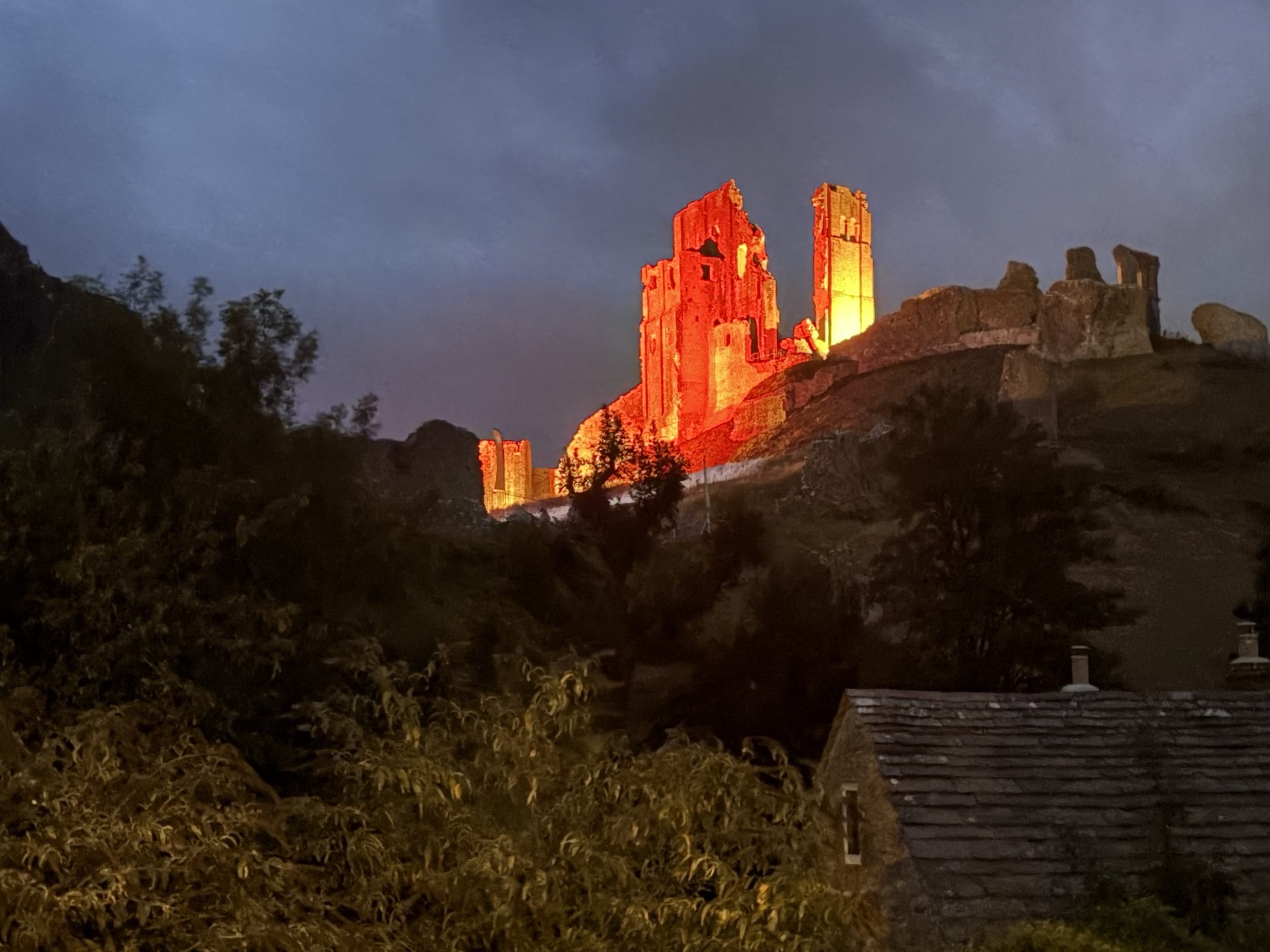
Dorset is very good in autumn.
The beaches grow quieter, the leaves begin to turn, mist settles over the hills, and some of the places we’ve walked past countless times suddenly feel completely different.
Dorset certainly isn’t short of ghost stories.
There are ruined castles said to be haunted by mysterious figures, an abandoned village whose residents left during the Second World War and never returned, ancient earthworks steeped in centuries of folklore, underground tunnels beneath Weymouth, and one Tudor manor where the resident ghost is said to be an ape.
Some of the stories are rooted in documented history, while others have been passed down through generations and firmly belong to the realm of local legend.
We’ve visited many of these places ourselves, often without giving much thought to their more mysterious stories. Come October, however, they offer a rather different way to explore the county.
So, if you’re staying in one of our Dorset holiday cottages this autumn, we’ve put together a selection of Dorset’s most intriguing haunted places, along with a few spooky trails and the Halloween events we’d include on our own list.
And don’t worry. You don’t need to believe in ghosts to enjoy them.
Corfe Castle: Dorset’s Most Dramatic Haunted Ruin
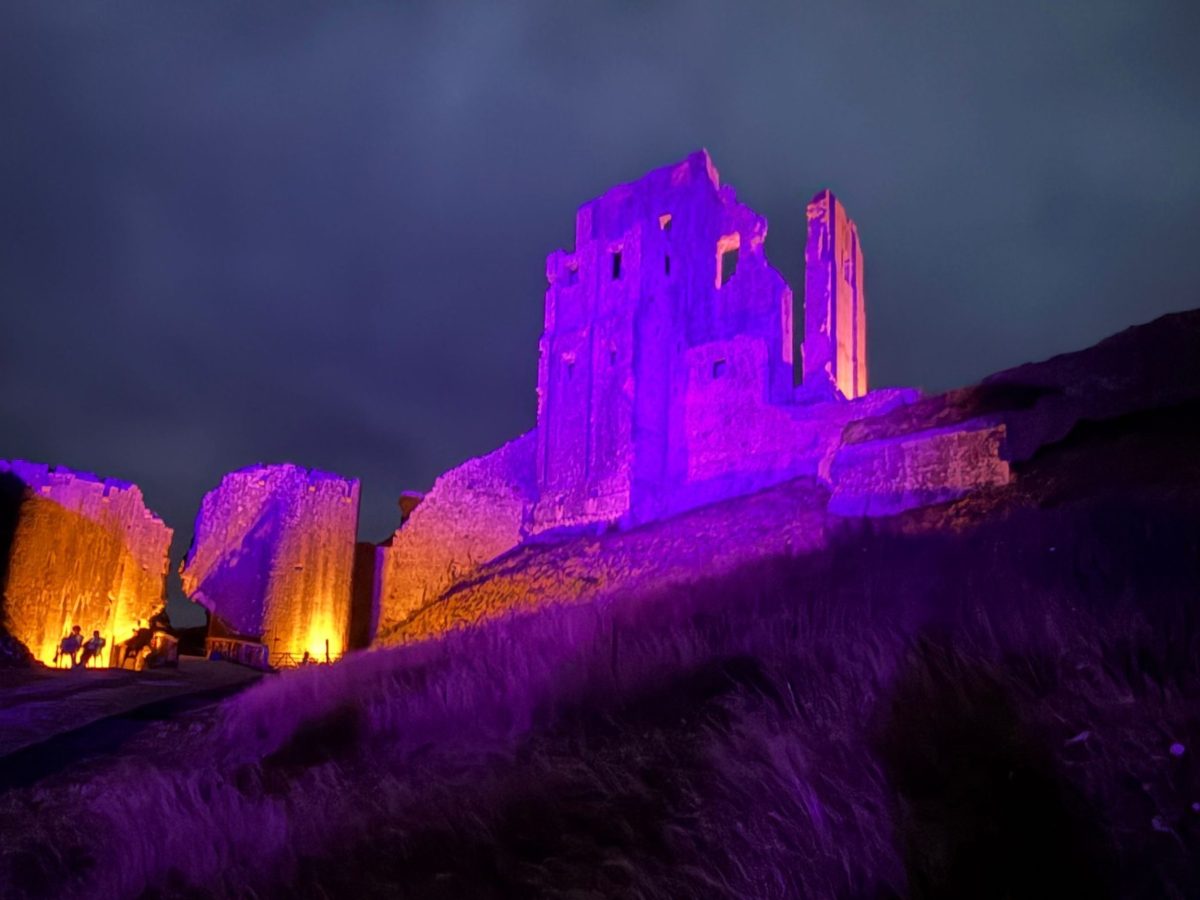
If we were choosing one place in Dorset for a Halloween adventure, Corfe Castle would be hard to beat.
We’ve visited Corfe many times over the years, and the castle is impressive in every season. But there’s something about seeing its ruined walls rise above the village on a misty autumn morning that makes its darker history particularly easy to imagine.
Corfe Castle has witnessed nearly a thousand years of conflict, imprisonment and political intrigue.
During the English Civil War, Lady Mary Bankes famously defended the castle for the Royalist cause before it was ultimately betrayed and captured by Parliamentarian forces in 1646. The castle was then slighted, leaving the extraordinary ruins we see today.
Not surprisingly, several ghost stories have grown up around it.
Perhaps the best known is the mysterious headless woman in white, said to have been seen among the ruins. Other local tales tell of unexplained lights, strange sounds and a child’s crying.
Are they true?
We’ll leave that for you to decide.
What isn’t in doubt is the atmosphere. Stand beneath those enormous ruined walls as the Purbeck Hills disappear into autumn mist, and you can understand why Corfe has inspired so many stories.
Halloween at Corfe Castle in 2026
There’s an extra reason to visit this year during October half term.
From 27 October to 1 November 2026, the National Trust is running Gruesome Tales for the Morbidly Curious, with a storyteller sharing slightly sinister tales among the castle ruins.
The sessions are family-friendly, take place during normal opening hours, and don’t require separate booking, although normal castle admission applies.
Our suggestion: make a day of it. Explore the castle in the morning, then wander through Corfe village. If you’re travelling with children, combine it with a trip on the Swanage Railway.
Tyneham. Dorset’s Real Ghost Village
Tyneham doesn’t need a ghost story to feel hauntingly so.
Hidden in a valley near the Jurassic Coast, this tiny Dorset village was evacuated in December 1943 after the surrounding land was requisitioned for military training in the Second World War.
The villagers were expected to return.
They never did.
A famous note left on the church door asked those taking over the village to treat the church and houses with care, explaining that the residents had given up their homes to help win the war.
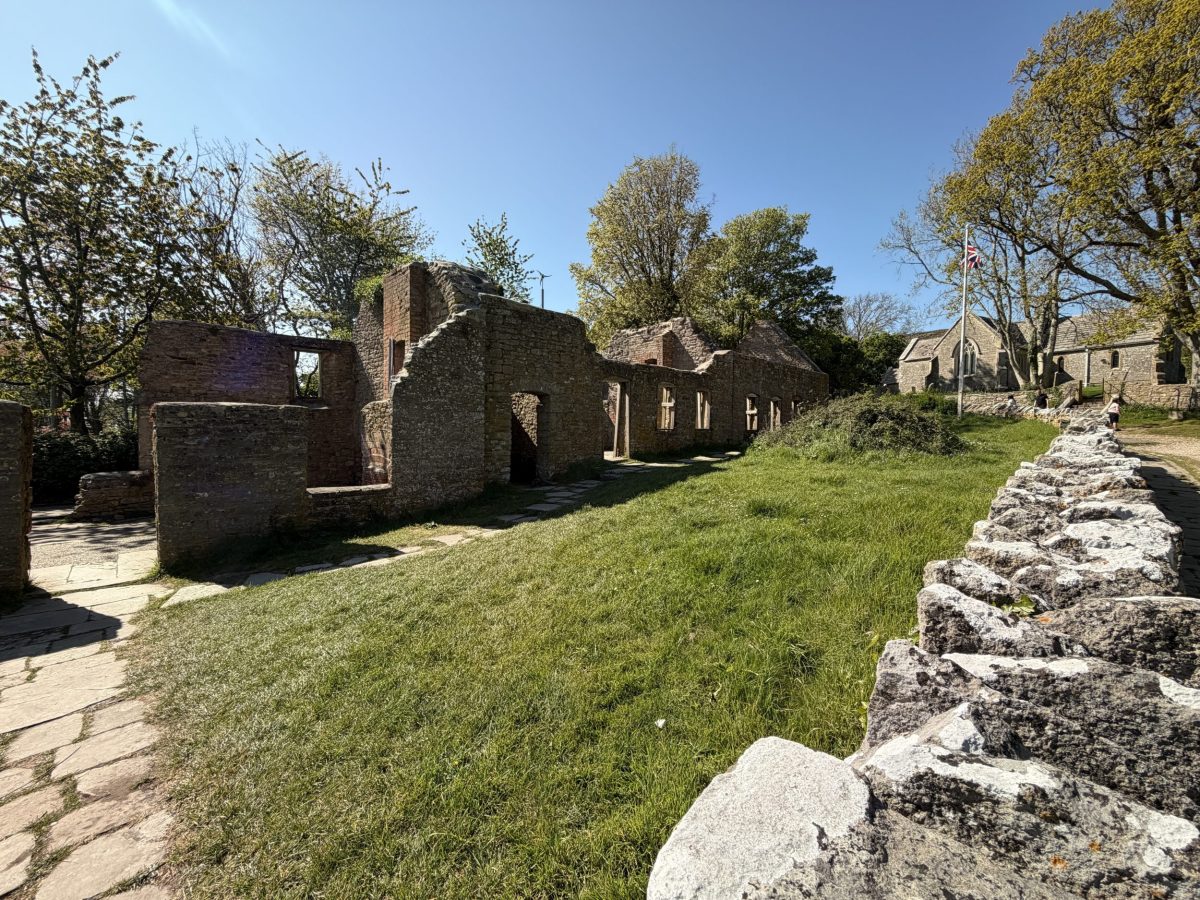
Today you can still walk among the remains of cottages and farm buildings, step into the old schoolroom, and visit the church.
We’ve visited Tyneham ourselves, and it’s one of those places where the real history is far more powerful than anything invented for Halloween.
Walking through an abandoned village set within beautiful Dorset countryside is an unusual experience at any time of year. In autumn, when there are fewer visitors, it becomes even more atmospheric.
There have inevitably been reports over the years of unexplained voices, noises and other supposed paranormal activity, but we’d regard those as part of the folklore surrounding Tyneham rather than as a reason for visiting.
The story of the people who actually lived here is far more interesting.
Our favourite way to explore Tyneham Village
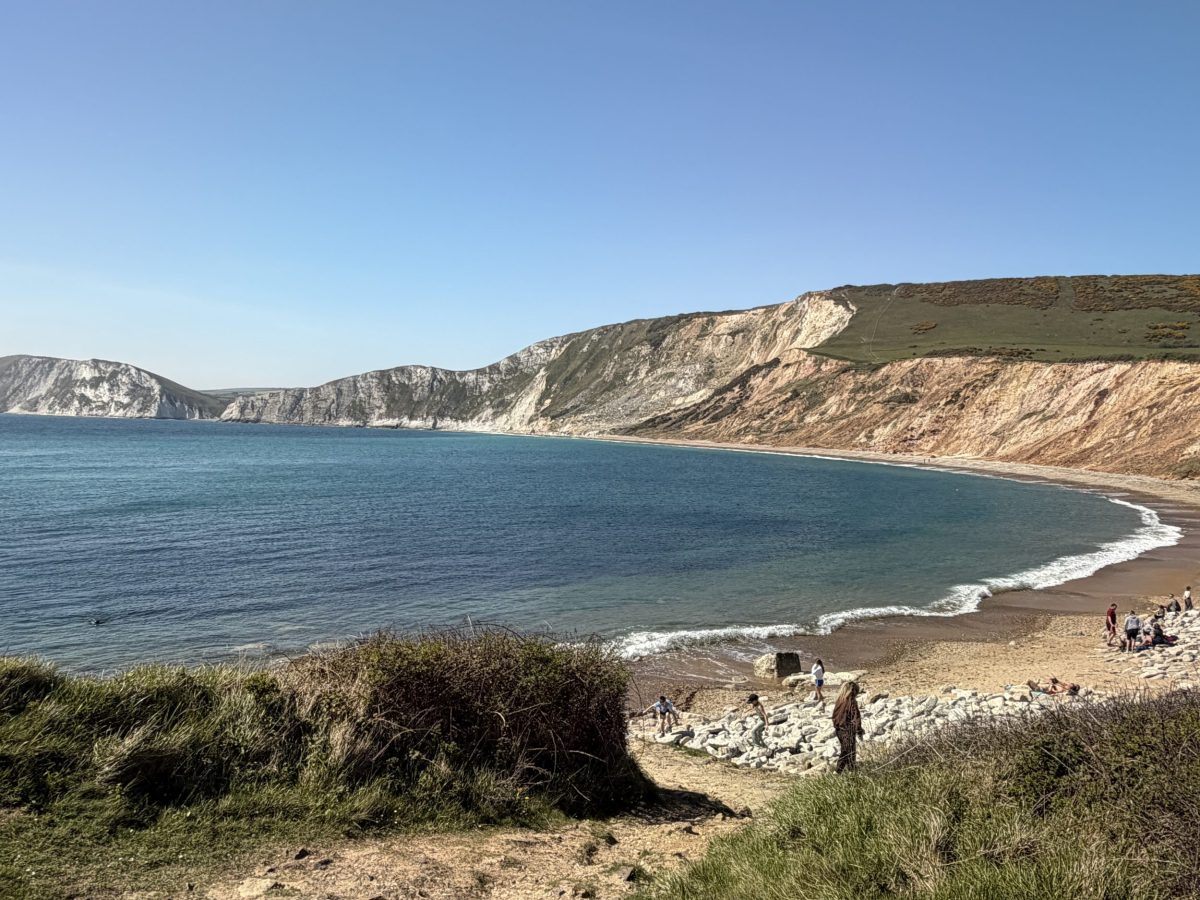
If the Lulworth Ranges are open, continue from Tyneham along the permitted path to Worbarrow Bay.
It’s a two-mile return walk and takes you through the valley towards one of the most beautiful stretches of the Jurassic Coast.
Important before you visit
Tyneham remains within an active Ministry of Defence training area, so access is restricted.
In October 2026, scheduled public access is available on 3–4, 17–18, 24–25 and 31 October, with 10–11 October closed. Access dates may change, so always check the latest MOD information before travelling.
The village gate normally opens at 9am and closes at dusk, while the church and school exhibitions are generally open from 10am to 4pm.
Having visited Tyneham Village many times with our children, we’ve put together a complete guide to making the most of your visit in our Explore Tyneham Village Guide.
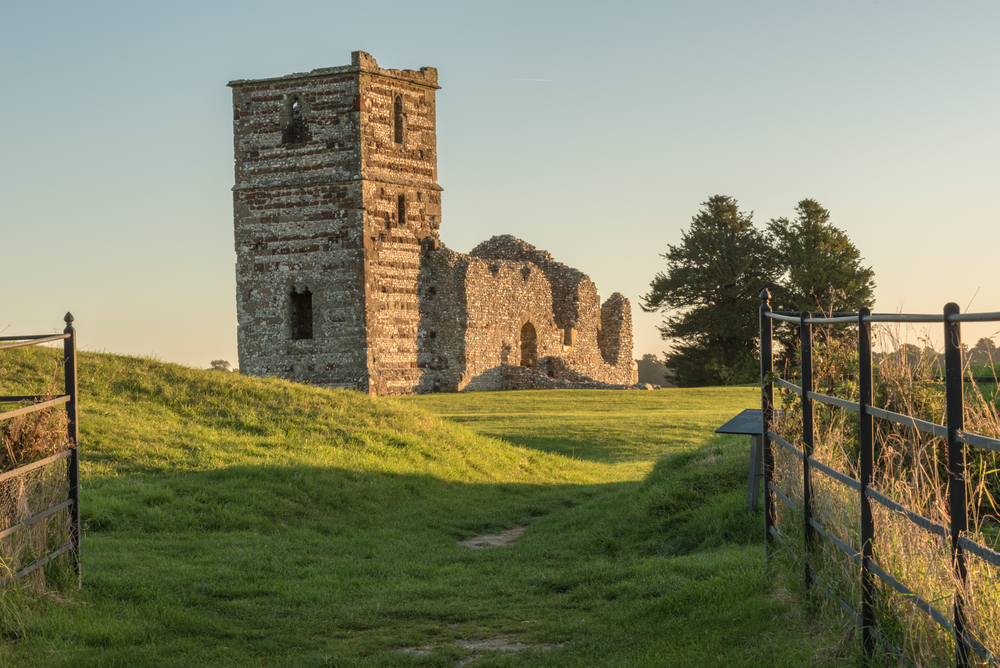
Knowlton Church & Earthworks: 4,000 Years of Mystery
This may be the most intriguing place on our list.
Near Wimborne, the roofless remains of a 12th-century Norman church stand within a much older Neolithic henge.
And by much older, we mean about 4,000 years older.
English Heritage describes the surrounding landscape as part of southern England’s great Neolithic and Bronze Age ceremonial complexes.
Nobody knows precisely why a medieval church was built within a prehistoric ceremonial monument, and that meeting of two very different beliefs has helped create centuries of folklore.
Stories associated with Knowlton include ghostly figures, unexplained faces and strange occurrences around the church.
Even English Heritage acknowledges its reputation for being haunted and records an old suggestion that the unusual arrangement of the henge ditch might have been intended to prevent spirits from escaping.
There is also a wonderfully bizarre local legend about the Devil stealing the church bell and throwing it into a nearby river.
True? Almost certainly not.
A brilliant Dorset story? Absolutely.
What makes Knowlton special to us isn’t whether you believe any of it. It’s standing inside a medieval church, surrounded by a landscape where people gathered thousands of years before Christianity reached Britain.
Visit on a crisp autumn morning, and it’s difficult not to feel the weight of history around you.

Athelhampton House and The Ape in the Wall
Dorset’s castles and ancient monuments aren’t the only places with ghost stories.
Just outside Dorchester stands beautiful Athelhampton House, a Tudor manor with gardens we’ve long considered worth visiting in their own right.
It also claims to have a surprisingly large collection of ghosts.
The most memorable is undoubtedly the Martyn Ape.
According to the legend, an ape kept by the Martyn family followed one of the daughters into a hidden room. When she later left, the unfortunate animal was trapped behind the panelling.
Its ghost is now said to appear in the Great Chamber, and scratching has reportedly been heard behind the walls.
Apparently, the ape isn’t alone.
Athelhampton itself records stories of a mysterious bride seen wandering the gardens, a hooded priest, and a female voice that simply says, “hello”.
We’ll admit that the last one would probably be enough to make us leave the room rather quickly.
Whether or not you believe the stories, Athelhampton is a wonderful autumn day out, particularly when the gardens begin to change colour.
For guests staying in our Dorchester holiday cottages or at Silverlake Estate, it’s also very close by.
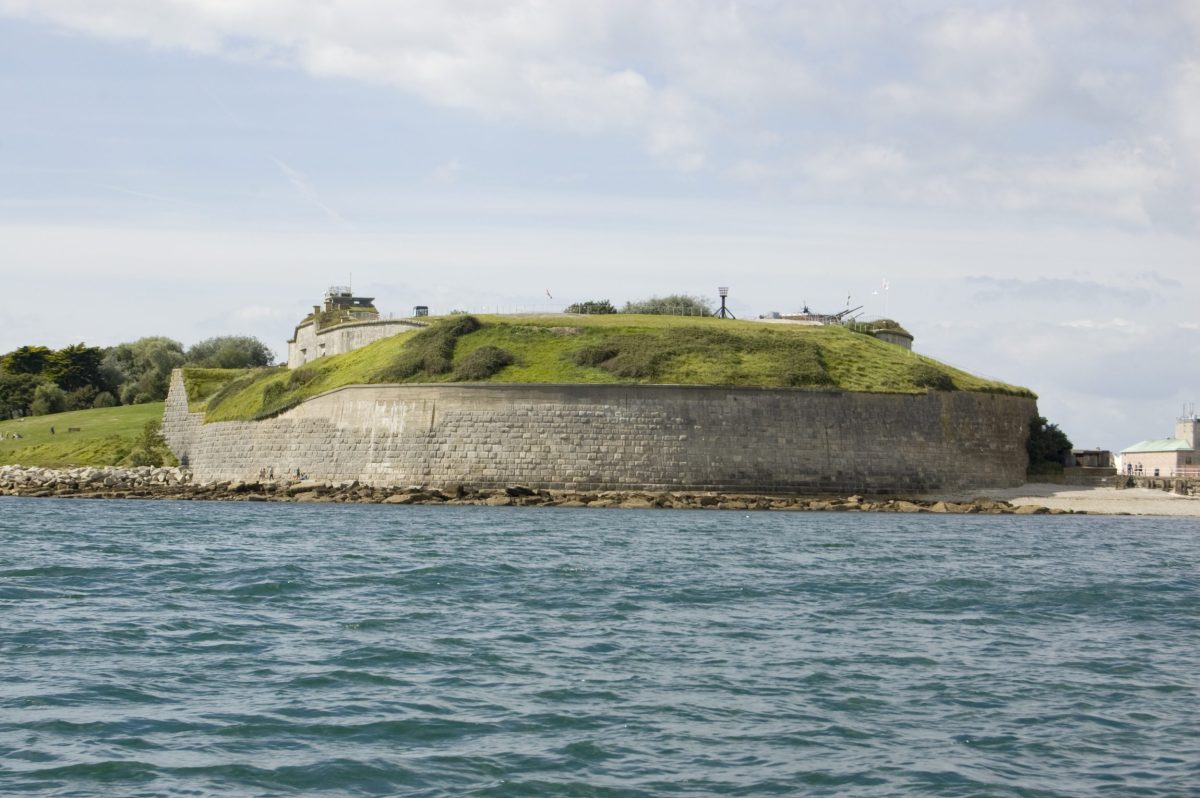
Nothe Fort. Meet Weymouth’s Whistling Gunner
We’ve visited Nothe Fort many times as a family, and even without the ghost stories, its underground tunnels are atmospheric.
Built to defend Portland Harbour, the Victorian fort overlooks Weymouth Harbour and features gun decks, underground passages, magazines and even a nuclear bunker.
Then there’s the Whistling Gunner.
He’s the fort’s best-known resident ghost, and stories of mysterious whistling and unexplained activity have become part of Nothe’s folklore.
The fort takes its paranormal reputation seriously, too. It has hosted numerous organised paranormal investigations and was once nominated as one of Britain’s spookiest locations in a National Lottery survey.
But families don’t need to join a ghost hunt to experience its darker side.
There is already a spooky Ghost Tunnel to explore on a normal visit.

Halloween Half Term at Nothe Fort 2026
This is probably our top pick for families staying in our Weymouth holiday cottages over October half term.
From Saturday 24 October to Sunday 1 November 2026, Nothe Fort is running its Halloween Half-Term Fun programme.
Activities currently announced include:
- a Halloween Mouse Hunt
- family ghost tours
- wand-making
- pumpkin golf
- spooky bingo
- creepy crafts
- Ghosty Boo Bowling
- Halloween games
The fort is open from 10am to 4pm during this period.
It’s a good option if the Dorset weather isn’t cooperating, because much of the fun happens inside the fort and its tunnels.
Our family tip: combine the fort with a walk through Nothe Gardens, then head down to Weymouth Harbour. If the weather is kind, you can easily make a full day of it without moving the car. If you’re planning to dine by the water, check out our curated guide to the best places to eat in Weymouth Harbour for our top local recommendations.

Dorchester. Ghosts, Romans and the Bloody Assizes
You don’t need to travel far into the Dorset countryside to find spooky stories.
Dorchester has enough for an entire trail of its own.
We know the town extremely well and usually recommend its museums, independent shops and restaurants to our guests. But look a little deeper, and you’ll discover a much darker side to Dorset’s county town.
Begin at Maumbury Rings
What looks today like a peaceful grassy amphitheatre has an extraordinary history.
Maumbury Rings began as a Neolithic henge and was later adapted by the Romans as an amphitheatre.
Centuries later, it became associated with executions.
One of the most infamous cases involved Mary Channing, who was executed here in 1706 after being convicted of murdering her husband.
Perhaps unsurprisingly, stories of ghostly figures have become associated with the site.
Continue towards High West Street
From Maumbury Rings, head into Dorchester’s historic centre towards High West Street.
Here you’ll find Shire Hall Museum, one of our favourite recent discoveries in Dorchester.
The building contains the original cells and courtroom, associated with more than two centuries of justice and injustice. It’s also closely linked to the Tolpuddle Martyrs, who were tried here in 1834.
Before climbing the stairs into the courtroom, walk through the cells, and it’s remarkably easy to imagine how intimidating this building must once have been.
The surrounding streets also have links to Judge George Jeffreys and the notorious Bloody Assizes of 1685, when hundreds of people were tried after the failed Monmouth Rebellion.
For older children interested in history, it’s a fascinating way to explore Dorchester beyond the usual attractions.
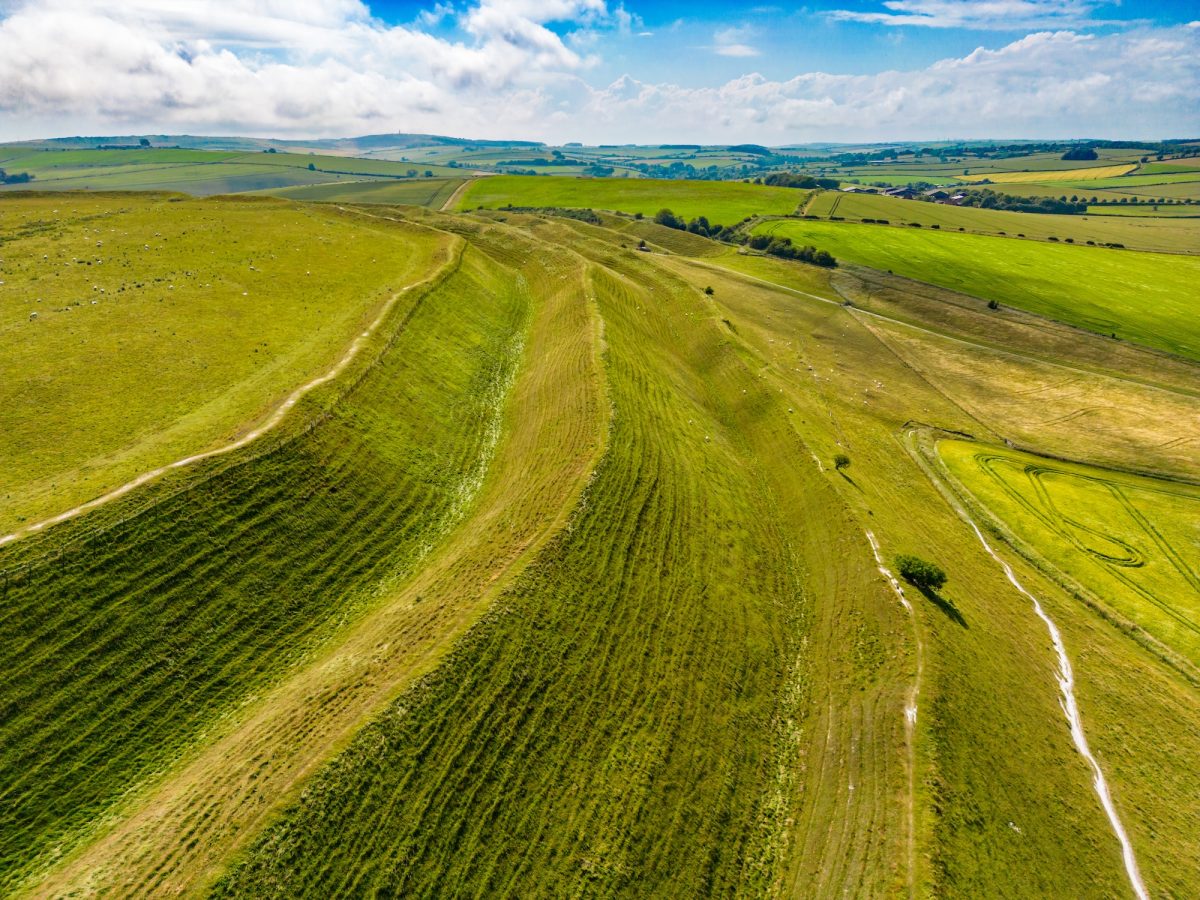
Maiden Castle. Ancient Mysteries Above Dorchester
Just outside Dorchester lies a place we’ve walked many times: Maiden Castle.
It’s difficult to appreciate its scale until you’re standing on it.
This enormous Iron Age hillfort covers an area roughly equivalent to 50 football pitches, making it among the largest and most complex hillforts in Europe.
Its history dates back thousands of years.
And naturally, somewhere this ancient has gathered a few ghost stories.
Local folklore records sightings of Roman soldiers and mysterious lights around the ramparts.
There’s no evidence to support any of these stories, but you hardly need ghosts to make Maiden Castle atmospheric.
Walk along the enormous earthworks when the wind is blowing across the hill, and there are surprisingly few reminders of modern Dorset.
English Heritage has also created Echoscape, a free 40-minute immersive audio experience designed to be listened to while exploring the landscape. It brings together imagined perspectives from different periods in Maiden Castle’s history and is suitable for ages seven and over.
We’d choose this rather than try to turn Maiden Castle into an after-dark ghost hunt.
Visit in daylight, wear good walking shoes, and let 4,000 years of history set the atmosphere.
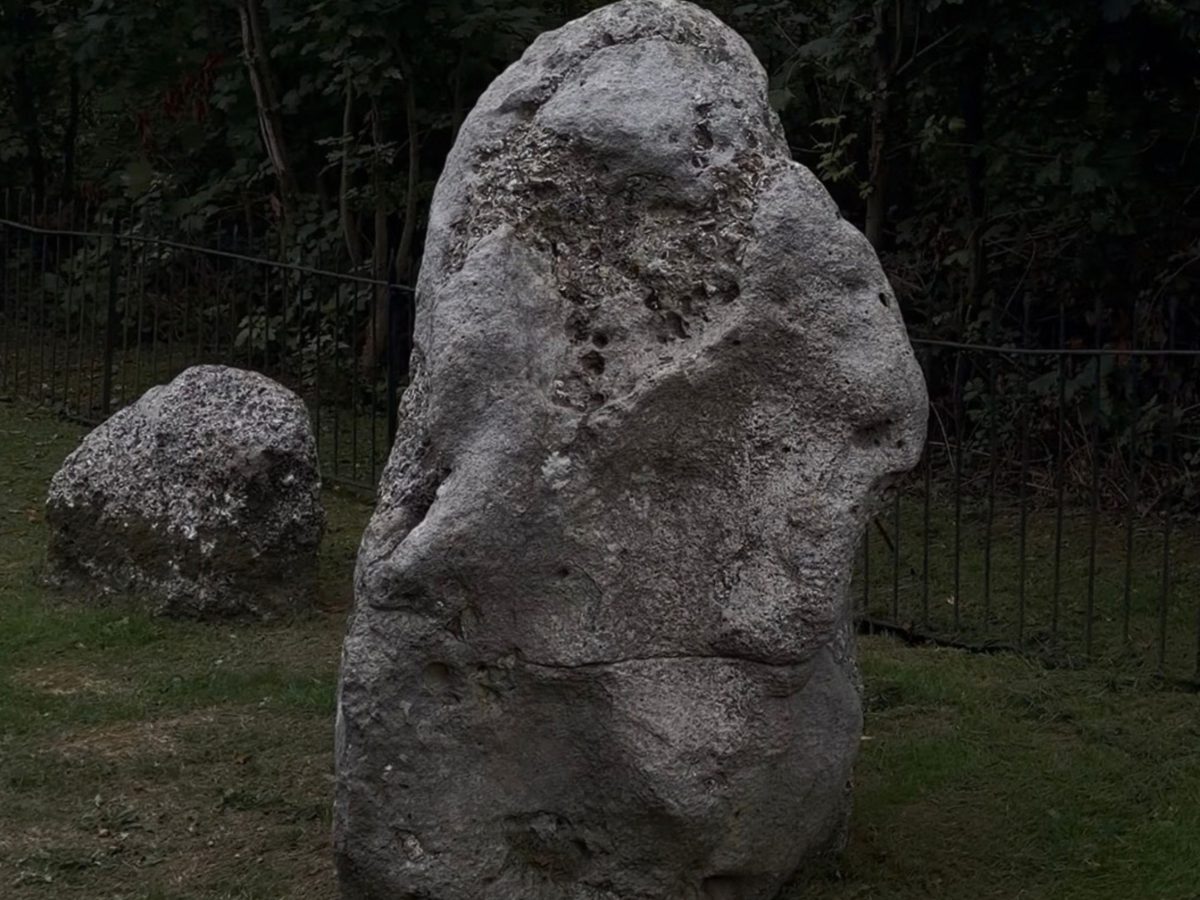
The Nine Stones. Dorset’s Ancient Stone Circle
If Knowlton Church and Maiden Castle leave you wanting more of Dorset’s ancient mysteries, there’s another place to discover near Winterbourne Abbas.
Hidden within a small wooded glade are The Nine Stones.
The stone circle was built around 4,000 years ago and is one of only four surviving examples in south Dorset.
It’s tiny compared with Stonehenge, but that’s part of what makes it fascinating.
There are no visitor centres or vast car parks. Just nine ancient stones tucked among the trees.
Nobody knows precisely why stone circles such as this were built, although they clearly held ritual significance for the communities that built them.
It’s free to visit and makes a fascinating addition to a Dorset ancient-history trail, especially when combined with Maiden Castle.
There is a permissive walking route to the stones, and the site can be muddy in autumn, so sturdy footwear is advisable. Parking is difficult, so our best advice is to park at the nearby Coach House Inn.
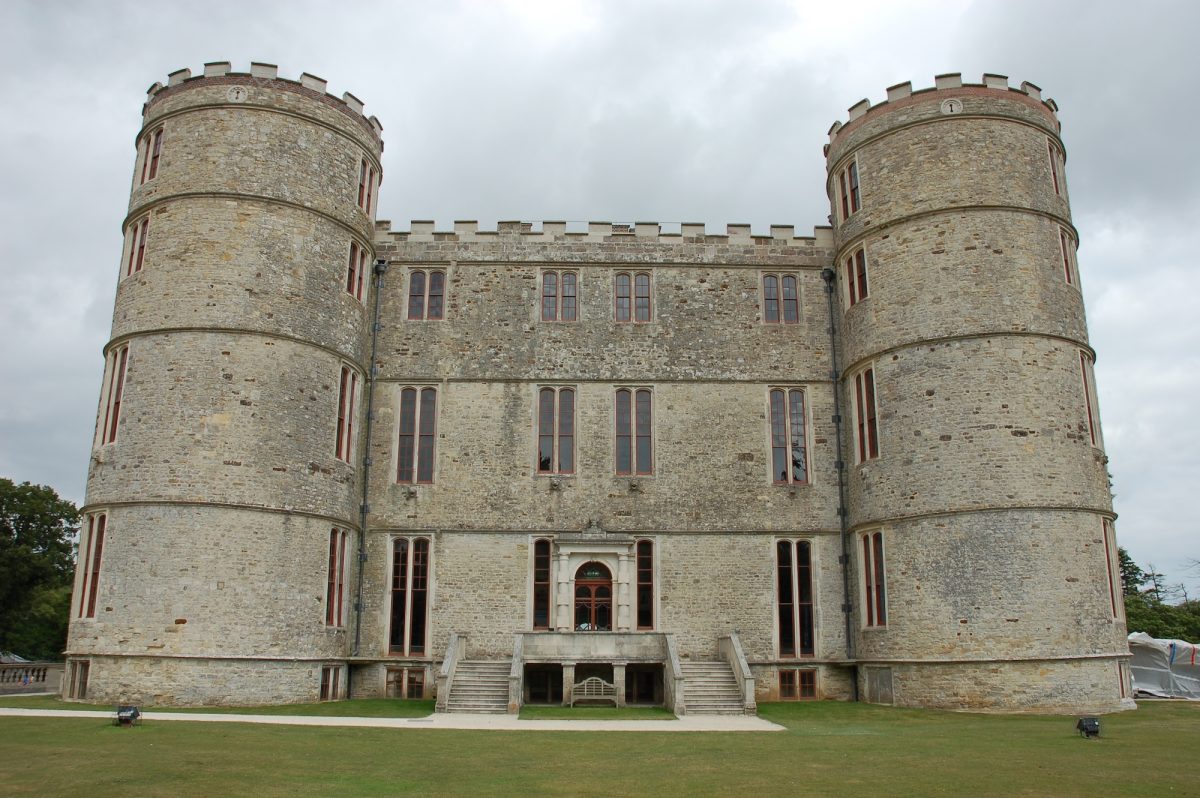
Lulworth Castle. History with a Gothic Edge
Most people visiting Lulworth head straight for Lulworth Cove and Durdle Door.
But a few miles inland, somewhere stands completely different.
Lulworth Castle was built in the early 17th century as a hunting lodge and was once used to entertain the aristocracy and royalty.
A devastating fire in 1929 destroyed much of its interior, and the building has since undergone partial restoration.
With its towers, woodland and extensive parkland, it looks particularly impressive against an autumn sky.
Over the years, various ghost stories have become associated with Lulworth, including tales of a mysterious Grey Lady, though we’d regard these as local folklore rather than established history.
The real history is interesting enough.
You can climb the castle tower, explore the parkland and woodland, visit St Mary’s Chapel, and discover the remarkable story of the building’s destruction and its subsequent restoration.
And because it’s close to both Tyneham and the Jurassic Coast, it’s very easy to build a full autumn day of exploring this part of Dorset.

Halloween Events in Dorset for 2026
If you’d prefer your ghosts professionally organised rather than lurking in a 4,000-year-old stone circle, several Halloween events are already confirmed in Dorset this October.
Corfe Castle – Gruesome Tales for the Morbidly Curious
27 October–1 November 2026
Family-friendly spooky storytelling amongst the ruins of Corfe Castle.
Nothe Fort Halloween Half Term
24 October–1 November 2026
Ghost tours, Halloween trails, crafts, wand-making, pumpkin golf and family activities, all within one of Weymouth’s most atmospheric attractions.
Swanage Railway Halloween Ghost Trains
30 & 31 October 2026
Swanage Railway’s family-friendly Ghost Train returns for 2026, combining a heritage railway journey with Halloween entertainment and mysterious encounters along the route.
Tickets are already on sale, so this is one we’d book rather than leave until half term.
As seasonal events can change, we’d always recommend checking directly with each attraction before setting out. If you’re looking for further inspiration we’ve produced a complete guide for Halloween and Half-Term in Dorset 2026.
Three Spooky Dorset Trails We’d Recommend
Rather than simply visiting one location, several of these places work brilliantly together.
The Purbeck Ghost Village & Castle Trail
Corfe Castle. Tyneham. Worbarrow Bay
Start among the ruins at Corfe Castle before driving towards Tyneham on an official range-opening day.
Explore the deserted village, and if conditions are favourable, continue along the valley to Worbarrow Bay.
We’d allow most of the day for this one rather than rushing through it.
For families visiting on 30 or 31 October, you could swap Worbarrow for the Swanage Railway Ghost Train to make it a proper Halloween day out.
The Dorchester Ancient Mysteries Trail
Maiden Castle. Maumbury Rings. Shire Hall
This would probably be our favourite if you’re staying at Silverlake Estate.
Begin with a morning walk around Maiden Castle, then head into Dorchester.
Explore Maumbury Rings, stop for lunch in town, then visit Shire Hall’s historic cells and courtroom.
It’s an easy day without spending hours in the car, and it mixes outdoor exploration with somewhere indoors if the October weather changes.
The Ancient Dorset Trail
Knowlton Church. Maiden Castle. The Nine Stones
This one is for anyone fascinated by ancient Dorset.
In a single day, you can stand inside a Neolithic henge, walk the ramparts of one of Europe’s largest Iron Age hillforts, and finish beside a stone circle dating back approximately 4,000 years.
That’s quite a lot of history for a single Dorset day.
We’d keep this firmly as a daylight route, particularly in autumn. These are rural historic sites rather than visitor attractions with lighting, surfaced paths and facilities.
Or if you like exploring historic ruins, you can discover all 12 included in our Dorset castle guide, each offering a spooky spot for a Halloween half-term day out.

Visiting Dorset at Halloween and October Half Term
October is one of the times of year we particularly enjoy exploring Dorset.
The summer crowds have gone, the countryside is changing colour and even some of the county’s most famous places feel completely different.
It’s also a brilliant time for a family break.
Staying in one of our family holiday cottages in Dorset puts places such as Nothe Fort, Corfe Castle, Swanage Railway, Maiden Castle, Tyneham and Athelhampton within easy reach.
Several of our cottages are located on Silverlake Estate, between Dorchester and the Jurassic Coast, and are particularly well positioned for the trails in this guide.
After a windswept October walk around an Iron Age hillfort, there is definitely something to be said for returning to one of our luxury holiday cottages in Dorset, lighting the fire and deciding that any remaining ghosts can stay outside. Some of Dorset’s spookiest places are best explored outdoors, but if the weather has other ideas, there are plenty of fascinating places to discover inside too. Take a look at our favourite indoor attractions and family days out in Dorset for a few alternatives when the rain arrives.
Ready to Explore Dorset’s Darker Side?
We suspect Dorset’s ghosts will continue to divide public opinion.
Some people will happily walk through Nothe Fort’s tunnels without a second thought.
Others will hear a single unexplained whistle and be back in the café before anyone else has noticed.
We’re probably somewhere in the middle.
What we do know is that autumn reveals a fascinating side of Dorset that visitors during the height of summer don’t always get to see.
Ancient landscapes, ruined castles, deserted villages, and thousands of years of stories are waiting to be discovered, whether you believe in ghosts or not.
And if you do happen to see the headless woman at Corfe Castle, what will you do?
Perhaps don’t mention that we sent you.
Frequently Asked Questions
Corfe Castle, Athelhampton House, Nothe Fort and Knowlton Church are among Dorset’s best-known locations for ghost stories and paranormal folklore. Tyneham is often described as Dorset’s “ghost village”, although its atmosphere stems primarily from its extraordinary wartime history rather than from supernatural tales.
Nothe Fort is running Halloween activities from 24 October to 1 November 2026, while Corfe Castle offers family-friendly spooky storytelling from 27 October to 1 November. Swanage Railway’s Halloween Ghost Trains are scheduled for 30 and 31 October 2026. Always check the latest information from the attraction before travelling. For more inspiration we’ve produced a complete guide to Halloween and Half term fun during October.
There are several longstanding ghost stories associated with Corfe Castle, including accounts of a mysterious headless woman and other unexplained apparitions. They remain legends rather than verified paranormal events, yet the castle’s turbulent history and dramatic ruins have certainly helped the stories endure.
Tyneham was evacuated in December 1943 so the surrounding area could be used for military training during the Second World War. Residents expected to return after the war but were never able to permanently resettle in their village. The abandoned buildings, together with the preserved church and school, have led to its popular description as Dorset’s ghost village.
Access depends on the Lulworth Ranges military training schedule. The official 2026 schedule lists Tyneham as accessible on 24–25 October and 31 October, but visitors should always check the latest MOD access information before travelling.
Many are. Corfe Castle, Nothe Fort, Swanage Railway, Athelhampton and Shire Hall can all make fascinating family days out. Remote ancient sites such as Maiden Castle, Knowlton and The Nine Stones are better suited to daytime historical adventures rather than places for children to explore after dark.
A central Dorset base works particularly well, as many of the county’s Halloween attractions and historic sites are within a short drive. Our Dorchester holiday cottages and those at Silverlake Estate are well positioned for Maiden Castle, Athelhampton, Tyneham, Lulworth and Corfe Castle, while our Weymouth holiday cottages are ideal for Nothe Fort and for exploring the Jurassic Coast.
You can also browse our full collection of Dorset holiday cottages, including family-friendly stays and luxury cottages for autumn breaks.