
The Curated Guide to Dorset’s Jurassic Coast
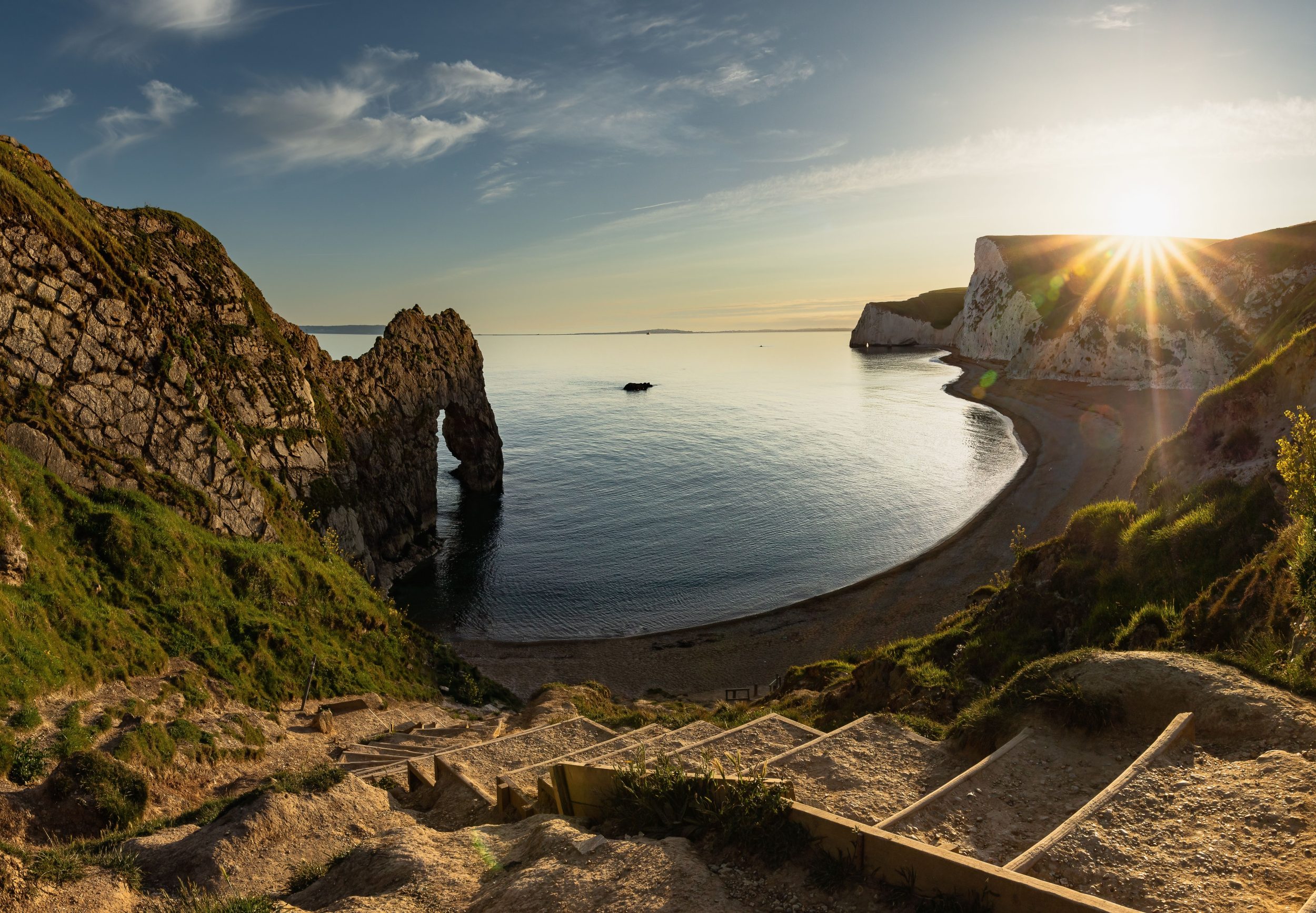
There are some Dorset views we never tire of.
The first glimpse of Durdle Door as you crest the hill. Portland appearing beyond the sweep of Chesil Beach. The golden cliffs at West Bay catching the evening sun. Or looking back towards Old Harry Rocks after a long walk across the Purbeck Hills.
After living in Dorset for more than 15 years, we’ve explored this coastline in almost every season, with our children when they were younger, on long walks with Smarty along the beach and the coastal path, and occasionally from the water.
And one thing we’ve learned is that the Jurassic Coast is far more interesting when you look beyond the famous photographs.
Durdle Door and Lulworth Cove absolutely deserve their reputation, but this extraordinary stretch of Dorset also conceals fossil beaches, abandoned villages, old quarries, tiny coves, wild headlands, peaceful walking routes, and some of Britain’s most fascinating geology.
If you’re staying in one of our holiday cottages in Dorset, this is our guide to exploring the Dorset Jurassic Coast properly, covering the places everyone knows, a few we think deserve much more attention, and some of the walks and beaches we return to ourselves.
What makes the Jurassic Coast so special?
The Jurassic Coast became a UNESCO World Heritage Site in 2001 and is England’s only natural World Heritage Site.
Stretching for approximately 155 kilometres from East Devon to Old Harry Rocks in Dorset, its cliffs and beaches reveal around 185 million years of Earth’s history.
Despite its name, the Jurassic Coast isn’t actually all Jurassic.
The rocks exposed along the coastline span three geological periods: the Triassic, Jurassic and Cretaceous, creating an almost continuous journey through the Mesozoic Era.
You certainly don’t need to be interested in geology to appreciate it. But once you understand a little of what you’re seeing, the landscape becomes even more remarkable.
The cliffs aren’t merely beautiful backdrops. They contain evidence of ancient seas, forests, deserts and creatures that lived here millions of years ago. Because the coast is constantly changing through erosion, landslides, waves and weather, that story continues to unfold.
It’s one of the reasons we’ve always thought of the Jurassic Coast as somewhere to explore rather than simply to visit.
Where is the Jurassic Coast in Dorset?
The Dorset section of the Jurassic Coast runs from Lyme Regis and the West Dorset border eastwards through some of the county’s most spectacular coastal landscapes.
It includes Lyme Regis, Charmouth, Golden Cap, West Bay, Burton Bradstock, Chesil Beach, Portland, Weymouth, Lulworth, Kimmeridge, the Isle of Purbeck, Swanage and finally Old Harry Rocks beside Studland.
Lyme Regis: fossils, history and one of Dorset’s loveliest seaside towns
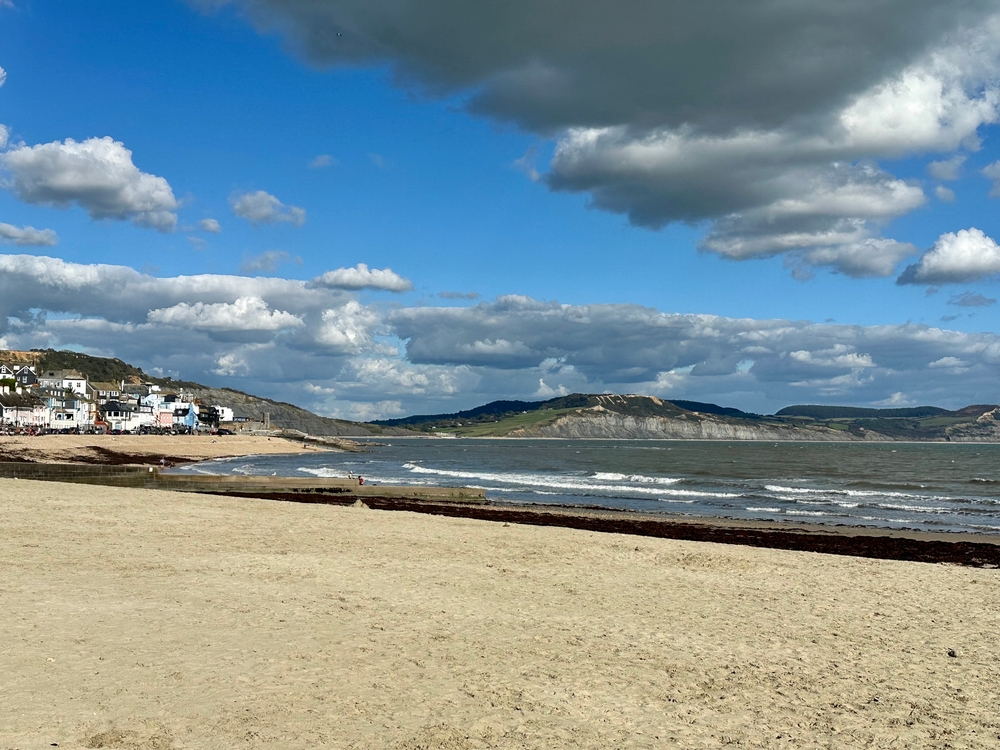
At the western end of Dorset, Lyme Regis is among the most famous places on the Jurassic Coast.
The harbour and historic Cobb are instantly recognisable, but Lyme’s real story lies in the cliffs and beaches around the town.
This was the landscape explored by pioneering fossil hunter Mary Anning in the early 19th century. Her discoveries, including significant marine reptiles, helped reshape scientific understanding of prehistoric life.
Today, Lyme Regis Museum offers a brilliant introduction to that history, while guided fossil walks are a much better starting point for beginners than simply arriving on the beach with a hammer.
One of our favourite places to explore is Monmouth Beach, just west of the Cobb. At low tide, you can walk out to the remarkable Ammonite Pavement, where huge, spiral-shaped fossils of ancient sea creatures are still visible in the rocks beneath your feet.
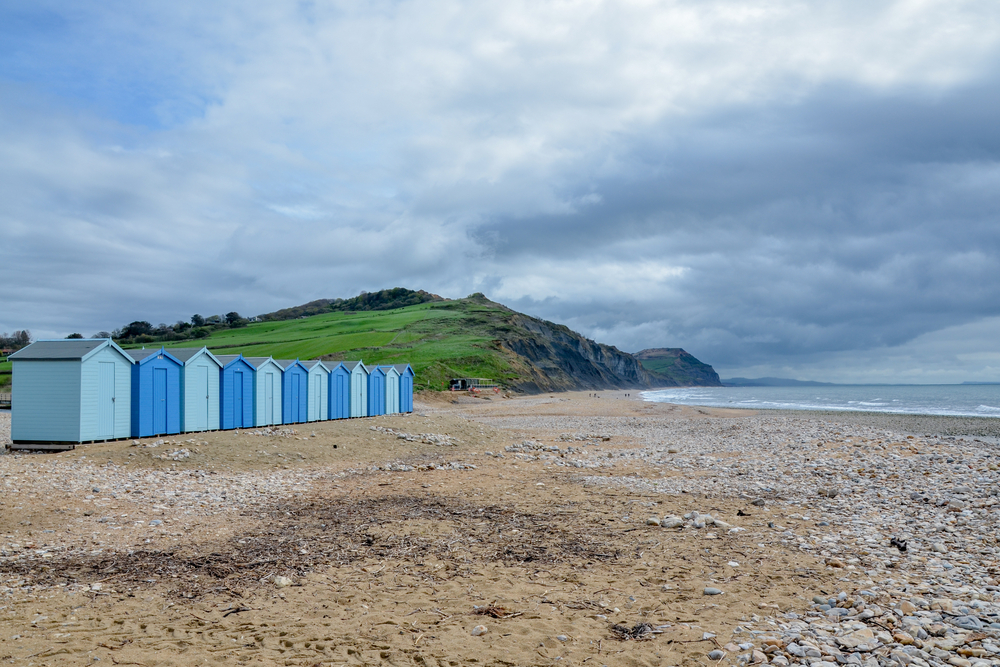
Charmouth: probably Dorset’s best introduction to fossil hunting
If you’re hoping to find fossils on the Jurassic Coast, we’d recommend putting Charmouth high on your list.
The cliffs around Charmouth and Lyme Regis are internationally significant fossil sites, and natural erosion regularly exposes fossils on the beach.
The Charmouth Heritage Coast Centre is an excellent place to start, particularly if you’re visiting with children. Guided fossil walks greatly enhance the experience, helping you understand why fossils appear here, what you’re looking at and how to search responsibly.
There’s an important difference between fossil hunting and attacking the cliffs.
Look among loose material on the beach, follow the local fossil-collecting code, and stay well away from unstable cliff faces. These cliffs are actively eroding, and rockfalls can occur without warning.
We’d always check tide times before setting out.
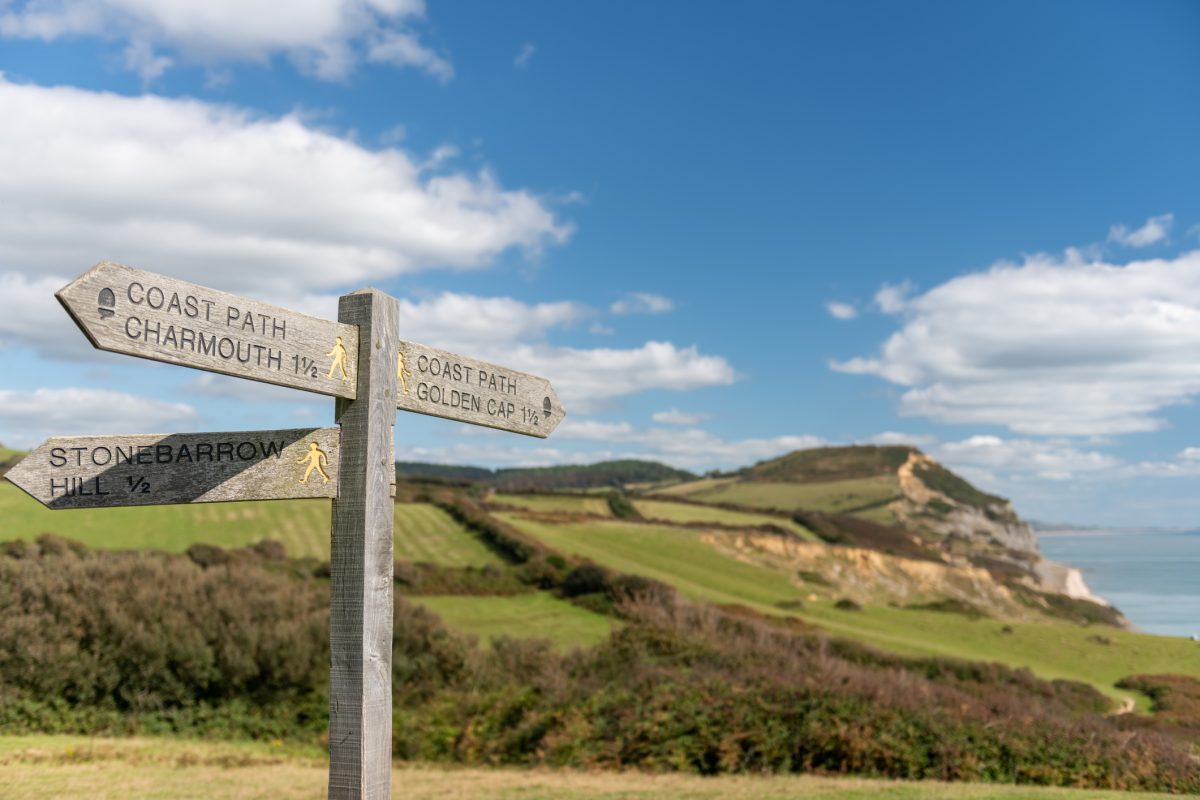
Golden Cap: one of the great Jurassic Coast walks
If you enjoy walking, Golden Cap is hard to beat.
At 191 metres, it’s the highest point on England’s south coast, with exceptional views from the top.
On a clear day, the coastline seems to stretch forever in both directions.
You can approach Golden Cap from several places, including Seatown, but we particularly like the countryside around Langdon Hill and Stonebarrow.
Stonebarrow is also a good choice if you want magnificent Jurassic Coast views without immediately joining one of Dorset’s busiest walking routes.
There are paths across open downland, with wildflowers in season and wonderful views towards Golden Cap and the sea.
This is one of the things we love about walking the Jurassic Coast. You can be standing at an internationally famous landmark one moment and, half an hour later, find yourself on a stretch of path with remarkably few people.
Golden Cap itself requires a proper climb, so allow time and wear suitable footwear.
The view is worth it.
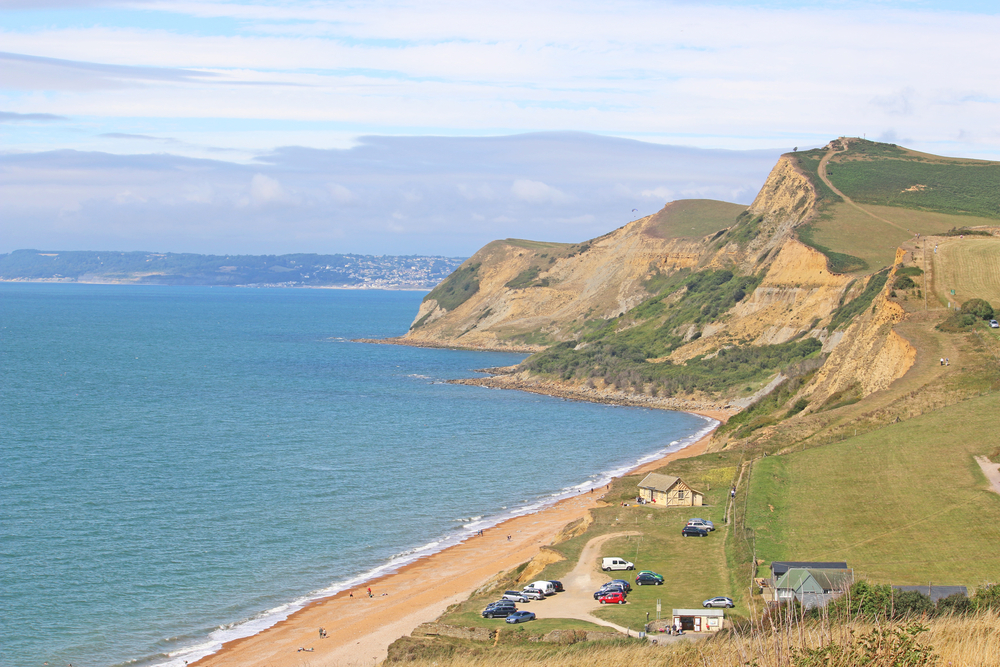
Seatown and Eype: quieter beaches beneath the cliffs
Just beneath Golden Cap lies Seatown, a small coastal hamlet with a shingle beach and huge cliffs rising behind it.
A little further east, Eype is another place we think deserves more attention.
It lacks the facilities of Weymouth or the instant spectacle of Durdle Door. The beach is backed by cliffs and countryside and has a wilder, less polished feel than some of Dorset’s best-known seaside destinations.
For us, these smaller Jurassic Coast beaches are an important part of what makes this coastline so special.
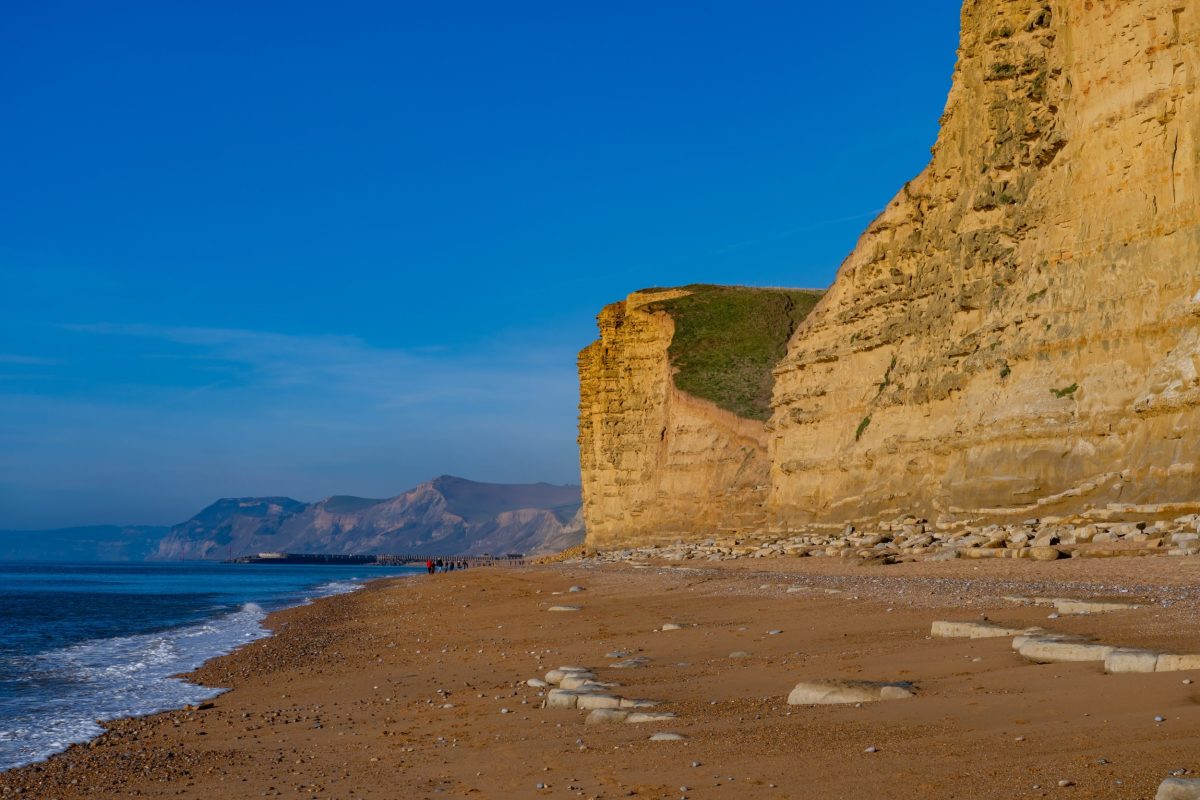
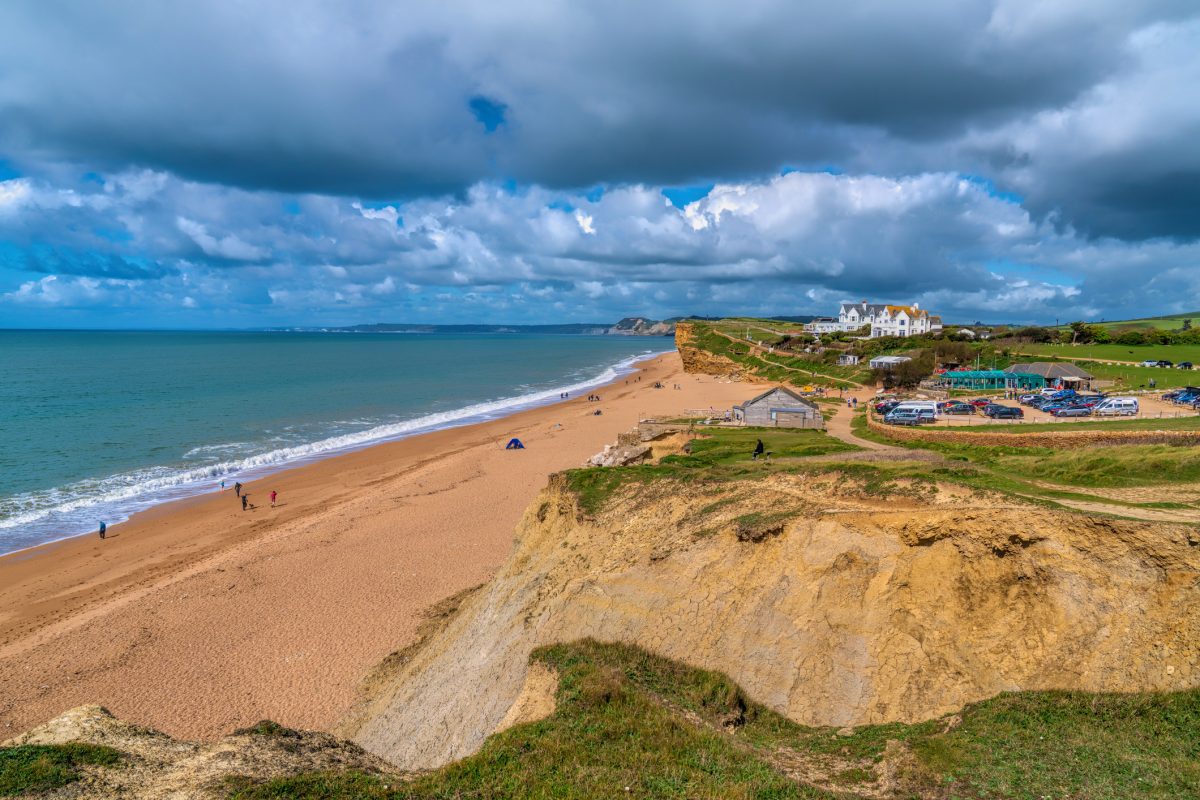
West Bay and those extraordinary golden cliffs
West Bay is one of the most instantly recognisable places on the Dorset coastline.
Its towering golden cliffs became particularly famous through ITV’s Broadchurch, but they are impressive even before you know anything about the show.
We often think West Bay works particularly well because you get two very different experiences during one visit.
There’s the harbour, cafés and bustle by the water, and then the enormous sweep of East Beach beneath the cliffs.
Bridport is only a short distance inland, so it’s easy to combine a visit to the coast with its independent shops, markets and cafés.
The cliffs can be unstable, so always keep a safe distance and never stand directly beneath them, however tempting it may be to photograph them from close up.
Burton Bradstock and Hive Beach
The cliffs around Burton Bradstock have a distinctive layered appearance that looks especially beautiful when the evening light catches the rock.
Hive Beach is somewhere we’ve returned to many times over the years, whether for a coastal walk or simply to spend time by the sea. It’s also home to one of our favourite seaside places to eat, The Hive Beach Café, which serves excellent food, particularly seafood.
Chesil Beach: Dorset on an enormous scale
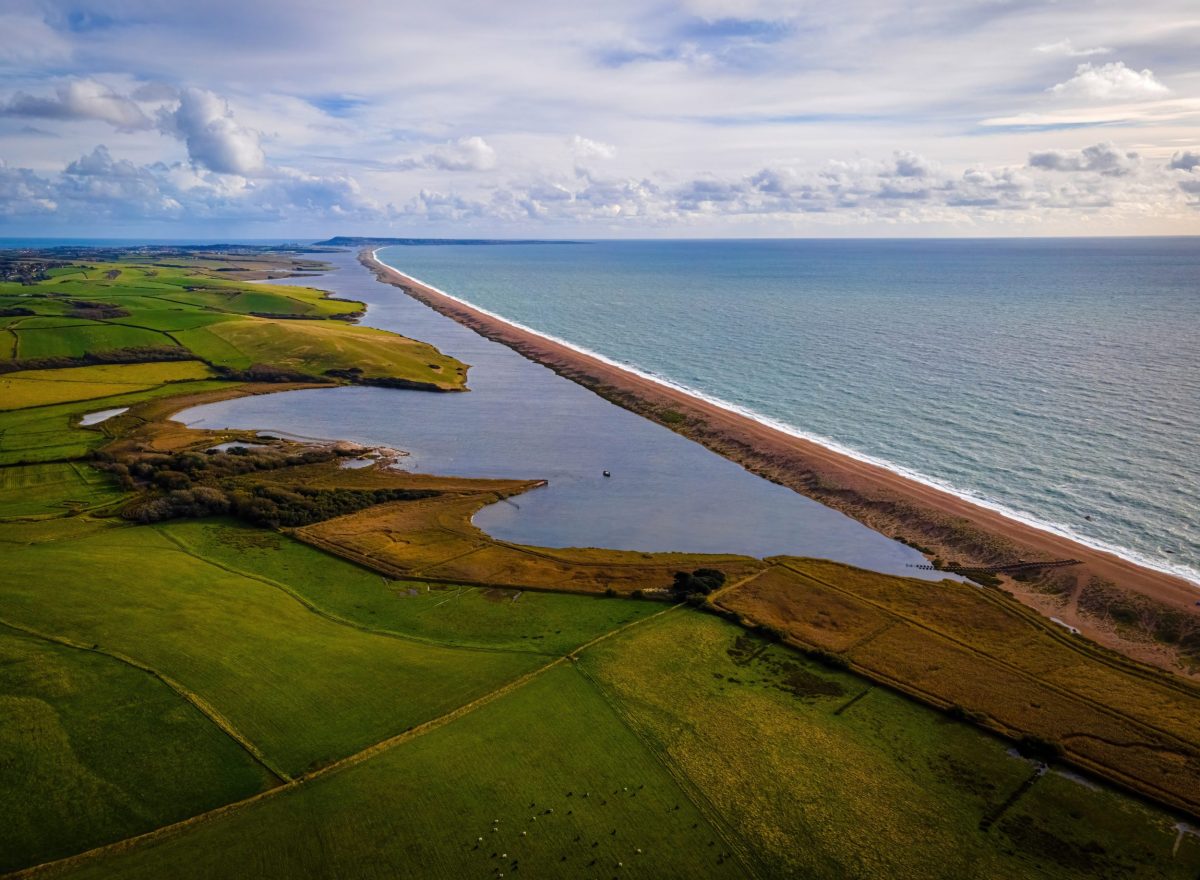
Few places make you appreciate the scale of Dorset’s coastline quite as much as Chesil Beach.
Stretching for about 18 miles, this extraordinary shingle bank runs from West Bay towards Portland, with the Fleet Lagoon lying behind much of it.
One of our favourite views is from the road approaching Portland, where Chesil Beach curves into the distance, with Lyme Bay on one side and the Fleet on the other.
The Fleet is also an important habitat for birds and other wildlife, making this part of the coast particularly rewarding for anyone who enjoys nature as much as geology.
If you’re exploring with younger children or with anyone less comfortable with long cliff walks, nearby Abbotsbury is easy to combine with Chesil Beach and offers you the Swannery, Subtropical Gardens and one of Dorset’s prettiest villages in the same area.
Portland: one of our favourite parts of the Jurassic Coast
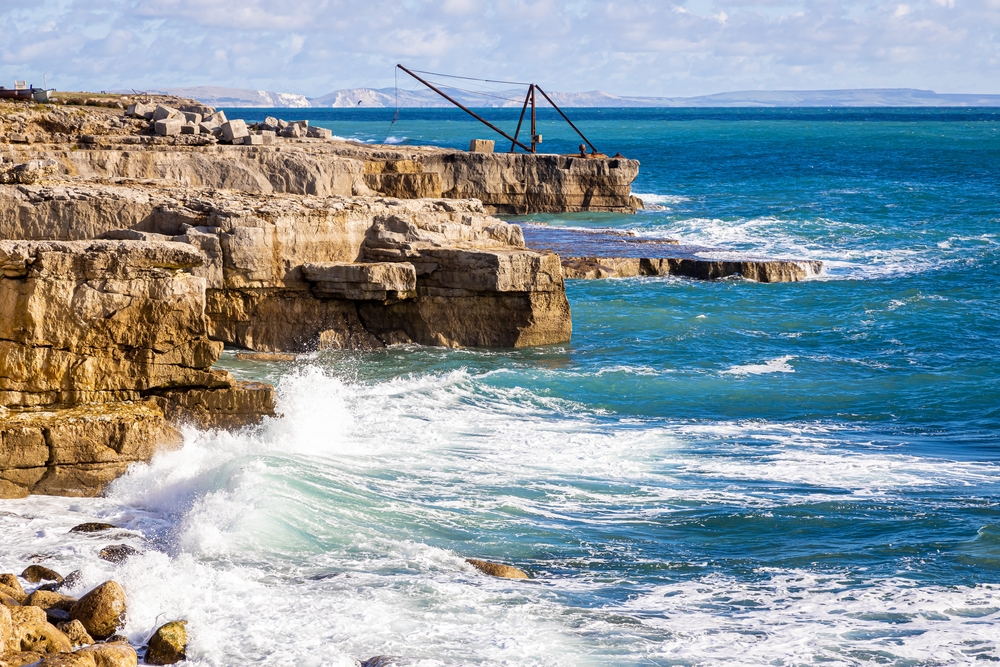
For us, Portland has always felt different from anywhere else in the county.
Drive across the causeway and the landscape changes almost immediately.
There are Portland Stone, old quarry workings, rugged cliffs, tiny coves, lighthouses, and enormous views across the Channel.
It’s one of those places where we often recommend taking a detour from the obvious route and exploring a little.
Portland Bill
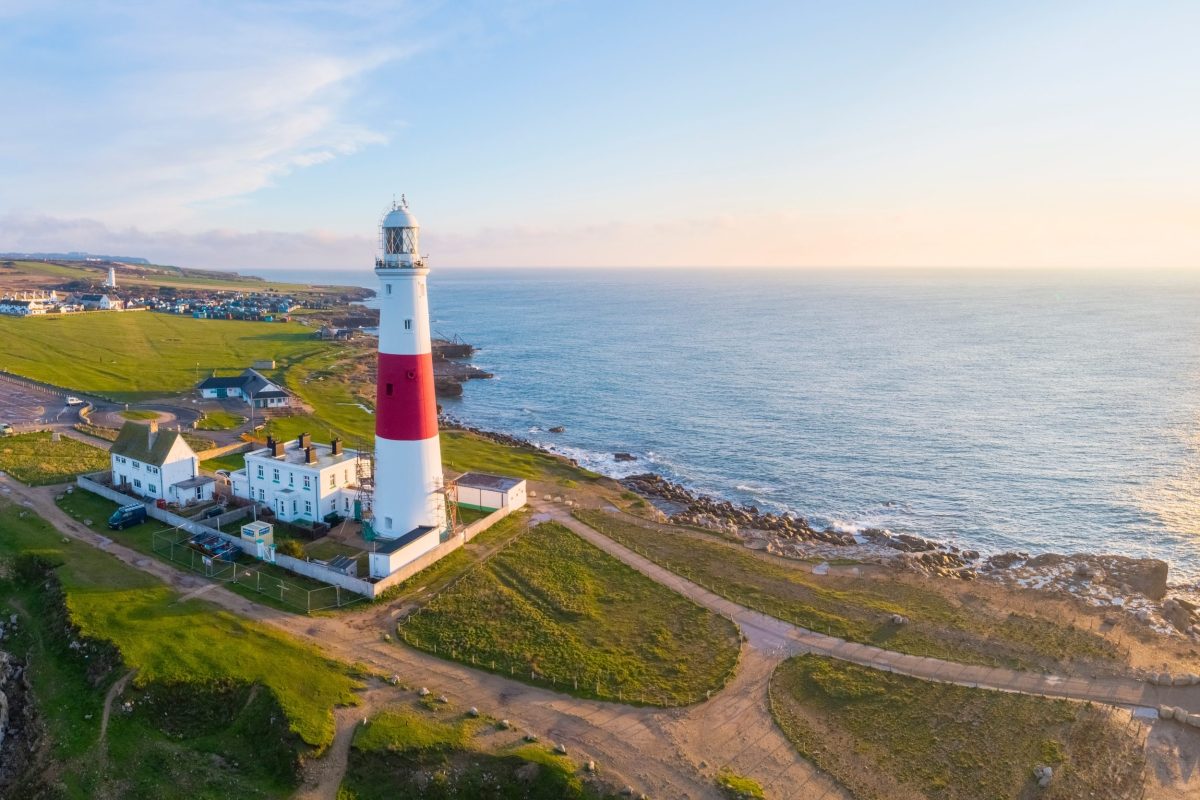
Portland Bill is the island’s best-known landmark, and rightly so.
The lighthouse stands at the southern tip of Portland and has always been a favourite with our family. Our children couldn’t wait until they were tall enough to climb to the top, and the views from the top are fantastic.
We also rarely visit Portland Bill without stopping at the Lobster Pot. When our children were younger, they were convinced the chips were the best in Dorset. And the Lobster Pot became a staple of almost every trip to the Bill.
There are some wonderful coastal walks from here too, with the landscape changing dramatically depending on the weather and the time of year.
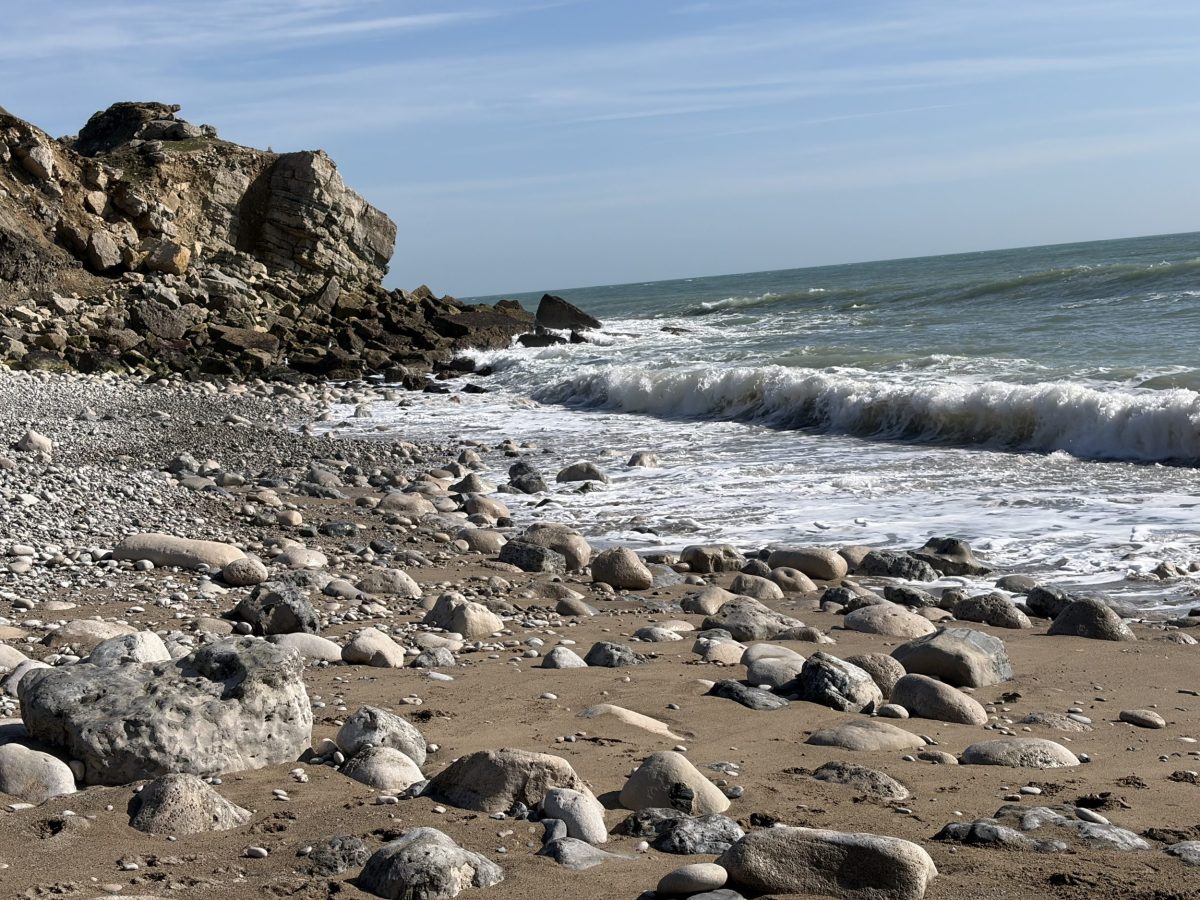
Church Ope Cove
Church Ope Cove is one of Portland’s most atmospheric yet unknown beaches.
Hidden beneath the cliffs and overlooked by the ruins of Rufus Castle, it’s reached on foot and feels wonderfully tucked away from the rest of the island.
We’ve included it in our guide to Portland’s beaches, alongside Chesil Cove and some of the island’s less obvious spots to explore.
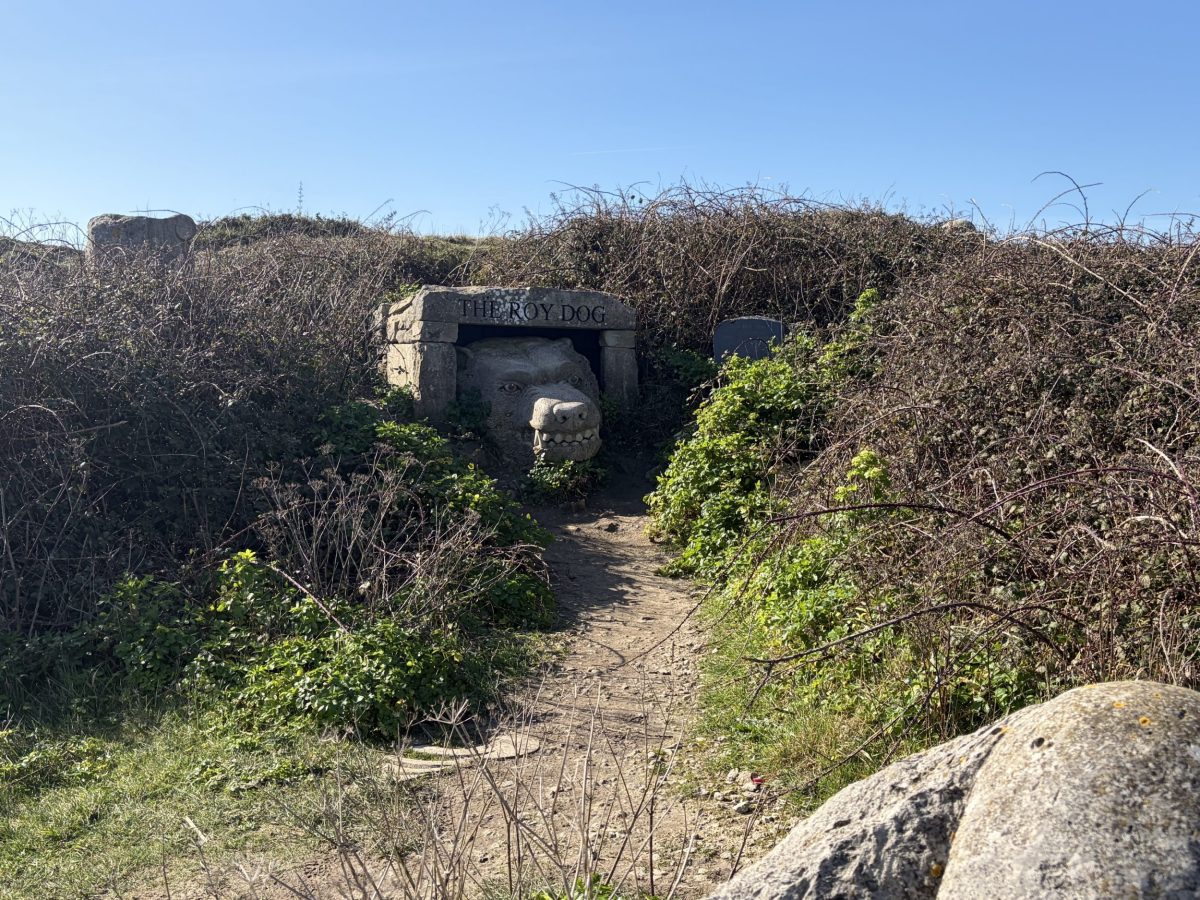
Tout Quarry
One of the things we particularly like about Portland is how often geology, history and art overlap.
Tout Quarry is a former Portland Stone quarry, now a sculpture park.
Instead of simply looking at an old industrial landscape, you’re walking amongst sculptures carved from the same stone that has helped shape buildings around Britain and far beyond Dorset.
It offers a fascinating change from a conventional coastal walk.
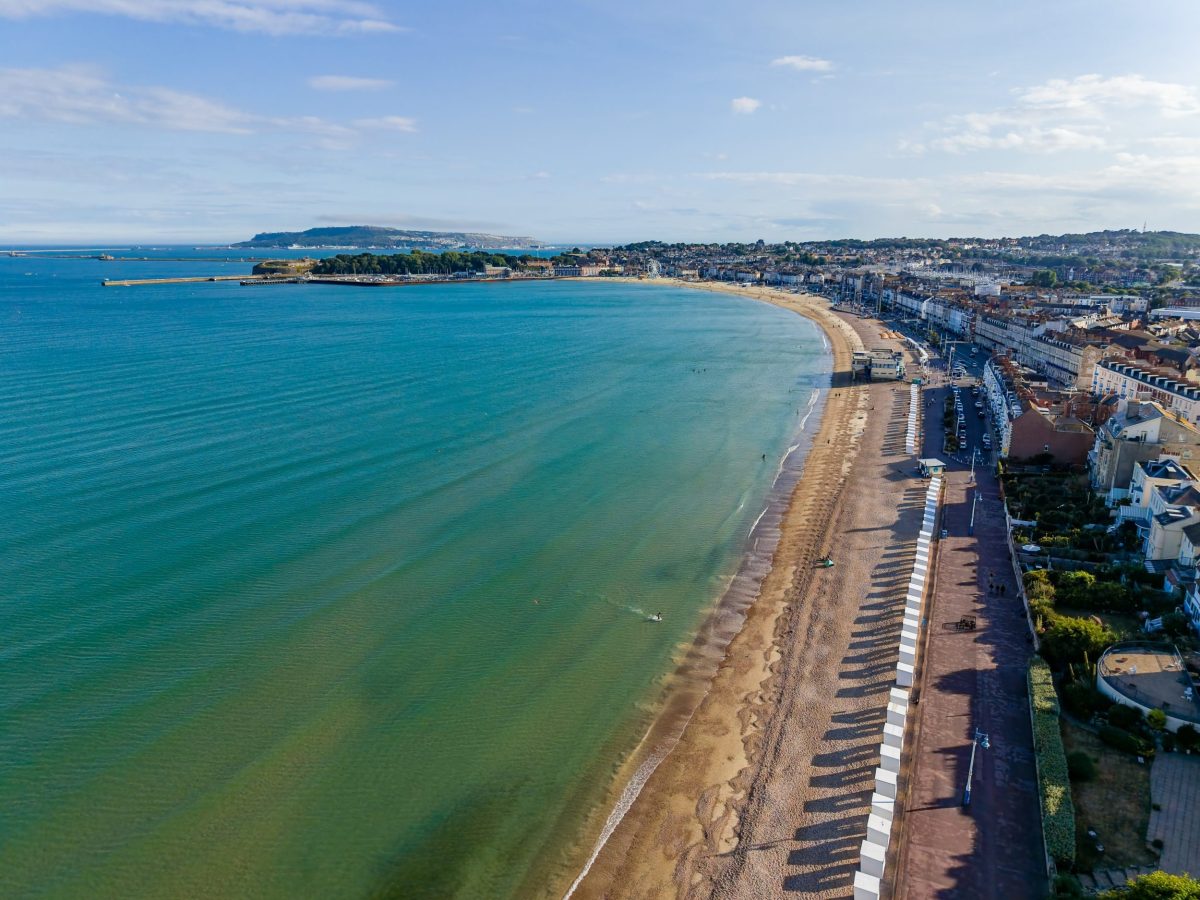
Weymouth: a relaxed base for exploring the Jurassic Coast
If you are staying at one of our Weymouth Holiday Cottages, you are ideally placed to explore the central Dorset coastline.
You have Portland and Chesil Beach in one direction, Lulworth and Purbeck in the other, and Dorchester only a short drive inland.
Weymouth itself has one of Dorset’s best sandy beaches, a beautiful historic harbour, and plenty to explore around Nothe Fort and Nothe Gardens. The harbour is also one of our favourite places to eat out, with everything from fresh seafood to relaxed waterside dining. We’ve shared some of our personal favourites in our guide to the best places to eat around Weymouth Harbour.

Ringstead Bay: one we come back to again and again
Ringstead is one of those beaches we probably mention more often than almost any other in Dorset, partly because we genuinely spend so much time here.
We’ve walked here countless times with Smarty, in summer and winter, and we particularly love continuing beyond the main beach towards Bran Point, a much quieter stretch of the coast. The views along the coast towards White Nothe are spectacular.
For a longer walk, you can follow the South West Coast Path in the opposite direction towards Osmington Mills, finishing at the Smugglers Inn for a drink or a bite to eat before heading back.
And if you’re staying closer to the beach, the Reef Café beside the Ringstead car park is a favourite spot for coffee or a bite to eat after a walk.
It’s exactly the kind of place we mean when we encourage guests to explore beyond Dorset’s headline attractions. Sometimes the places you remember most aren’t the ones you’ve seen hundreds of times on Instagram.
If you’re planning to explore this part of the coast, our collection of Dorset holiday cottages includes stays well placed for both the coast and the countryside.
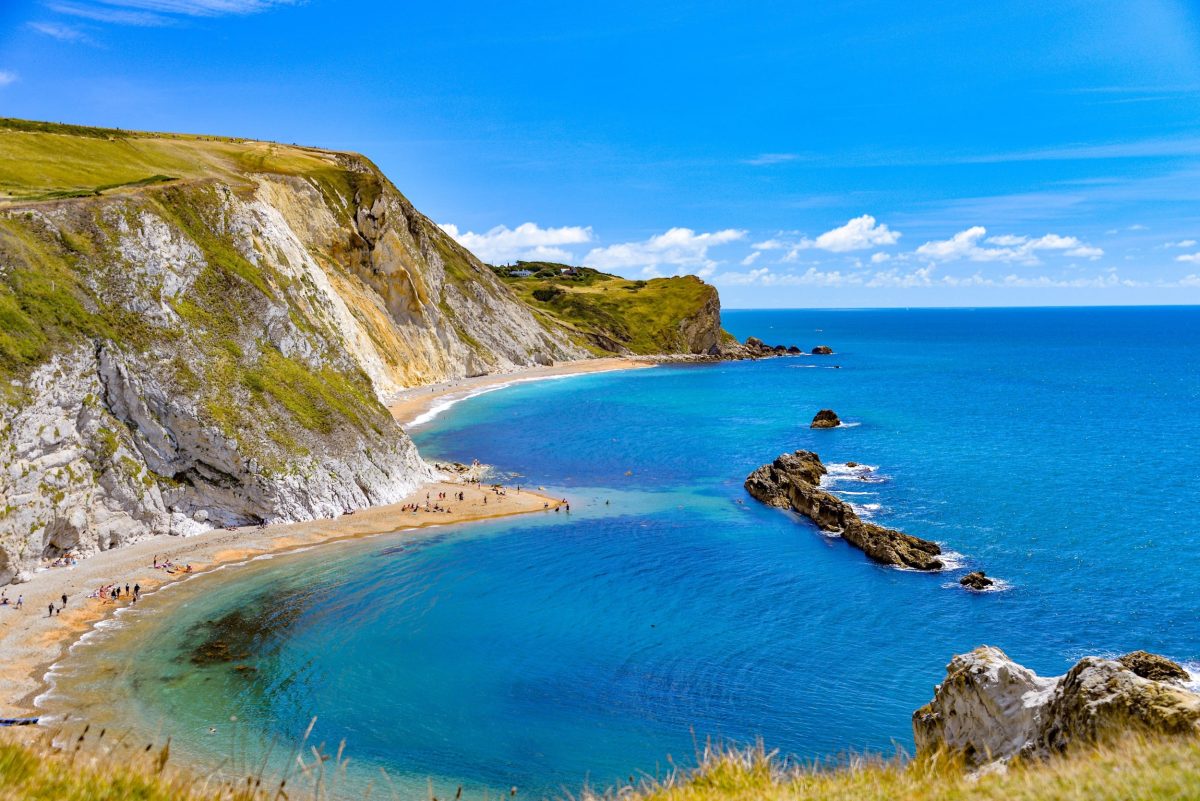
Lulworth Cove: famous, but still extraordinary
We may have visited Lulworth Cove dozens of times over the years, but that first view towards the water still makes an impression.
Its almost circular bay is one of the Jurassic Coast’s most recognisable sights, but for us there’s much more to Lulworth than just stopping for the view.
During the quieter months, on a calm day, we love taking our paddleboards or kayaks out on the water. During the season, you can also hire equipment at the cove, making it easy to experience Lulworth from a completely different perspective.
The saltwater sauna has been an excellent addition, bringing something a little different and rather special to a day by the sea.
And then there’s the food. The Boat Shed Café is one of our favourite places to eat in Lulworth, not least for its fantastic position overlooking the cove. On a beautiful day, we love sitting outside, but it’s just as good in winter, watching the waves and weather roll in while we’re warm inside.
If you’d prefer a proper Dorset pub, the Lulworth Cove Inn is only a short walk away and another good place to stop off after exploring the coast.
If you can, we’d recommend visiting Lulworth outside the busiest times of day or during the quieter months. Early mornings, evenings and those peaceful days out of season reveal a very different side of one of Dorset’s most famous places. It’s also why we think this part of the Jurassic Coast deserves more than a day trip. If you’d like time to explore the cove, discover the quieter beaches and enjoy the coastal walks without rushing, our Lulworth holiday cottages collection includes a beautifully furnished, dog-friendly cottage in nearby Winfrith Newburgh, just a short drive from the coast.
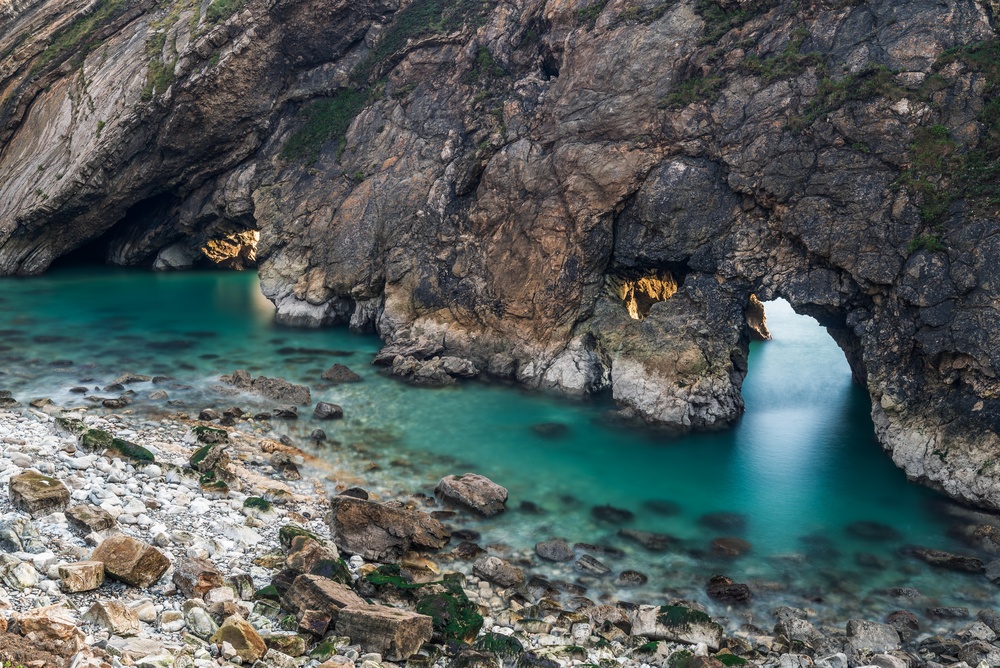
Stair Hole: don’t walk straight past it
One of the easiest mistakes at Lulworth is heading directly towards Durdle Door and overlooking Stair Hole.
It’s immediately beside Lulworth Cove and offers one of the best close-up views of the extraordinary folding and erosion of the surrounding rock.
Arches and small caves have formed where the sea has eroded the limestone.
You don’t need to stay long here, but it’s well worth stopping before continuing along the coast. It’s a great photo opportunity, too.
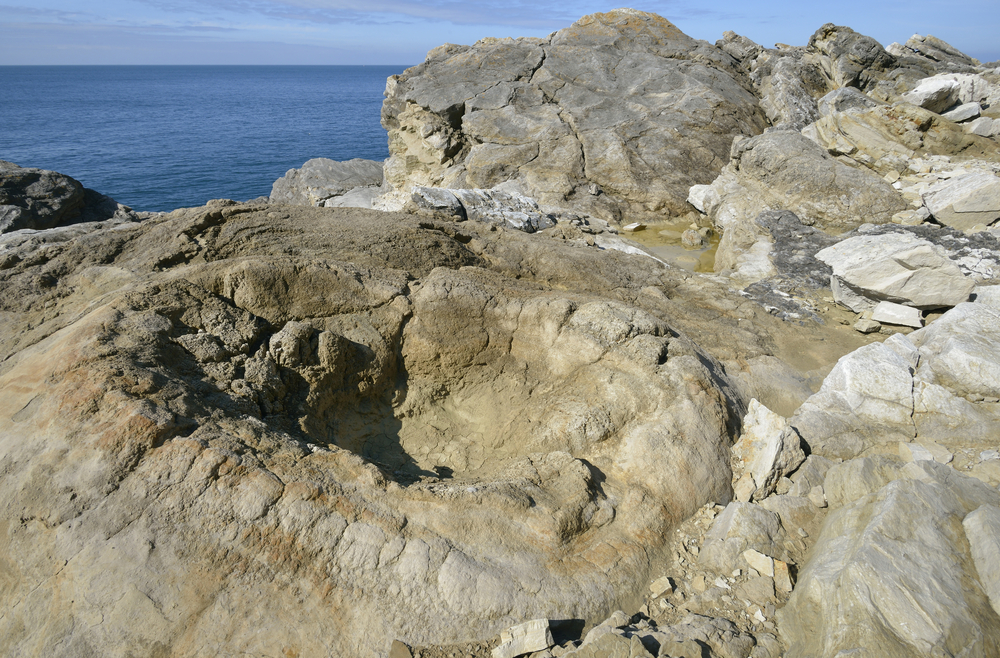
The Fossil Forest
The Jurassic Coast’s fossil story isn’t confined to ammonites and prehistoric sea creatures.
Near Lulworth lies the Fossil Forest, where evidence of trees that grew here around 145 million years ago survives.
The Fossil Forest lies within the Lulworth Ranges, so access is restricted at certain times. Before setting out, we’d always recommend checking the latest access times for the Lulworth Ranges on the government website.
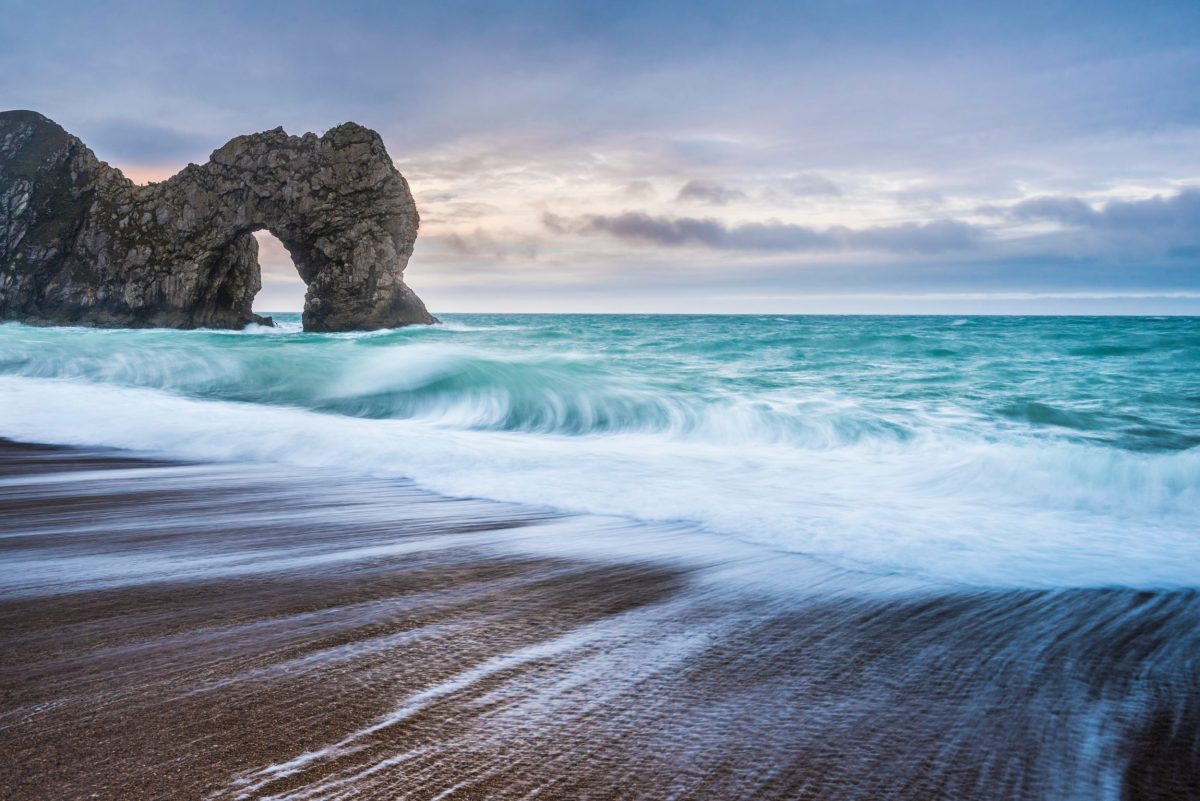
Durdle Door: Dorset’s most famous view
There aren’t many natural landmarks in Britain more instantly recognisable than Durdle Door.
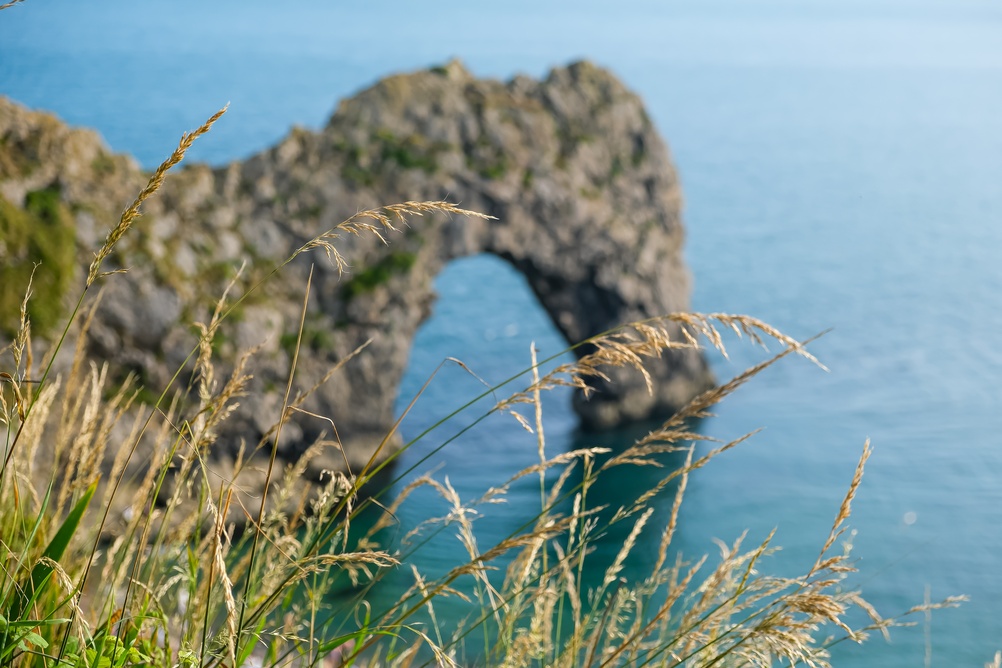
The huge limestone arch has been carved by the sea over thousands of years and has become an unofficial symbol of Dorset.
Yes, it gets busy, and yes, we’d still recommend seeing it.
We particularly love approaching on foot from Lulworth because the walk makes the arrival feel like part of the experience rather than simply another viewpoint. The climb is steep in places, and the descent to the beach involves quite a few steps, so good footwear is definitely worthwhile.
But one of the most memorable ways to see Durdle Door is from the sea.
If you’re staying in one of our luxury holiday cottages in Dorset as part of our Curated Experiences, we can arrange a luxury private sailing charter from Weymouth Harbour along the Jurassic Coast to Durdle Door. Seeing the arch from the water offers a completely different sense of its scale, and it’s become an experience our guests absolutely love.
Sometimes the journey home brings an unexpected bonus. Our skipper knows the local waters incredibly well, and when the dolphins are around, there’s always a chance of spotting them on the return towards Weymouth. We’ve been lucky enough to experience it ourselves, and it makes an already special day on the water even more memorable.
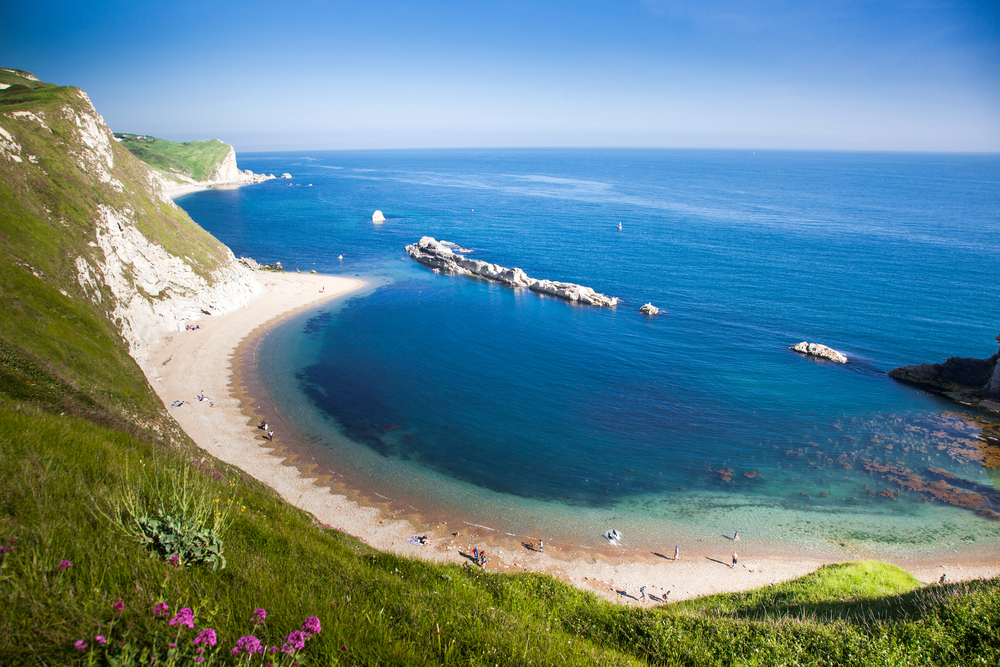
Nearby Man O’War Cove is also beautiful and often overlooked amid the rush to photograph the arch. So make sure it is on your itinerary too. If you’re hoping to experience Durdle Door beyond the busiest daytime hours, staying nearby makes a real difference. Our holiday cottage near Lulworth Cove and Durdle Door offers a lovely countryside retreat, with the freedom to explore this spectacular coastline at your own pace.
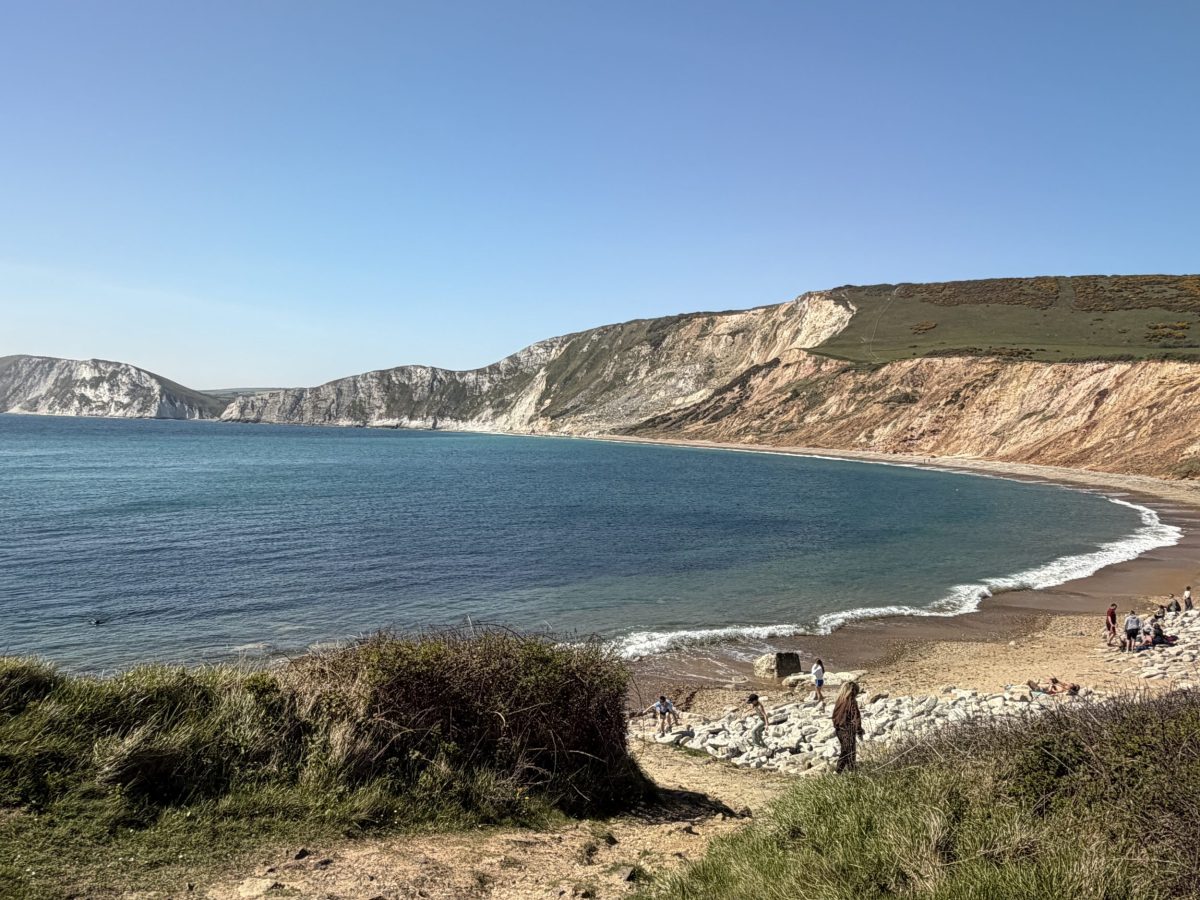
Worbarrow Bay and Tyneham: one of Dorset’s most memorable day trips
If you’re looking for somewhere that combines extraordinary scenery with a compelling human story, we’d put Tyneham and Worbarrow Bay very high on the list.
Tyneham was evacuated in 1943 so the surrounding land could be used for military training. The residents never returned, and today you can explore the remains of the village before following the walk through the valley to Worbarrow Bay.
It’s an extraordinary combination: an abandoned Dorset village behind you and one of Purbeck’s most impressive bays ahead.
We’ve visited many times over the years, and there’s something about the whole area that feels wonderfully removed from modern-day Dorset. If you’ve never been before, our guide to Tyneham Village covers its story, what you can still see, and what to know before visiting.
Worbarrow Bay itself feels noticeably more remote than Lulworth or Durdle Door, partly because you can only reach it on foot and partly because it lies within the Lulworth Ranges.
Access is restricted during military training, so always check the latest Lulworth Ranges access times before setting out.
It’s one of our favourite recommendations for guests who have already explored Dorset’s famous landmarks and are looking for somewhere a little different.
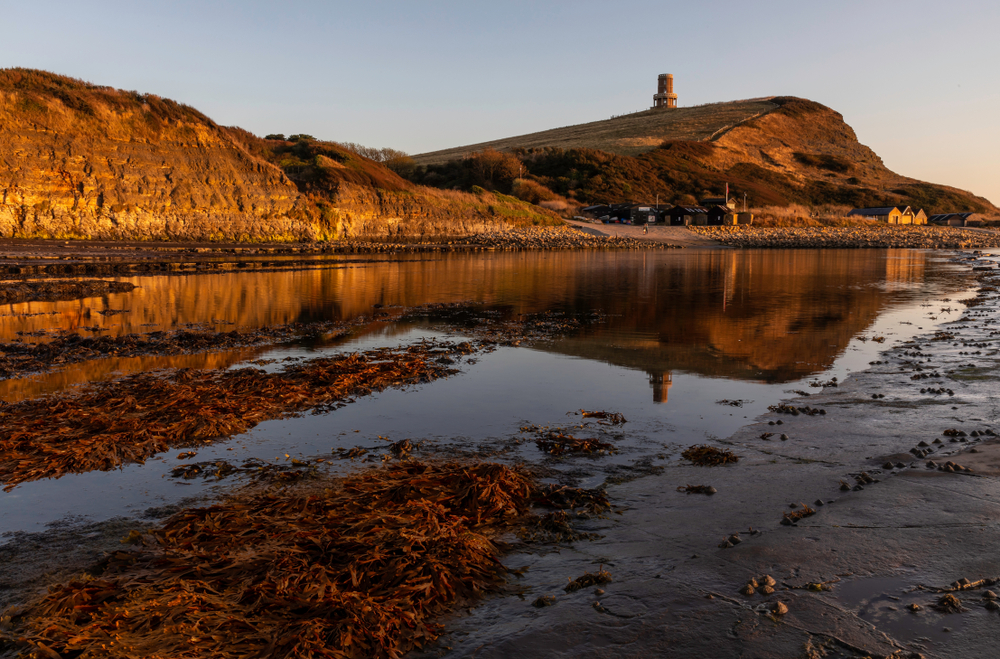
Kimmeridge Bay: fossils, rock pools and an extraordinary tower
Kimmeridge Bay is among the most distinctive parts of the Purbeck coast.
At low tide, broad rock ledges appear across the bay, making it a fascinating place for rock pooling and for exploring marine life along the shoreline.
High above the bay stands the unmistakable Clavell Tower, a beautiful circular stone tower that has become a landmark on this stretch of coast. The walk up towards it also offers wonderful views back across Kimmeridge Bay and along the Jurassic Coast.
And if you’re visiting Kimmeridge, we’d definitely make time for the brilliant Etches Collection in the nearby village. The museum houses an extraordinary collection of locally discovered fossils and is one we’ve included in our guide to family days out in Dorset on the Jurassic Coast.
We’d recommend combining the two. Explore Kimmeridge Bay and its rock pools first, then visit The Etches Collection to discover some of the remarkable creatures that once lived in the seas that covered this part of Dorset millions of years ago.
It’s a great day out, particularly for families, and offers something quite different from the better-known Jurassic Coast landmarks.
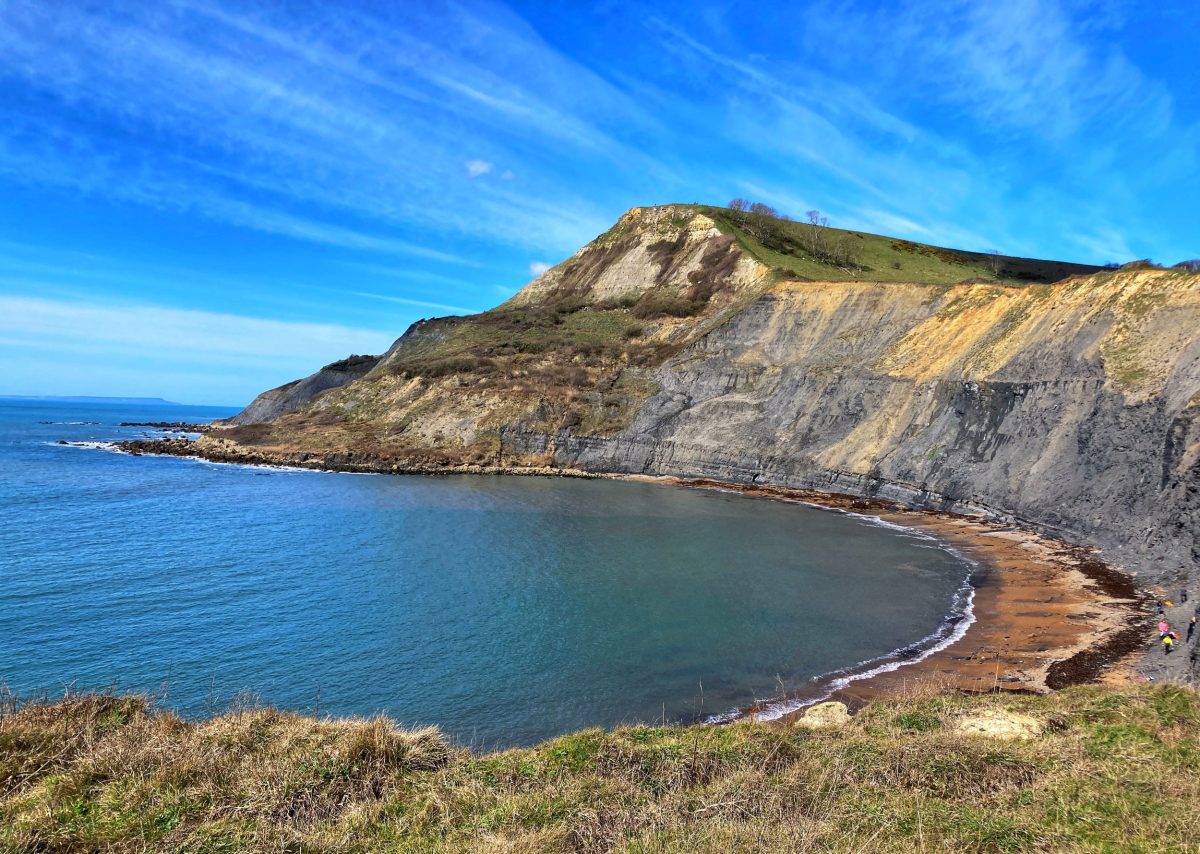
Chapman’s Pool and St Aldhelm’s Head
Chapman’s Pool is one of Dorset’s most beautiful secluded bays, but we’d never describe it as an effortless hidden beach.
Getting there involves a proper walk, and whichever way you approach it, there’s likely to be a climb on the return.
That’s also what makes it rewarding.
Nearby St Aldhelm’s Head offers sweeping sea views, dramatic cliffs and the tiny St Aldhelm’s Chapel, creating another of those wonderful Dorset combinations of landscape and history.
This stretch of Purbeck suits walkers who enjoy going a little further for a better view.

Worth Matravers, Winspit and Seacombe
This is another area we’ve walked many times.
Worth Matravers is an ideal starting point for exploring the quieter Purbeck coastline.
From the village, footpaths lead towards Winspit, Seacombe and to some spectacular stretches of the South West Coast Path.
Winspit is particularly atmospheric.
The former quarry workings are a reminder that these cliffs weren’t merely admired; they were places of work. Stone was quarried from Purbeck for generations, leaving caves, cut faces and platforms along the coast.
We love this walk because it offers you several versions of Dorset in one day: village lanes, open fields, old quarries, vast sea views and a wonderfully rugged coastline.
Returning to Worth Matravers gives you the chance for a drink at the Square & Compass, which is never a bad way to finish a walk.
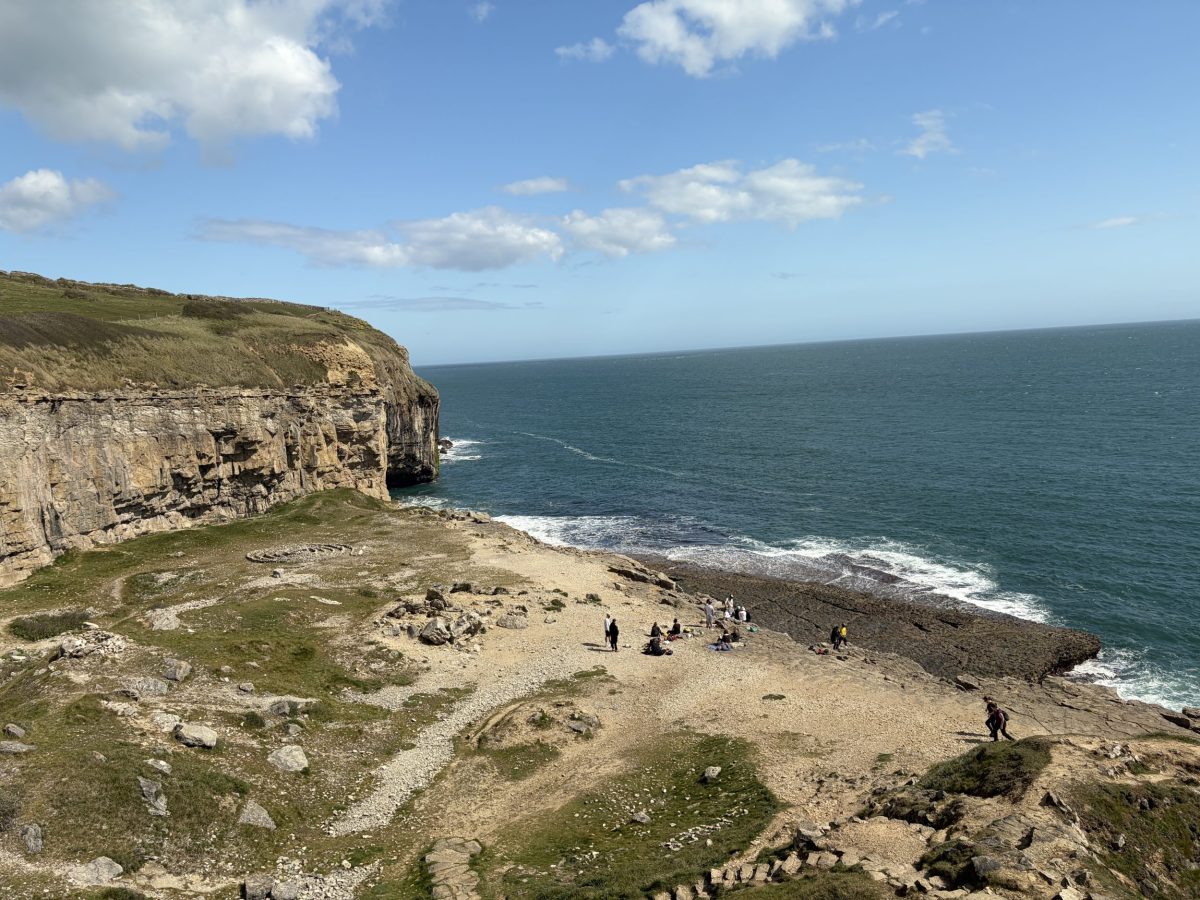
Dancing Ledge
Dancing Ledge has been a favourite with our family for years.
This dramatic flat shelf of rock beneath the Purbeck cliffs is the remains of an old coastal quarry, but tucked into the lower ledge is something unexpected: a small tidal swimming pool, blasted out of the rock for pupils of the nearby Prep School.
One of those pupils was a young Ian Fleming, who would later create James Bond, and is recorded as having swum in the pool himself. It’s one of those little pieces of Dorset history that we love discovering.
Our own children loved swimming here when they were younger, and Dancing Ledge was also a regular destination for school trips, often combined with coasteering along this rugged stretch of the Jurassic Coast.
Getting there is part of the adventure. From Spyway, you walk across the Purbeck countryside before descending towards the sea, with a much steeper final approach to the ledge. It’s definitely one for good footwear and sensible conditions.
And there’s another extraordinary reminder of Dorset’s past nearby. At Keates Quarry, you can literally walk in the footsteps of dinosaurs, with more than 100 fossilised tracks preserved in the rock dating back around 145 million years.
For us, that’s what makes this little corner of Purbeck so special. In a single walk, you can discover dinosaur footprints, centuries of quarrying history, a rock pool once used by the future creator of James Bond, and one of the most dramatic stretches of the Dorset coast.
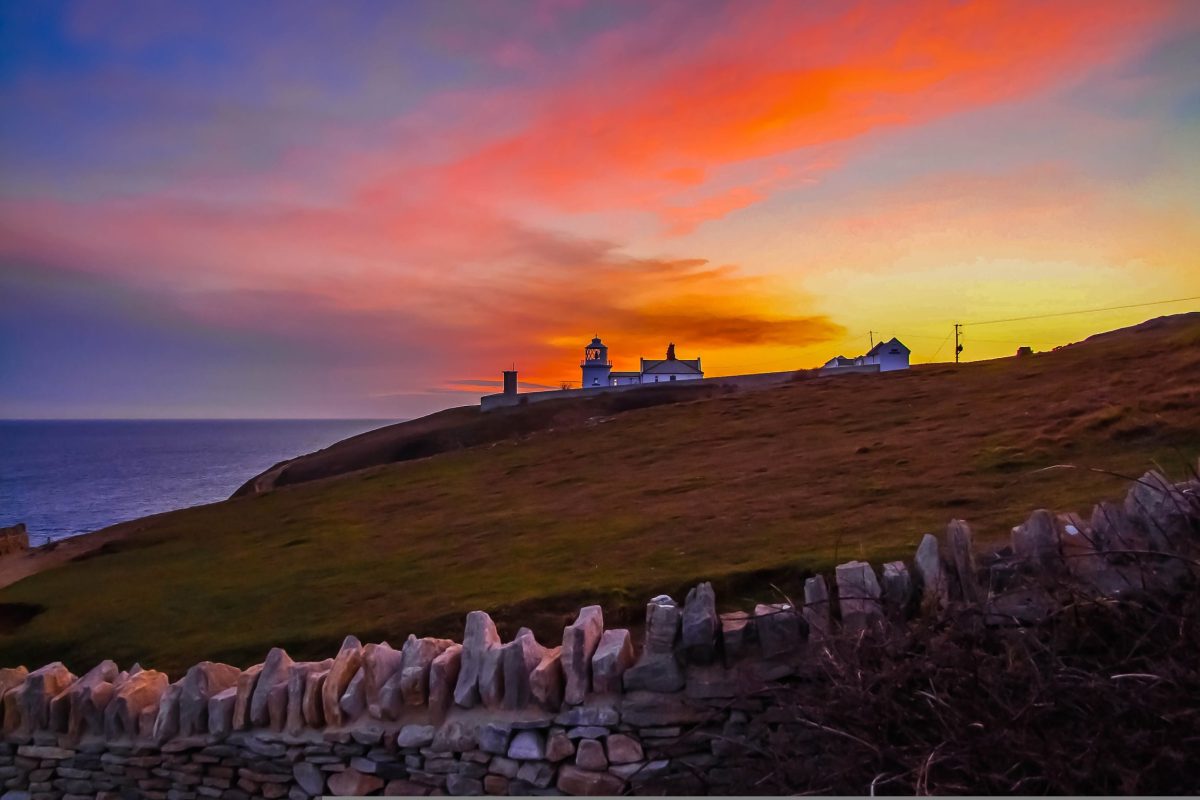
Swanage and Durlston Country Park
Swanage offers a lovely contrast to Purbeck’s wilder coastline. There’s a sandy beach, a traditional seafront and plenty of places for lunch or coffee, but head out of town and the scenery quickly becomes much more rugged.
Durlston Country Park is one of our favourite places to experience this side of Purbeck. There are miles of walking trails, wonderful cliff-top views and plenty of wildlife to spot along the way.
Make time to see the enormous Great Globe, created in Victorian times from local stone, before heading along the coast towards Anvil Point Lighthouse. We’ve spotted seals in the water around here ourselves, so it’s always worth keeping an eye on the sea. Dolphins are also regular visitors to the waters around Durlston, although, of course, wildlife sightings are never guaranteed.
We’ve always thought Durlston works particularly well for families and mixed groups. You can head off on a longer coastal walk towards Anvil Point, while those wanting something gentler can enjoy a shorter trail, explore Durlston Castle and the Great Globe, or simply take in the views before heading back towards Swanage.
Old Harry Rocks: where Dorset’s Jurassic Coast ends
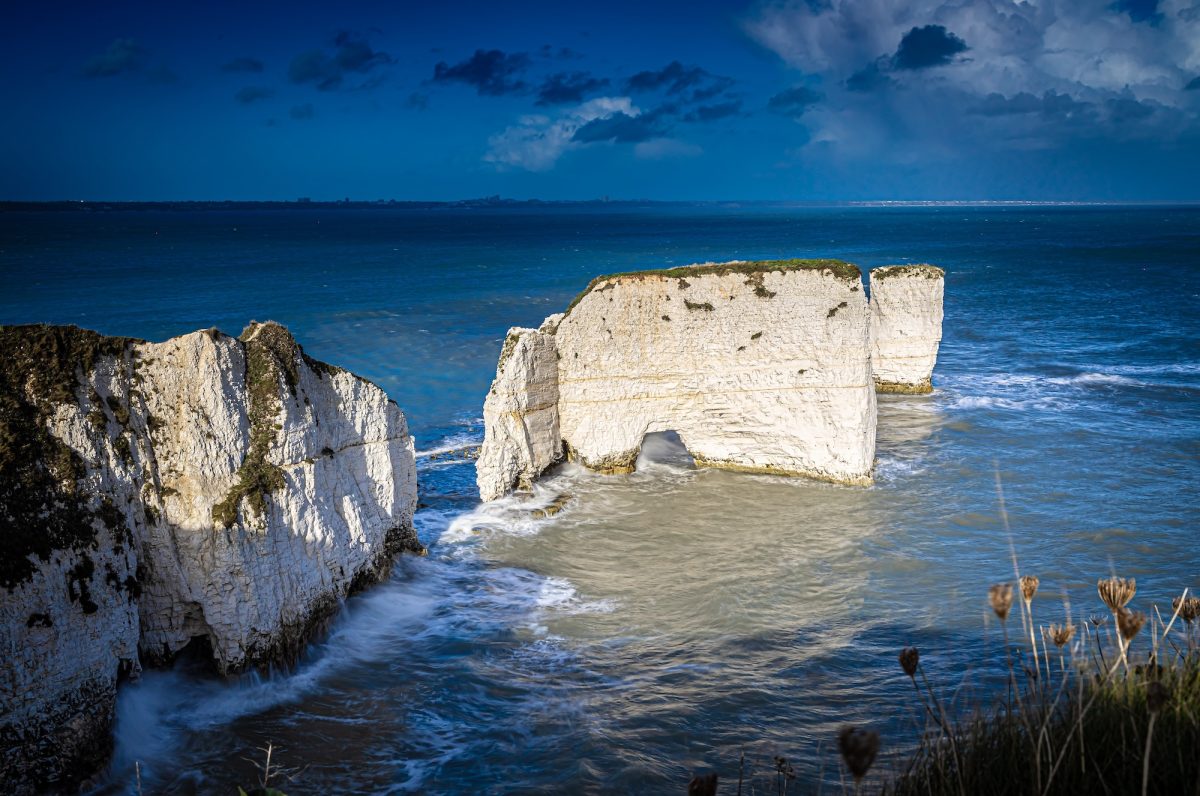
At the eastern end of the Jurassic Coast, the white chalk stacks of Old Harry Rocks stand, in marked contrast to the golden cliffs of West Dorset and the limestone around Lulworth and Portland.
This is a part of Dorset we know particularly well. One of our favourite walks starts at the Bankes Arms in Studland, heads towards Old Harry Rocks, continues across Ballard Down, and then loops back. We’ve walked it with Smarty many times over the years, and on a clear day the views across Poole Bay and towards the Isle of Wight are fantastic.
But walking isn’t the only way we enjoy seeing Old Harry.
Every summer, we try to kayak out from Studland, something we’ve done many times as a family. You can hire kayaks from Studland Watersports at Knoll Beach and paddle along the coast towards Old Harry Rocks. It takes us about 45 minutes, depending on the conditions, and seeing those enormous chalk stacks from water level is a completely different experience. Always check the weather and sea conditions before setting out.
Studland’s beaches are some of our favourite in Dorset, so it’s very easy to turn a visit to Old Harry into a full day by the coast.
There are some excellent places to eat nearby. The Pig on the beach and Shell Bay are longstanding favourites of ours, while the Bankes Arms has a fantastic beer garden with wonderful coastal views.
We also love the Sandy Salt Pig at Middle Beach. Its position overlooking the bay towards Old Harry makes it a great spot for coffee or a bite to eat while you’re exploring this part of Studland.
Old Harry marks the geographical endpoint of the Jurassic Coast World Heritage Site, and we can’t think of many better places to finish the journey.
Exploring the Jurassic Coast with your dog
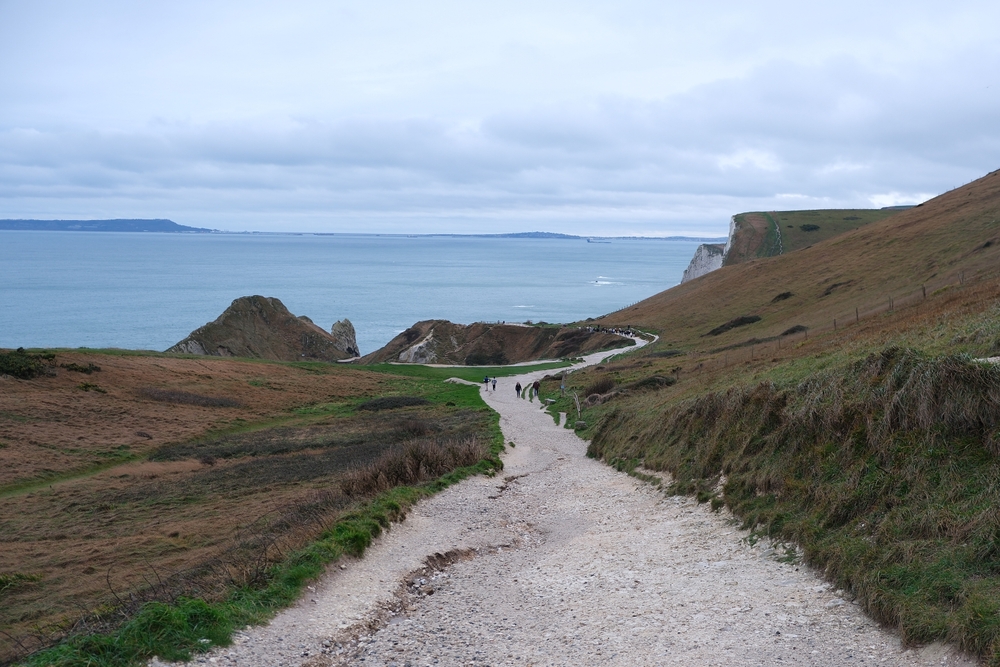
Dorset can be wonderful for a holiday with your dog, particularly if, like us, you tend to spend much of your holiday walking.
The South West Coast Path gives you almost endless options.
Some of the routes we revisit with Smarty include Ringstead, Osmington, Studland and the Purbeck coast around Worth Matravers.
You’ll need to take particular care around livestock and cliff edges, and some beaches have seasonal restrictions on dogs.
These vary by location and time of year, so it’s worth checking before travelling rather than assuming a beach will be dog-friendly.
We’ve put together our guide to dog-friendly beaches in Dorset, along with some of our favourite walks and dog-friendly places to eat.
And if nobody gets left behind on your holidays, our collection of dog-friendly holiday cottages in Dorset includes properties chosen specifically for guests travelling with four-legged companions.
Staying near the Jurassic Coast
One of the advantages of exploring the Dorset Jurassic Coast is that you don’t necessarily need to stay directly beside its busiest landmarks.
Weymouth makes a fantastic base for Portland, Chesil Beach, Ringstead, Lulworth and the central coastline.
Dorchester puts you within easy reach of both the coast and inland Dorset. For those particularly drawn to Lulworth Cove, Durdle Door and the Purbeck coastline, our holiday cottages near Lulworth Cove are another option. Our cottage in Winfrith Newburgh combines a peaceful village setting with easy access to some of Dorset’s most remarkable coastal scenery.
And staying close to Purbeck opens up Kimmeridge, Swanage, Studland, Worth Matravers and Old Harry Rocks.
Our collection of holiday cottages in Dorset has been personally selected from areas we know well, allowing you to explore the coast during the day and return to somewhere peaceful in the evening.
If you’re planning something special, our luxury holiday cottages in Dorset offer beautiful places to stay, with access to our concierge service and curated Dorset experiences.
Because the Jurassic Coast is only part of the story.
If this guide has inspired you to explore further, we’ve also put together our guide to Dorset’s most extraordinary places. Some are hidden along the Jurassic Coast, while others will take you inland to places you may never have heard of.
They’re the landscapes, landmarks and slightly more unusual corners of Dorset that we think are genuinely worth seeking out. Places that make a day out feel like a real discovery and, quite often, become some of the most memorable parts of a holiday.
Frequently Asked Questions
The complete UNESCO Jurassic Coast extends for approximately 155 kilometres from East Devon to Old Harry Rocks near Studland in Dorset. This guide focuses solely on the Dorset section, from Lyme Regis in the west to Old Harry Rocks in the east.
Yes. A large part of the Jurassic Coast lies in Dorset, including Lyme Regis, Charmouth, Golden Cap, West Bay, Chesil Beach, Portland, Weymouth, Lulworth Cove, Durdle Door, Kimmeridge, Swanage and Old Harry Rocks. The World Heritage Site also extends west into East Devon.
Despite the name, the coast contains rocks from three geological periods: the Triassic, Jurassic and Cretaceous. Together, they span approximately 185 million years of Earth’s history. The Jurassic period is an important part of that story, and the name has become synonymous with the wider coastline.
The Jurassic Coast is renowned for its extraordinary geology, fossils and coastal landforms. Dorset highlights include Durdle Door, Lulworth Cove, Chesil Beach, Golden Cap, Lyme Regis and Old Harry Rocks, as well as internationally important fossil sites around Lyme Regis, Charmouth and Kimmeridge.
Absolutely. Even if you have little interest in geology, the Jurassic Coast offers some of Dorset’s finest beaches, coastal walks, wildlife, villages and scenery. We’d allow several days rather than trying to see everything on a single driving tour.
That depends on what you’re looking for. Charmouth and Lyme Regis are best known for fossils; Lulworth and Durdle Door for spectacular geological landmarks; Portland for its rugged landscape and quarrying heritage; West Dorset for Golden Cap and dramatic cliffs; and Purbeck for some of Dorset’s finest coastal walking.
Some of our favourites include Charmouth for fossil hunting, Weymouth for a traditional sandy beach, Ringstead for walking and quieter days, Church Ope Cove for atmosphere, Worbarrow Bay for wild scenery, and Durdle Door for its extraordinary setting. Chesil Beach is completely different again and deserves to be experienced in its own right.
Charmouth and the coastline around Lyme Regis are among the best-known fossil-hunting locations. Beginners are best to start with a guided fossil walk or to visit the Charmouth Heritage Coast Centre. Search for loose material rather than digging into cliffs, stay clear of unstable rock faces, and always follow the local fossil-collecting code.
Yes. The South West Coast Path follows the Jurassic Coast and offers everything from relatively short circular walks to demanding full-day routes. Some sections are extremely steep, so distance alone isn’t a reliable guide to difficulty.
Walking the entire World Heritage coastline is a substantial undertaking and is normally divided into stages. If you’re visiting Dorset on holiday, we’d recommend choosing individual sections rather than covering enormous distances. Lulworth to Durdle Door, Studland to Old Harry Rocks, Golden Cap and the walks from Worth Matravers are all excellent places to begin.
You can travel between its towns, villages and attractions by road, but there isn’t a single road running directly along the coastline. In our view, that’s part of the appeal. Drive to a particular area, then explore on foot rather than spend your day travelling between viewpoints.
Weymouth and the Dorchester area are particularly well placed for exploring the central Dorset coast, including Portland, Chesil Beach, Ringstead, Lulworth and Durdle Door. Purbeck is better placed for Kimmeridge, Swanage, Worth Matravers and Old Harry Rocks, while West Dorset is ideal for Golden Cap, Charmouth and Lyme Regis.
Our handpicked collection of Dorset holiday cottages offers you several options for planning your holiday around the stretch of coast you’d most like to explore.
Many coastal paths and beaches welcome dogs, though some beaches may have seasonal restrictions. Dogs should also be kept under close control around livestock and well away from cliff edges. Our dog-friendly holiday cottages in Dorset are ideal if walking the coast with your dog is going to be a major part of your break.
We genuinely enjoy it year-round.
Spring is wonderful for walking and wildflowers. Summer brings long days and beach weather, but it is naturally busiest around places such as Durdle Door and Lulworth. Autumn brings softer light and quieter paths, while winter can be spectacular for wild coastal walks when conditions are safe.
If we had to choose purely for walking, late spring and early autumn are hard to beat.